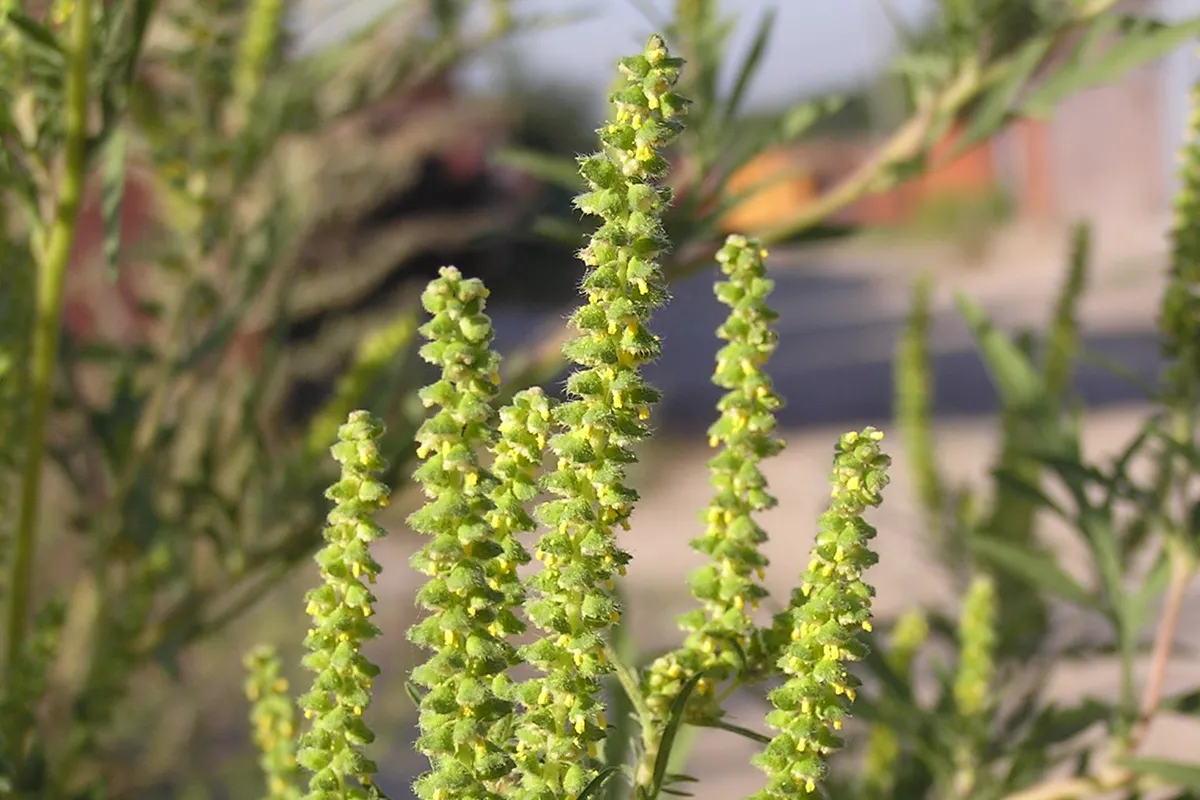
For people sensitive to pollen, this is the most demanding time of the year. In mid-July and early August, ragweed began to bloom-an extremely invasive annual weed whose pollen is considered the strongest natural allergen in our region. According to the latest information from the Institute of Public Health of Karlovac County, high levels of ragweed pollen have been recorded in the air in the city of Karlovac, with the peak expected between mid-August and mid-September.
Symptoms of ragweed allergy often include sneezing, red and itchy eyes, watery eyes, swollen eyelids, a stuffy nose, a runny nose, and difficulty breathing. The concentration of pollen in the air also depends on weather conditions, so values could be somewhat lower during rainy periods.
Daily Protection Guidelines
Željka Cerovac, head of the Service for Disinfection, Disinsection, and Deratization and Biological Monitoring of Outdoor Air at the County Institute of Public Health, has offered useful advice to people suffering from ragweed allergies.
If such individuals have therapy prescribed by their doctor, they should take it regularly. Furthermore, it is recommended to reduce time spent outdoors, and when outside, wearing sunglasses helps protect the eyes and mucous membranes. Upon returning home, it is necessary to shower, wash hair, and change into clean clothes. Also, avoid drying laundry outside; instead, dry it indoors. If they have pets, they should brush them thoroughly after walks, Cerovac pointed out, emphasizing that citizens should regularly check pollen forecasts published on the Institute's website.
Why Ragweed Is So Dangerous
Ragweed is an annual plant that can reach heights of up to 1.5 meters. The plant can have up to 200 flowers, is wind-pollinated, and produces as many as eight million highly allergenic pollen grains. It is precisely this amount of pollen that makes it one of the biggest enemies of allergy sufferers during the summer and early autumn months.
The best way to eliminate ragweed is to pull the plant out by the roots before it begins producing pollen. For large areas, it should be removed by mowing. However, unlike in April, May, or June when it is young, ragweed should not be pulled up in August during flowering because this can multiply the pollen concentration and cause greater problems for allergy sufferers.
Additionally, the situation in Osijek shows how serious the problem can be. The latest measurements by the Teaching Institute of Public Health of Osijek-Baranja County recorded as many as 90 pollen grains in the air, while anything above 30 is considered a high concentration. Biologist Ivan Domjanović from the Service for Health Ecology explained: "We take daily measurements; the latest show 90 grains. It should be noted that anything over 30 is considered a high concentration." This means that allergic reactions can be expected in almost all sensitive individuals.
A particular problem is posed by neglected private plots and the outskirts of cities, where ragweed spreads uncontrollably. Although cities maintain public areas, the weed is almost impossible to completely eradicate, but regular removal can significantly reduce the amount of pollen in the air. Proper land maintenance is therefore important not only for plot owners but also for all citizens who suffer from allergic symptoms during ragweed flowering.