Fuel Prices in Croatia: Spike Expected, but Brussels Opens Door for Future Savings
The government is set to set new maximum prices today, while EU approval for a temporary excise duty reduction could soften the blow from August onwards.
The government is set to set new maximum prices today, while EU approval for a temporary excise duty reduction could soften the blow from August onwards.
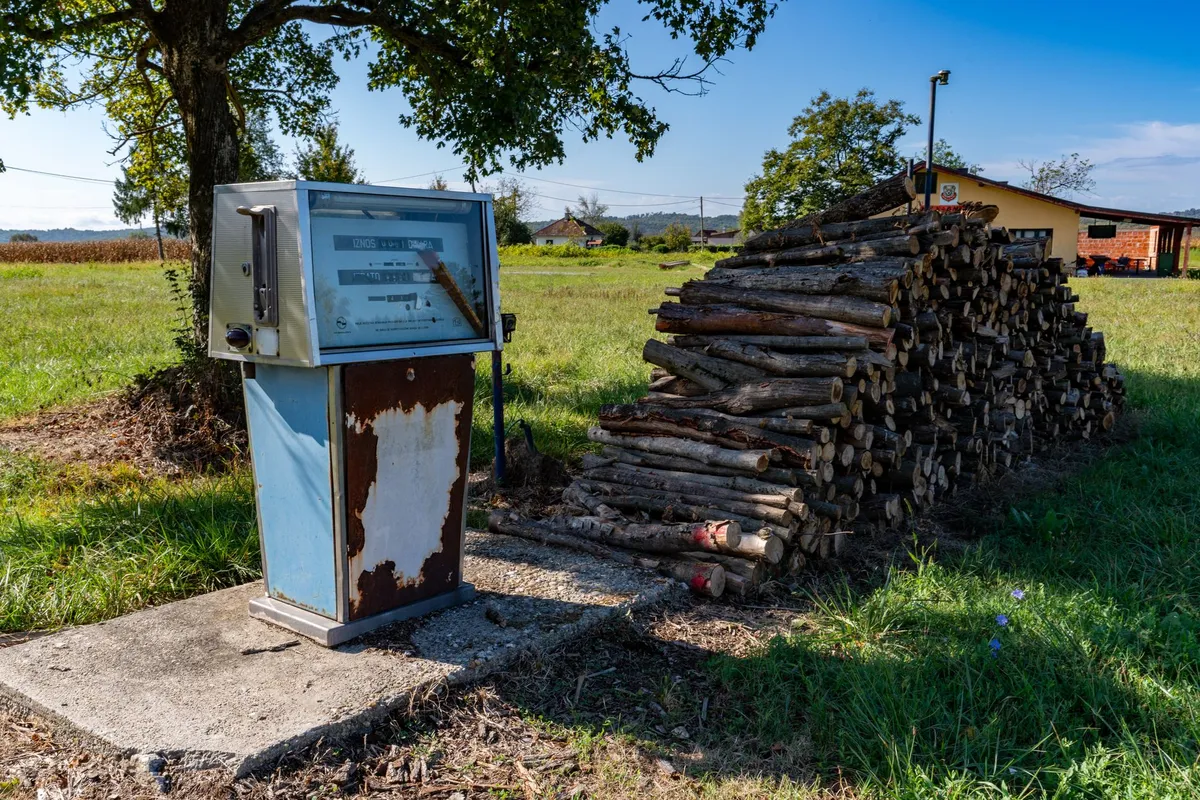
Today, July 27, 2026, at a telephone session, the Croatian Government is expected to confirm new maximum retail fuel prices, which will be in effect for two weeks starting Tuesday. According to information reported by Zadarski list, prices could rise significantly: gasoline (Eurosuper 95) could reach 1.65 euros, an increase of 11 cents, while diesel would go up by 22 cents to 1.81 euros per liter. Blue diesel is expected to rise by 24 cents to 1.26 euros.
In the current period, with government measures in place, the maximum price for basic gasoline is 1.54 euros and diesel 1.59 euros per liter, as reported by Dulist. Without these interventions, gasoline would cost 1.66 euros and diesel 1.72 euros.
Meanwhile, news from Brussels gives the government more room to maneuver. The Council of the European Union accepted Croatia's request on July 10, 2026, to temporarily lower excise duties below the minimum levels set by EU rules. The decision, published in the EU Official Journal on July 20, allows Croatia from August 1, 2026, to January 31, 2027, to reduce excise duties on unleaded gasoline to as low as 0.1395 euros per liter, down from the current 0.44231 euros, and on diesel to 0.105 euros per liter, down from 0.38 euros. According to Dulist's calculations, this could theoretically reduce prices by about 30 cents per liter for gasoline and 27.5 cents per liter for diesel compared to current levels.
However, this does not automatically mean cheaper fuel. The government will be able to use this tool only from August 1, and whether and how much it will do so will depend on global oil price movements and the government's decision.
Ahead of the expected price increase, oil companies have introduced temporary measures. As Zadarski list reports, Ina, at the end of last week, limited fueling at its gas stations, except those on highways and for vessels, to a maximum of 300 liters per transaction.
"As a responsible supplier, Ina has temporarily introduced a fueling limit of up to 300 liters of fuel per transaction to maintain continuity of supply amid increased demand due to the tourist season and growing uncertainty in international markets," reads Ina's official notice.
Ina emphasizes that the Rijeka Oil Refinery is operating stably and continuously, that they have sufficient reserves, and that there is no real fuel shortage; this is solely a short-term stabilization measure. The 300-liter per transaction limit has also been introduced by Petrol and Tifon, with Petrol noting that the measure is temporary and will be reviewed daily.
Lukoil has gone a step further: at their gas station in the western part of Zagreb, a notice has been posted prohibiting the fueling of canisters and mobile pumps. "It is forbidden to fuel canisters and mobile fuel pumps, and we ask you to fuel only into vehicle tanks," reads the notice at that station, as reported by Zadarski list.
Alongside the fuel decision, the Croatian Government announced on its Twitter account a meeting between Prime Minister Andrej Plenković and Deputy Prime Minister and Defense Minister Ivan Anušić with members of the 855th Firefighting Squadron of the Croatian Air Force in Zemunik. The post highlights that since the start of the main phase of the firefighting season, squadron members have participated in extinguishing 45 fires, and they are also assisting in extinguishing fires abroad.