Danube at Budapest Reveals German Motorcycle and Two WWII Soldiers
Low river levels exposed remains hidden for nearly 80 years. Along with the bodies and motorcycle, intact identification tags were found that could solve the mystery of their fate.
Low river levels exposed remains hidden for nearly 80 years. Along with the bodies and motorcycle, intact identification tags were found that could solve the mystery of their fate.
Extremely low water levels in the Danube in Budapest have brought to the surface the eerie remains of World War II, hidden in the river mud for nearly eight decades. On the Buda side of the city, near Batthyány Square, a nearly perfectly preserved German military motorcycle was discovered, with the remains of two Wehrmacht soldiers lying beneath it.
The unusual discovery began quite by chance when a passerby noticed parts of a motorcycle protruding from the rocks along the shore. After his report, experts from the Hungarian Military History Institute went to the site and soon confirmed the nature of the find.
Before any attempt could be made to extract the motorcycle, the area had to be thoroughly inspected by bomb disposal experts. A concerning amount of unexploded ordnance from the war was found in the immediate vicinity. Among them were German anti-tank mines, Tellermine 35 (TMi-35), as well as remnants of hand grenades and artillery shells. Due to the danger, a section of the road along the embankment was temporarily closed.
Only after the area was secured did the excavation continue, revealing the full extent of the find. The motorcycle, believed to be a DKW NZ 350-1 model produced for military use from 1944, was not the only secret of the muddy bottom.
Beneath the motorcycle, the remains of two German soldiers were found. Alongside their bodies, a crucial clue was discovered that could aid in identification: two identification tags with still-legible markings. Incredibly well-preserved, the tags survived decades thanks to the river mud mixed with fuel oil, which created ideal conditions for preservation.
According to a report from the German War Graves Commission (Volksbund Deutsche Kriegsgräberfürsorge), both halves of the tags were found together. This is an extremely important detail because in the event of a death, one half was sent to the Wehrmacht office in Berlin to record the death and notify the family. The fact that both halves are still together strongly suggests that their deaths were never officially recorded.
Arne Schrader from the German War Graves Commission believes that comparing the data from the tags with preserved war records and military unit diaries will allow for the identification of the fallen. If their identity can be established, the remains will be buried at the German military cemetery in Budaörs, on the outskirts of Budapest, where thousands of war victims already rest.
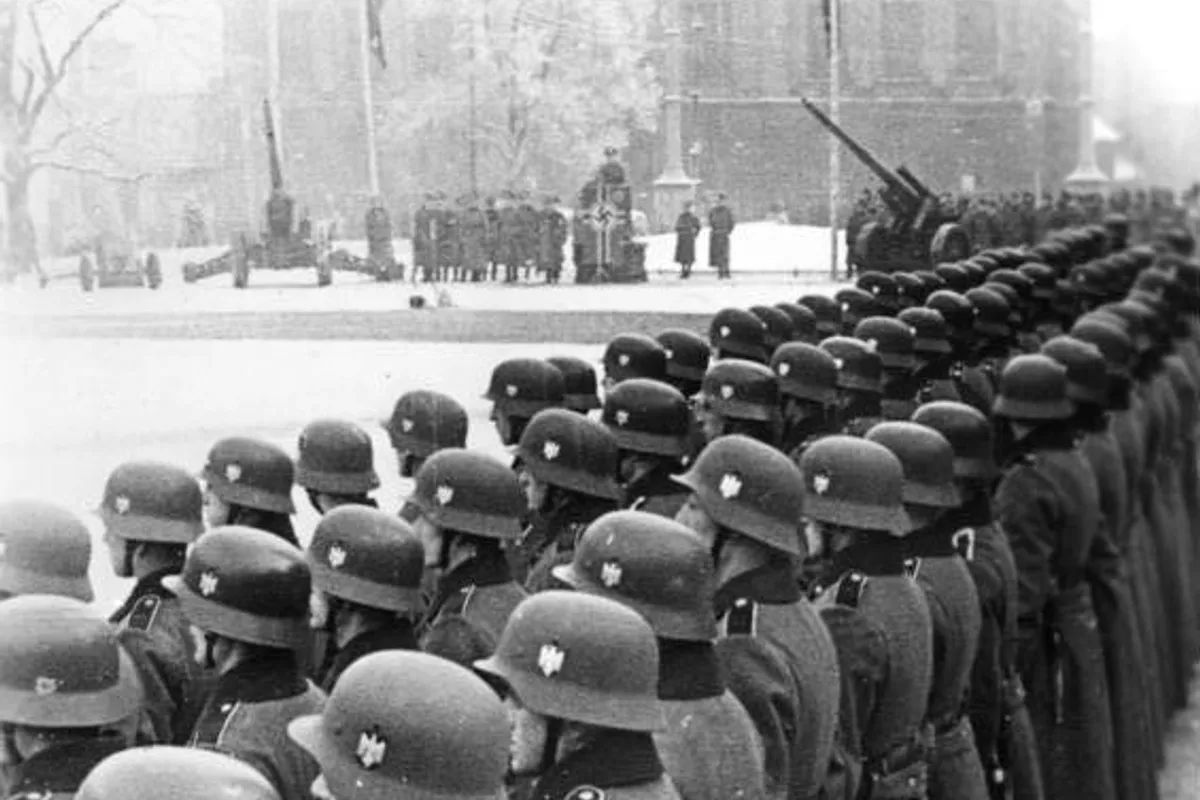
The discovery is linked to early 1945, when German and Hungarian forces in the city fought fierce battles against the advancing Red Army. The Battle of Budapest was one of the hardest and bloodiest in Hungary in the final months of the war, and the Danube still holds many untold stories from that period.
In addition to the motorcycle and bodies, other items were recovered from the riverbed, including a World War II military decoration and a fuel canister. Due to the extremely low water level, the German War Graves Commission expects that other ships and remains could soon emerge, from which the remains of the fallen might be recovered. Hungary is initially responsible for these finds, but if there is evidence of possible German casualties, the Commission will be notified and can become involved in the excavations.