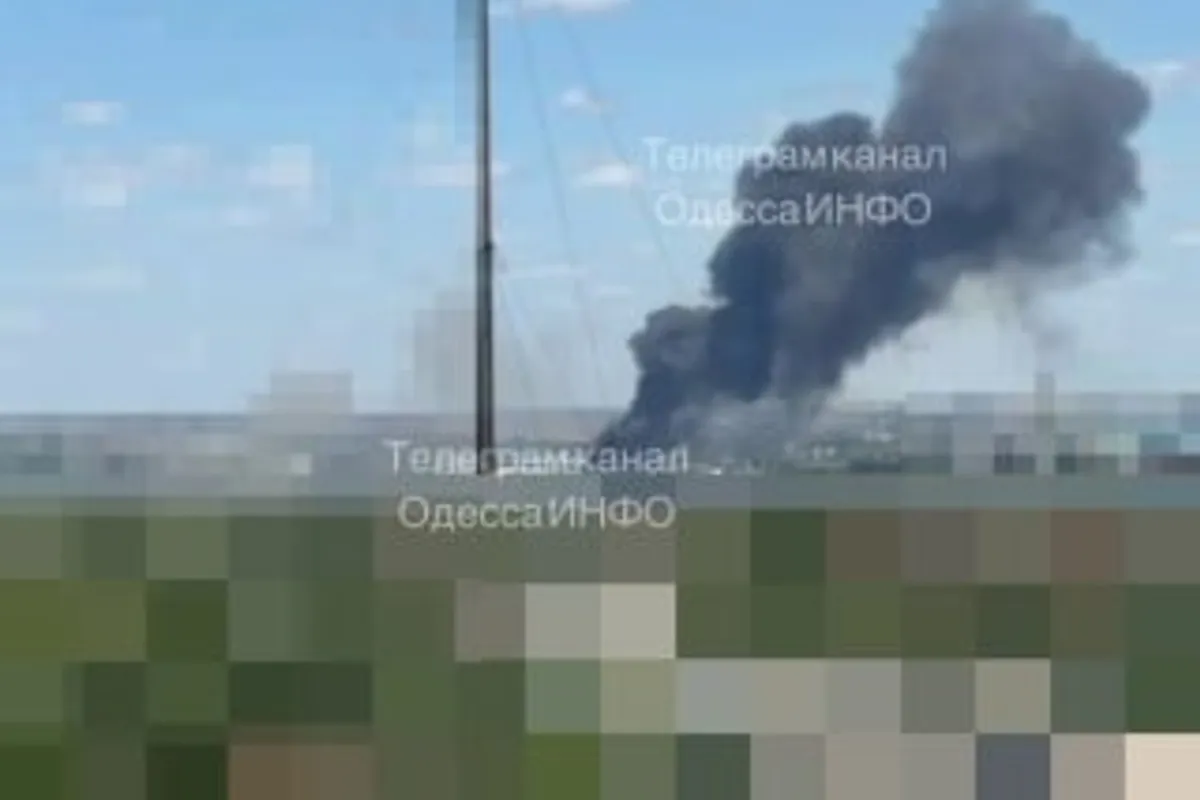
On Friday, July 24, 2026, around noon local time, Russia launched a missile strike on the Kyiv region, targeting a firing range where a weapons exhibition was underway for representatives of Ukraine's defense industry. At least six people were killed and dozens injured, President Volodymyr Zelensky confirmed on X (formerly Twitter). The attack was highly unusual in that it was carried out in broad daylight, a stark departure from the nighttime strikes that characterize most Russian missile campaigns.
A Defense Industry Expo as the Target
According to Ukrainska Pravda, the site hit was a firing range hosting an event called Defense Demo Day & Defense Expo Critically Protected, organized by ARMADA (the Association of Manufacturers of Unmanned Systems and Related Technologies). The gathering was intended to showcase solutions for protecting critical infrastructure against modern aerial threats. Valerii Borovyk, founder of defense manufacturer First Contact and a former soldier, reported that Russia had deliberately targeted the range. Serhii "Flash" Beskrestnov, an adviser to the Ukrainian president who was present at the event, wrote on Facebook: "Thank you, friends, I'm fine. The team is alive."
Ukraine's Defense Industry Council confirmed that Russian forces had struck the location where defense sector representatives had assembled, and stressed that the venue had not been publicly disclosed. The Council urged everyone to refrain from posting photographs, footage, or location data so as not to compromise the investigation or ongoing rescue operations.
How the Attack Unfolded and What Was Used
The Ukrainian Air Force issued a ballistic missile threat warning at 11:25 a.m., with air raid sirens sounding around 11:30 a.m., followed shortly by powerful explosions across the city. Kyiv Mayor Vitali Klitschko urged residents to remain in shelters. Early assessments indicate that Russia fired approximately 12 projectiles, including ballistic missiles from the S-300, S-400, or Iskander systems, as well as 3M22 Zircon cruise missiles, which were reportedly launched from Russia's Kursk region. The Zircon is a Russian hypersonic cruise missile capable of traveling at many times the speed of sound, making it extremely difficult to intercept with conventional air defense systems.
Mayor Klitschko reported that emergency services had been dispatched to the Sviatoshynskyi district of the city, where structural damage was recorded. Hours after the strike, Zelensky posted: "A major rescue operation is underway in the Kyiv region following Russia's missile attack. We currently know of dozens of casualties. Tragically, six deaths have been confirmed," adding that rescue teams remained on the ground.
July: A Month of Intensified Ballistic Strikes
This attack is far from an isolated incident. According to data from the specialized military outlet Militarnyi, in just the first 19 days of July 2026, Russian forces fired as many as 107 ballistic missiles and 20 Zircon cruise missiles. Analysts warn that this figure exceeds Russia's estimated monthly production capacity for such weapons, potentially suggesting the country is drawing down previously stockpiled reserves. No official explanation has been offered for the escalation.
Echoes of the 2023 Chernihiv Attack
Ukrainska Pravda notes that this is not the first time Russia has targeted a defense industry gathering. In August 2023, Russian forces struck the Taras Shevchenko Theater in Chernihiv, roughly 150 kilometers north of Kyiv, with an Iskander missile during the Fierce Birds demo day, an event that had brought together drone manufacturers and reconnaissance training schools. Seven people were killed and hundreds were wounded on the street outside. In that case, too, the venue was known only to participants, yet Russia managed to locate the target. The investigation into Friday's strike is ongoing, and authorities continue to piece together the full picture as the casualty toll may yet rise with incoming information.