Bishop Bogdan from Knin: Forgiveness Does Not Erase Truth
The Military Ordinary led Mass on the 31st anniversary of Operation Storm and stated that the most dignified monument to veterans is a society that respects and cares for them.
The Military Ordinary led Mass on the 31st anniversary of Operation Storm and stated that the most dignified monument to veterans is a society that respects and cares for them.
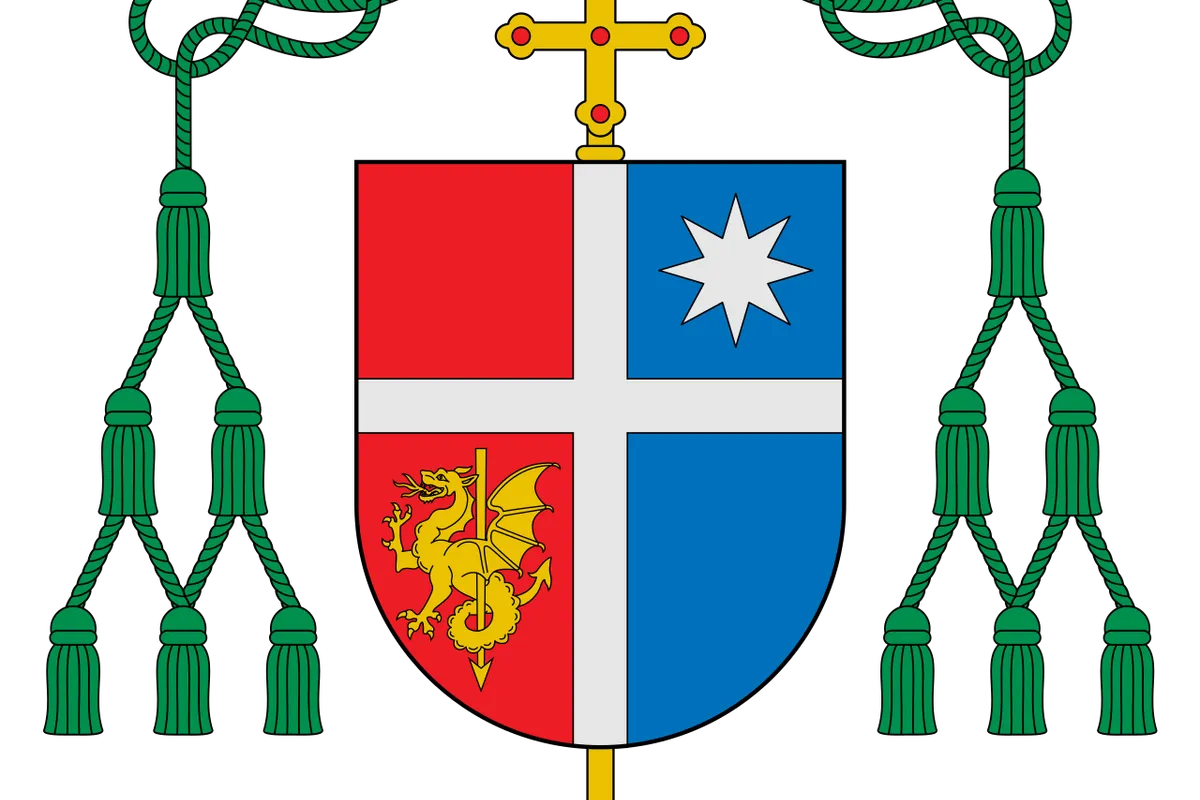
The Military Ordinary in the Republic of Croatia, Bishop Jure Bogdan, led a solemn Mass on Wednesday, August 5, 2026, at the Church of Our Lady of the Great Croatian Baptismal Vow in Knin. The Eucharistic celebration was held as part of the observance of Victory and Homeland Thanksgiving Day, Croatian Veterans Day, and the 31st anniversary of the military-police operation "Storm."
Alongside Bishop Bogdan, concelebrants included the Bishop of Šibenik, Tomislav Rogić; the Provincial of the Franciscan Province of the Most Holy Redeemer, Fra Siniša Balajić; the Vicar General of the Military Ordinariate, Ilija Jakovljević; the Guardian of the Knin monastery, Fra Marko Đerek; and numerous other priests. The Mass was also attended by the highest state officials, including Prime Minister Andrej Plenković, Speaker of the Croatian Parliament Gordan Jandroković, Chief of the General Staff of the Armed Forces Lieutenant General Tihomir Kundid, Director General of Police Nikola Milina, and President of the Croatian National Assembly of Bosnia and Herzegovina Dragan Čović.
In his homily, Bishop Bogdan emphasized the importance of memory for the survival of a people. "A person and a nation cannot live healthily if they do not know where they come from, whose goodness they have received, who made sacrifices for them, and which path they wish to continue," he said. He warned that memory without gratitude becomes a cold chronology, without truth it turns into myth, and without mercy it can become the seed of new hostilities.
"A people that loses its collective memory becomes susceptible to manipulation and to others' interpretations of its own history," the Military Ordinary stressed. He also reminded of God's closeness during the most difficult moments of the Homeland War: "He was close to the person in the shelter and in the refugee column, to the soldier on the front line, to the wounded in the hospital, to the family waiting for news, and to the returnee who was rebuilding his home."
Bishop Bogdan delivered a powerful message on reconciliation, saying that "forgiveness does not erase truth, reconciliation does not equalize guilt." He noted that Operation "Storm" achieved its historical goal-the liberation of Croatian territories-but that society still faces challenges such as the disintegration of families and the departure of young people.
To address these issues, he said, courage, unity, readiness for sacrifice, and hope are needed once again. The most dignified monument to fallen veterans, he emphasized, is not stone, but a society that respects the individual, cares for veterans and their families, and gives young people a reason to stay and build their lives in the homeland.
He concluded his homily with a prayer for the healing of wounds and the preservation of identity: "Lord, teach us to remember so that wounds heal; to preserve identity so that it is a home, not a wall." The liturgical singing was led by the Croatian Navy Klapa "Sveti Juraj" and the Police Klapa "Sveti Mihovil," with organ accompaniment by Mihael Mojzeš.
After the Mass, at 9 a.m., delegations of families of fallen veterans, wartime commanders, and the state leadership laid wreaths and lit candles in front of the Monument to the Croatian Victory "Storm '95" at Trg dr. Ante Starčevića. The Victory Day program continued with a ceremony at the NK "Dinara" stadium and at the Knin Fortress.