Boris Krneta First to Document Rare Stingray in the Adriatic
The angler caught a Dasyatis tortonesei stingray at a depth of 7 to 10 meters, a species never before recorded in the Croatian part of the Adriatic.
The angler caught a Dasyatis tortonesei stingray at a depth of 7 to 10 meters, a species never before recorded in the Croatian part of the Adriatic.
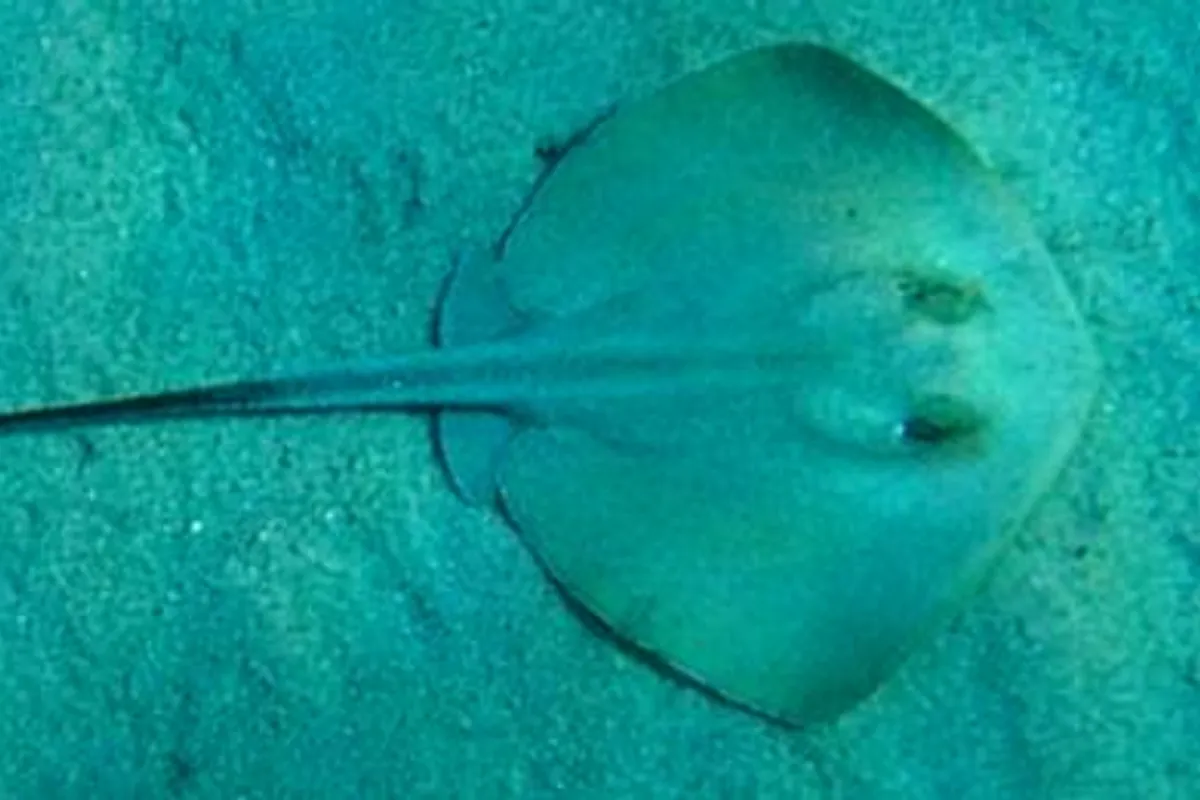
Croatian angler Boris Krneta has become the first person to document the rare stingray species Dasyatis tortonesei in the Adriatic Sea. Although his initial plan was to catch gilthead seabream, the fishing trip turned into a minor scientific event when an unusual stingray weighing 1.8 kilograms took the bait. He photographed it and released it back into the sea.
Preparations began the day before, when Krneta obtained fresh bib (juvenile seabream) and arranged a fishing spot. "It all started on Friday. I got some fresh bib from a local fisherman, and after some chatting, advice, and a bit of pondering, we decided - tomorrow we'll hit a spot that hasn't been kind to me in recent summers," he told Glas Istre.
The alarm went off at 5 a.m., and after a car ride, a twenty-minute hike over rocky terrain with all the gear followed. The first cast was made at exactly 7 a.m., in an area where the depth ranges from 7 to 10 meters.
Around 9:30 a.m., Krneta noticed the rod tip dancing and the reel screaming. "I ran, grabbed the rod, and the fish just kept going, not stopping. And of course, it had to happen when I was alone..." he recalled. The fight lasted about five minutes, and the fish didn't show the usual signs of panicked flight. "No crazy runs or head shakes. Just pure, brutal power," Krneta described.
When the ray surfaced, he noticed it was unusual. "It looks like a common stingray, but there are differences," he said. He photographed it and released it back into the sea, unaware that it was a species never before recorded in the Croatian part of the Adriatic.
Only later did he learn that it was a Dasyatis tortonesei stingray, previously documented only in Albania. "I should have kept a small piece for DNA analysis to confirm it genetically. I guess I'll have to catch it again... But the gear passed the test, and I'm overjoyed," he stated.
The story didn't end there. After tying a new leader and casting a fresh bib, within half an hour the rod was bending again. Another grueling fight ensued, with the fish surfacing three times and diving back to the bottom before being hauled onto the rocks. "Oh my... I'm done," Krneta muttered to himself as he slowly, inch by inch, brought in the catch.
For the curious, Krneta shared the details of the gear that endured two consecutive battles with powerful rays. He used a Penn Tidal 400 rod, an Okuma 8k reel, 0.35mm Tuberitini Sky Blue monofilament line, and a 0.37mm Seguar FX leader. The hook was a Hayabusa Light Circle 2, the sinker weighed 60 grams, and the bait was live bib.
"Fish come and go, but days like this stay etched in memory forever," Krneta concluded, noting that this catch brought him not only personal satisfaction but also a potentially valuable contribution to the understanding of Adriatic biodiversity.