Croatian Amateurs Discover New Nebula in Cygnus
If expert verification confirms the discovery, it will be the first planetary nebula entirely discovered by Croatian amateur astronomers.
If expert verification confirms the discovery, it will be the first planetary nebula entirely discovered by Croatian amateur astronomers.
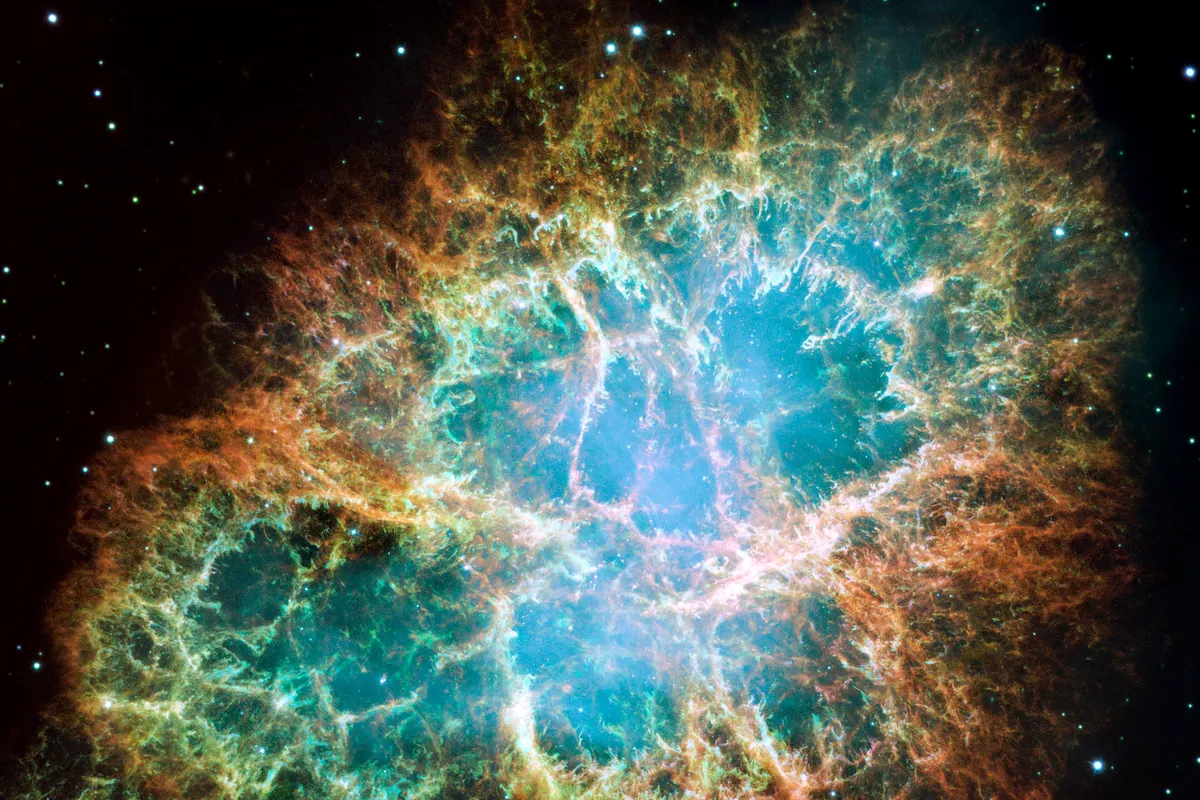
A group of Croatian amateur astronomers announced on Wednesday, August 5, 2026, the discovery of a previously unknown nebula in the constellation Cygnus. The discovery has been submitted for expert verification, and if confirmed as a planetary nebula, it will be the first such object resulting from the collaboration of exclusively Croatian amateurs, which would place it in global astronomical catalogs.
The credit for the find goes to four enthusiasts: Matija Cecelja, Matija Pozojević, Stjepan Prugovečki, and Robert Žibreg. Over several nights, they imaged a small patch of sky near the reflection nebula vdB 134, right in the constellation Cygnus. A faint emission trace indicating the presence of a nebulous shell was first spotted in the images by Stjepan Prugovečki, followed by a detailed analysis.
The newly discovered planetary nebula candidate surrounds the star designated Gaia DR3 2084755414429885952. In astronomical databases, it is classified as a white dwarf of spectral type DA, characterized by its very blue color and intense ultraviolet radiation. Such stars are often found at the centers of planetary nebulae, which was a key impetus for further searches of catalogs and scientific literature.
The analysis showed that the white dwarf is located at a distance of approximately 2,350 light-years from Earth. The diameter of the observed nebulous shell is estimated at 1.4 to 1.5 light-years. According to the amateur astronomers' statement, these values fit excellently with the expected parameters for a classic, middle-aged planetary nebula.
After searching available catalogs and finding no designation for a planetary nebula matching their object, the Croatian team submitted it for expert verification. This was entrusted to Pascal Le Dû, a prominent French amateur astronomer and specialist in spectroscopic confirmation of planetary nebulae, known for his role in the 2SPOT project.
If the verification confirms that it is indeed a planetary nebula, the object will be included in major global catalogs of planetary nebulae, including PlanetaryNebulae.net and HASH PN. This would mark a historic achievement for Croatian amateur astronomers and permanently inscribe their name on the map of cosmic discoveries.