Iran and Oman Close to Deal on Hormuz
According to a New York Times report, the US and Iran have reached a preliminary agreement on a framework to reopen the strategic strait, but Tehran denies any talks with Washington.
According to a New York Times report, the US and Iran have reached a preliminary agreement on a framework to reopen the strategic strait, but Tehran denies any talks with Washington.
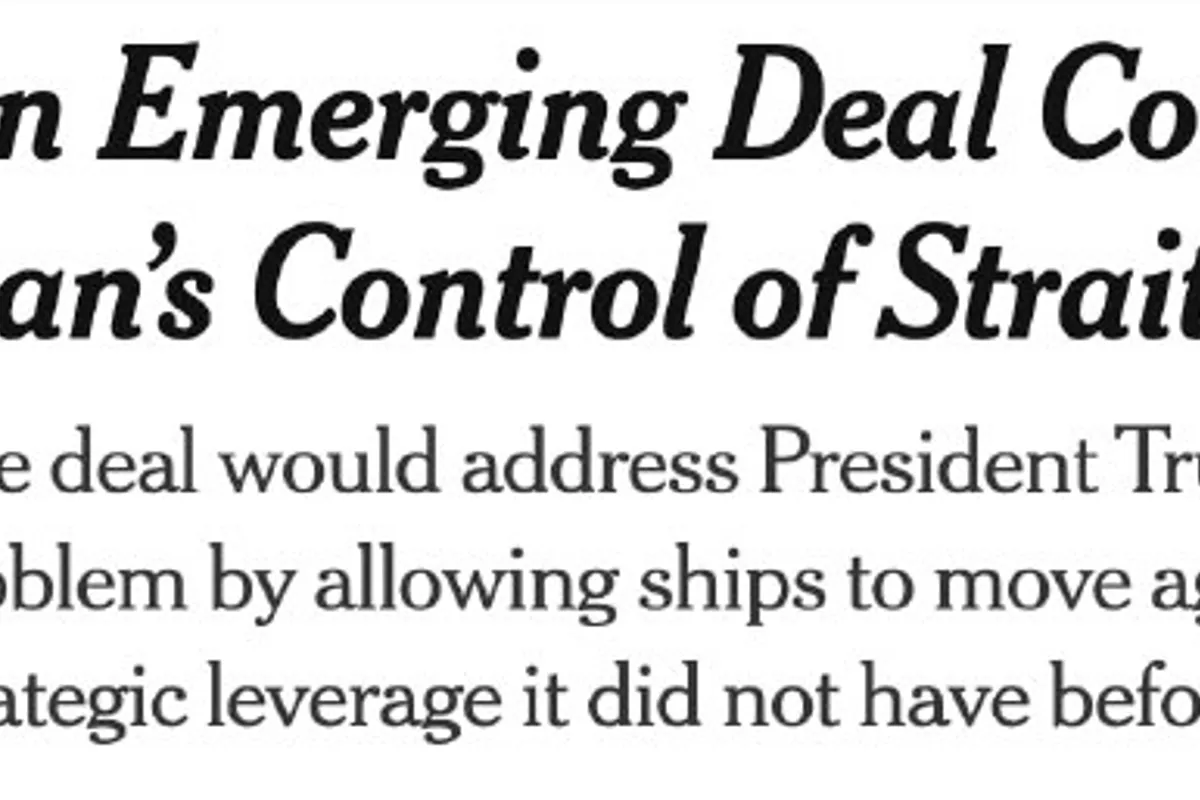
Iran and Oman are closer than ever to an agreement on reopening maritime traffic through the Strait of Hormuz, The New York Times reported on Monday, August 4, 2026, citing US and Iranian officials. The proposed deal, which would give Tehran control over areas that were international waters before the conflict, would allow commercial shipping to resume, while negotiations on Iran's nuclear program would be postponed to a later date.
According to unofficial information, vessels entering the Persian Gulf would pass through an Iranian-controlled channel running along its coast. Ships leaving the Gulf would use a channel near Oman. Iranian officials claim that no traditional tolls would be charged, but that the agreement includes a "service fee" to cover environmental, security, and staffing costs, with revenue shared equally between Iran and Oman.
However, a US official familiar with the negotiations disputed this account to The New York Times, calling the Iranian portrayal "inaccurate." He stressed that there would be no fees and that the new routes or channels would be "temporary" and would not require Iranian permission or approval.
US President Donald Trump reacted sharply to Iranian claims. On his social media platform Truth Social, on Monday, he accused Iran's leadership of being "incredibly two-faced" and insincere about the status of negotiations. "They are asking for a meeting... talks are beginning, with more scheduled in the near future, and they say, openly and proudly, that they are not conducting any talks, that nothing is being discussed," Trump wrote.
The President also disputed Iranian control over the strait, asserting that the waterway is "already fully controlled by the United States Navy." He added a threatening message: "Nothing reaches Iran unless we want it to, and nothing will pass unless an agreement or total surrender is reached."
Despite Trump's statements and the New York Times report, Iranian Foreign Ministry spokesman Esmail Baghaei denied on Monday evening the existence of any negotiations with the United States, stating that no meetings are planned, as reported by the Wall Street Journal. However, the Iranian ministry confirmed that talks with Oman on the future of the Strait of Hormuz are ongoing and that some progress has been made in recent days.
Ali Vaez, deputy director of the Middle East program at the International Crisis Group, told The New York Times that Iran sees influence in the Strait of Hormuz as its only tangible achievement from the war. "Trump's options are between an unwinnable war and an unacceptable peace," Vaez said, suggesting that a deal with Oman could put Iran in a more favorable position than before the current round of conflict.
The dispute over the Strait of Hormuz remains a central point of contention. Washington claims that a memorandum signed in June 2026 committed Iran to opening the strategically important waterway, while Tehran interprets the text as explicitly preserving its authority over maritime traffic. Within the Pentagon, according to TASS, some senior officials are skeptical of such an arrangement, believing it would amount to a US capitulation.
So far, the United States has failed to force Iran to relinquish control over the strait, which has raised global oil prices and politically sensitive gasoline prices in the US.