Iran Strongly Condemns US-Saudi Attacks on Iraq, Oil Prices Surge
Escalation of Conflict in the Middle East: Joint US-Saudi Strikes on Pro-Iranian Forces Kill at Least 20, Trump Threatens 'a Good Beating', Iran Warns of Dangerous Consequences.
Escalation of Conflict in the Middle East: Joint US-Saudi Strikes on Pro-Iranian Forces Kill at Least 20, Trump Threatens 'a Good Beating', Iran Warns of Dangerous Consequences.
Iran's Foreign Ministry on Wednesday, July 29, 2026, strongly condemned the joint airstrikes by the United States and Saudi Arabia on Iraqi territory. In a statement carried by the Russian state agency TASS, it was stated that these attacks constitute a "clear violation of Iraq's national sovereignty and territorial integrity, a gross breach of the UN Charter and fundamental norms of international law."
"The Ministry of Foreign Affairs of the Islamic Republic of Iran strongly condemns the aggressive attacks by the United States and Saudi Arabia on several areas of Iraq. These attacks represent a clear violation of Iraq's national sovereignty and territorial integrity, a gross breach of Article 2, Paragraph 4 of the United Nations Charter and fundamental norms of international law, and serve the interests of the United States and the Zionist regime, with the aim of expanding the scale of war and conflict in the West Asia region."
Tehran also stated that Washington and Riyadh bear responsibility for the "dangerous consequences of these criminal, inhumane, and provocative actions."
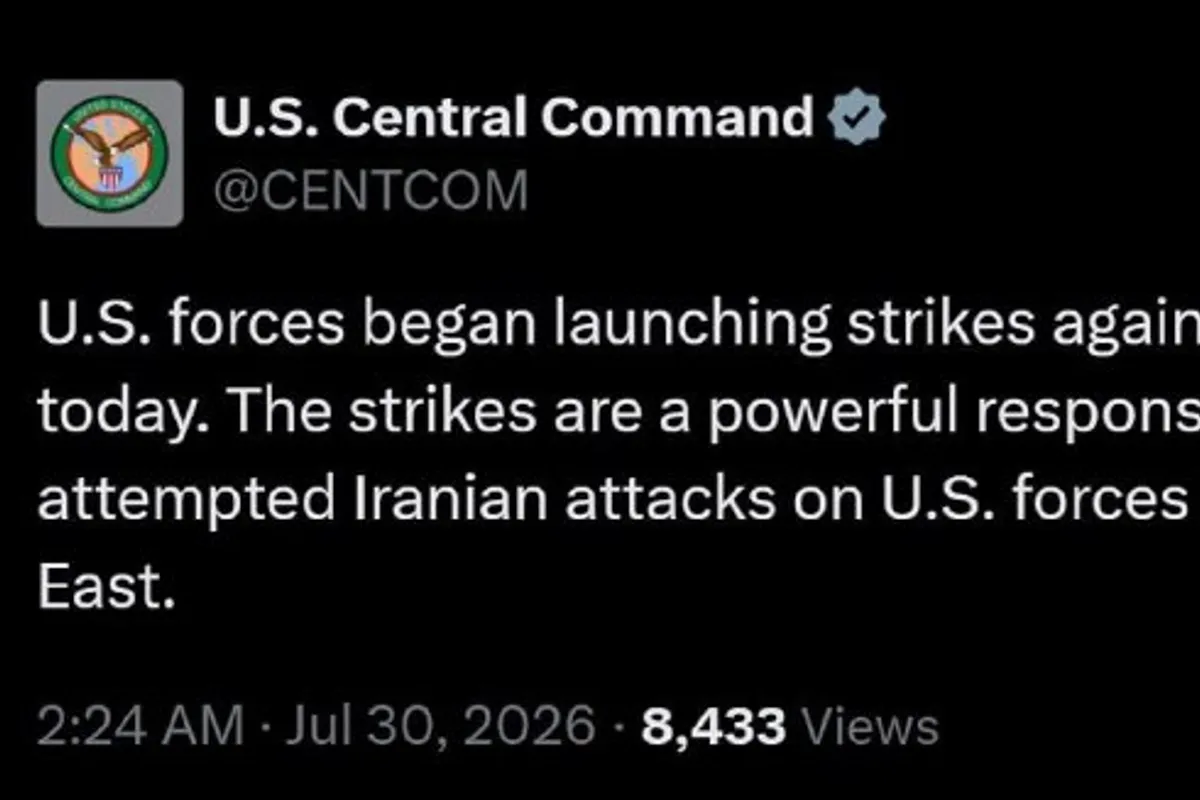
The airstrikes in Iraq came just hours after Iran's Islamic Revolutionary Guard Corps (IRGC) launched ballistic missiles at a US base in Jordan on Tuesday evening, July 28. The US military stated that all missiles were intercepted, but President Donald Trump responded decisively. In a phone interview with Fox News, he said: "We'll give them a good beating. We'll hit hard, they will get a beating."
Joint US-Saudi forces then carried out strikes on multiple locations linked to the pro-Iranian Popular Mobilization Forces (PMF) across Iraq, including Mosul and Nineveh province. According to data from the PMF itself, as reported by Abu Ali Express, at least 20 people were killed and 32 wounded. Earlier reports from France Info and AFP mentioned ten casualties, but the numbers later increased. Iraqi Prime Minister Zaydi, who heads the National Security Council, convened an emergency meeting and assessed that the attacks were a "violation of sovereignty and undermine stability."
After reports from the New York Times about low stockpiles of interceptors for the Patriot system, Trump on Monday, July 27, dismissed such claims to reporters: "We have a lot of ammunition, various types. Biden gave a lot to Ukraine, so we're replenishing stocks, but we have plenty. We have plenty of medium-range material too, I think, more than we could use, no matter what happens." According to Axios, the US commander for the Middle East, General Brad Cooper, had earlier recommended a pause in attacks to preserve supplies.
The renewal of hostilities immediately affected the energy market. The price of Brent crude oil rose 3.39% to $86.94 per barrel, while WTI oil reached $82.17 after a 3.67% increase, reports France Info. The escalation further threatens the supply of "black gold" as Iran has been blocking the Strait of Hormuz, a key passage for oil tankers, for some time. According to Turkey's Anadolu Agency, Tehran insists on greater control over this waterway, while the US and European allies refuse to make concessions. As a result, according to Bloomberg, the conflict could drag on for months.
Iran's state television reported that the United States bombed the city of Piranshahr in the northwest of the country, near the border with Iraq, on Wednesday. According to the Iranian report, an uninhabited area was hit and there were no casualties. Washington had neither confirmed nor denied this information as of the time of writing. If proven true, it would be the first direct US attack on Iranian soil since the start of the current crisis.
Adding to the uncertainty is a report from Iranian media, soon deleted, about four IRGC members killed in the joint US-Saudi strike on the city of Karbala. According to Abu Ali Express, they are Ali-Asgar Astaneh, Abolfazl Moteqi, Mortaza Akbari, and Amir Abbas Deram-Furosh. Other sources have not yet confirmed these losses, so it remains unclear whether the elite Iranian officers were indeed among the victims.
Meanwhile, Yemen's Minister of Information Muammar Al-Iryani told AFP that the pro-Iranian Houthis plan to impose fees on ships passing through the Red Sea and the Bab el-Mandeb Strait. According to him, this would be a "dangerous expansion of the conflict" that would turn one of the world's most important maritime corridors into a source of funding for the militia's military activities.
According to information gathered by Bloomberg, US, European, and Iranian officials believe the fighting could last for months. Iran believes it can withstand a prolonged naval blockade and that Trump will avoid a wider war due to the risk of disrupting global energy markets and regional escalation. The administration in Washington, on the other hand, does not expect the president to back down until Tehran abandons its demands for expanded control of Hormuz, leaving both sides in a stalemate with periodic military exchanges.