Iconic Stones Now Part of Trešnjevka Museum Stories
Virtual museum brings memories of the 1976 Rolling Stones concert, the story of Yugoslavia's first modular synthesizer, and traces of the alternative scene from the 1990s.
Virtual museum brings memories of the 1976 Rolling Stones concert, the story of Yugoslavia's first modular synthesizer, and traces of the alternative scene from the 1990s.
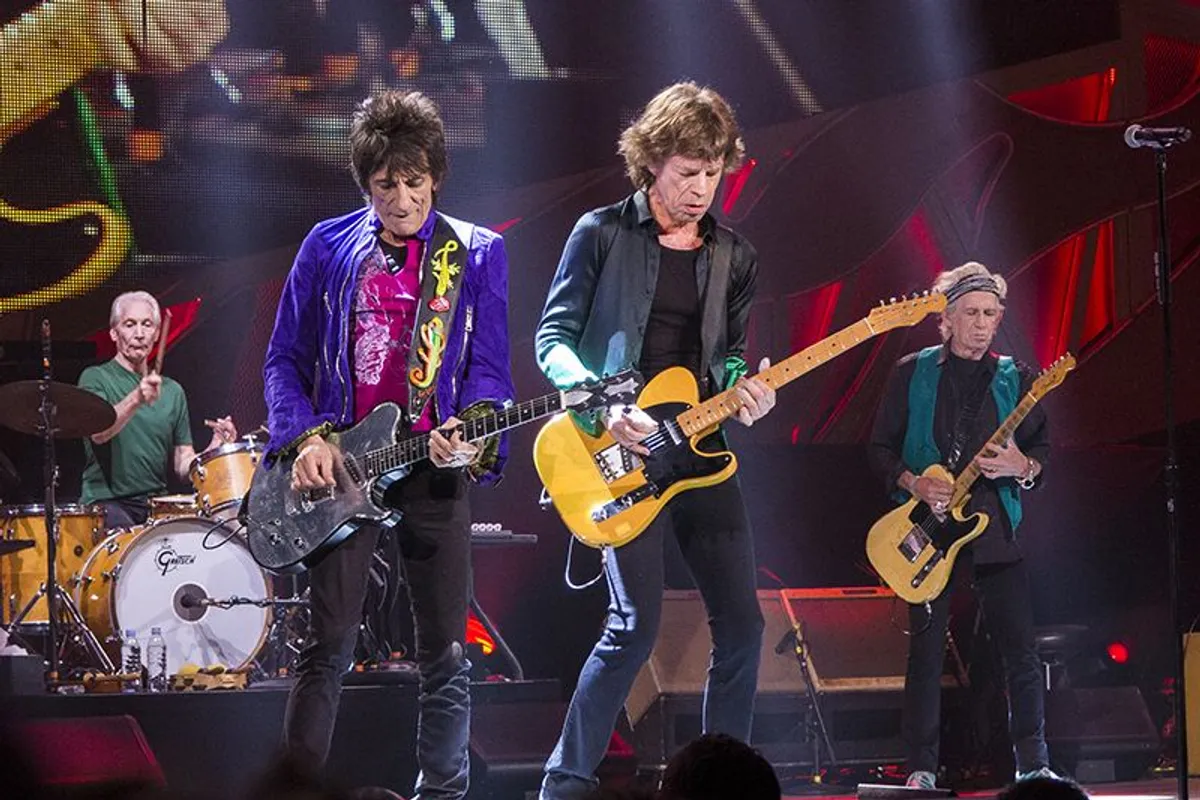
The Trešnjevka Neighborhood Museum, a virtual project by the BLOK association, has enriched its collection with new stories that shed light on the rich musical history of this Zagreb quarter. From the legendary Rolling Stones concert at Dom sportova in 1976, through the creation of the first modular synthesizer in the former state, to traces of the alternative scene from the 1990s, the new content takes visitors through several decades of Trešnjevka's musical life.
One of the central stories comes from Trešnjevka resident Marija Mađerčić Skuliber, who recalled the Rolling Stones concert held in 1976. Her preserved diary entries and photographs reveal how preparations for the event unfolded, how young people back then acquired records and clothing, and what it was like to attend one of the biggest musical spectacles of that time in Zagreb.
The collection also includes photographs from the concert of Greek musician Demis Roussos, former lead singer of Aphrodite's Child, who performed at Dom sportova a year earlier, in 1975. Moments from that performance were captured by photographer Andor Janči. Dom sportova itself, designed by architect Vladimir Turina, opened in 1972 and quickly became an important venue not only for sports but also for the city's cultural and musical life.
A special place in the new content is occupied by the story of Sanisint, the first modular synthesizer built in Yugoslavia. Its creator is Saniboj Žugić, a keyboardist and electrical engineer, well known on the Trešnjevka alternative scene. The instrument was developed over several years in various locations, from his office at the Civil Engineering Institute of Croatia, where he was employed, through his military service in Niš, to an apartment on what was then Končareva Street.
The synthesizer contains electronic components produced in the former Yugoslav factories Tesla and Iskra. The instrument is now in the possession of musician and sound engineer Hrvoje Nikšić, and interestingly, it hasn't remained just a museum exhibit. Its sound can be heard in the music of bands like Šumovi protiv valova, Mangroove, and Šumski, and it has also been used for film scores, such as in the movie "Ne gledaj mi u pijat".
The new content also takes visitors back to Zagreb in the 1990s, offering testimonies of the alternative scene of that era. Among them are releases by bands SexA and Paruzija, as well as the story of the record and cassette shop "Iz sve snage" on Trakošćanska Street, a well-known gathering place for alternative music enthusiasts.
Part of the narrative is also connected to the former button factory in Zagreb, located on Savska Road, which many called Dugmetara. After production ceased in the late 1990s, its spaces found new purpose and became a place where numerous alternative bands, including Analena and Antenat, held rehearsals. Very few items from that period have been preserved, but among them are buttons collected by Ana Franjić from the band Analena. It is precisely such seemingly ordinary objects that now bear witness to a part of the history of Zagreb's alternative music scene.
The Trešnjevka Neighborhood Museum is conceived as a place that preserves and presents the history of everyday life in this quarter, with the key role in building the collection played by the residents themselves, who contribute old photographs, documents, personal writings, and various objects.