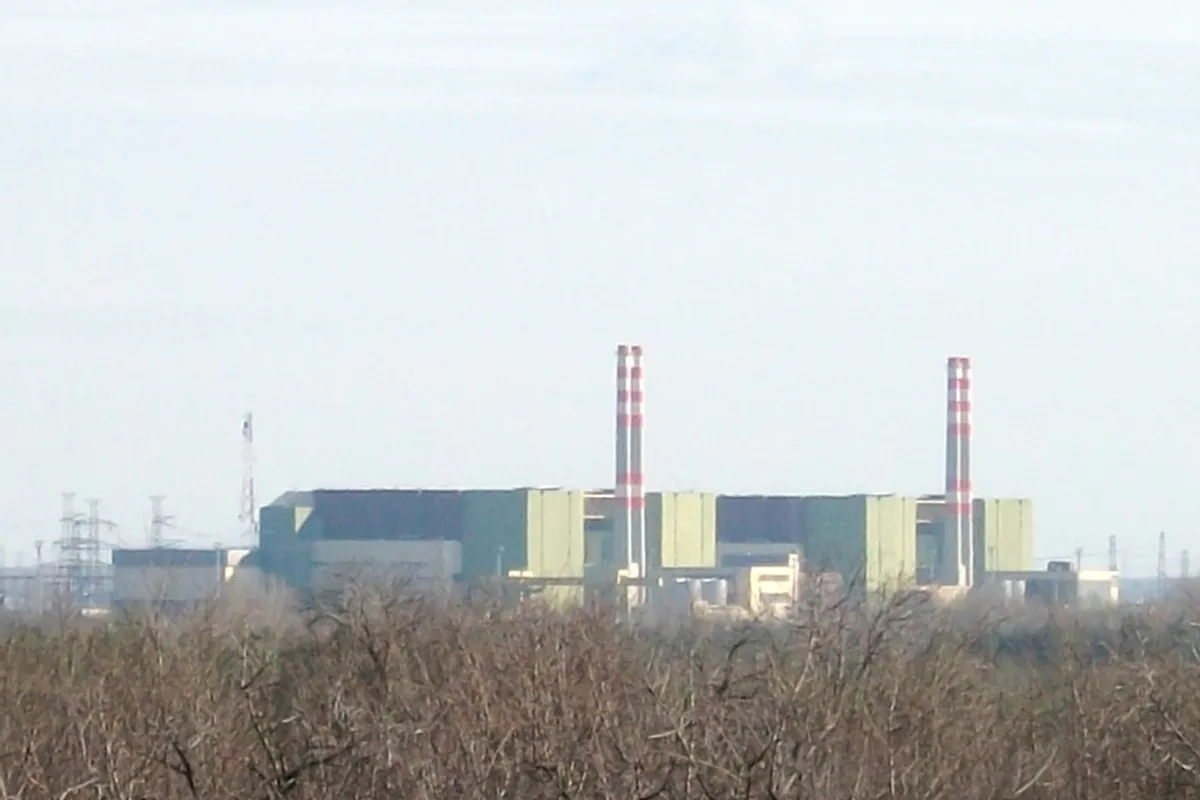
Hungary's Paks nuclear power plant, located about 90 kilometers south of Budapest and not far from Osijek, has been completely shut down due to record-low water levels on the Danube. This is the first time in history that the entire plant has been taken offline, and Prime Minister Péter Magyar has warned that it could remain off the grid for several weeks as the river's level is expected to continue falling, reports Osijek Express.
The Soviet-designed plant uses water from the Danube to cool its four reactors. Due to prolonged drought and a heatwave, the river's temperature limit has been exceeded, and the pumps can no longer draw sufficient water. According to data cited by SCMP, the plant was operating at less than half capacity before the shutdown, producing 965 megawatts instead of the usual 2,000 megawatts.
First Time in History Without Power from Paks
Sources differ on the exact number of years the plant has operated without a full shutdown. Osijek Express cites 42 years, while SCMP mentions 44 years of service. In any case, this is a historic event for Hungary's energy system. The plant was not completely shut down even during the two minor incidents it experienced in the past.
Prime Minister Magyar emphasized at a press conference on Friday, July 31, 2026, that the shutdown is being carried out according to plan and safety protocols and poses no danger to the public or the environment. He was joined by Laszlo Nagy, deputy executive director of the plant. The facility is expected to be fully disconnected by Tuesday or Wednesday.
Appeal to Citizens and Businesses
Starting next week, Hungary will be without 2,000 megawatts of generating capacity, and consumption is rising due to the heatwave. The government has called on citizens and businesses to voluntarily reduce electricity consumption during peak hours from 5 PM to 10 PM. The shortfall will be covered by imports, which is challenging at a time when the entire region is under energy pressure.
Budapest Airport has also joined the national conservation efforts. Over the next ten days, it will voluntarily reduce consumption, especially between 5 PM and 10 PM. Passengers at Terminal 2 may experience slightly higher temperatures as air conditioning will operate at reduced capacity, reports Daily News Hungary.
Government Pivots: Wind, Batteries, and Grid Modernization
Amid the crisis, Prime Minister Magyar announced one of Hungary's largest renewable energy investment programs in recent decades. The plan includes building 4 gigawatts of new wind capacity by 2030, roughly double the installed capacity of the Paks nuclear plant. The projects will be financed through private investment, and a public consultation on locations will begin soon.
In addition to wind farms, the government plans to build 3 gigawatts of energy storage capacity by 2030 and modernize the national power grid. Funding has already been secured: 868 billion forints through an ongoing energy development program, as well as 1.5 billion euros from the European Union's Recovery and Resilience Facility.
"We must ensure that Hungary's energy supply becomes as independent as possible from both Russian energy and the water level of the Danube," said Prime Minister Magyar, as reported by Daily News Hungary.
Commenting on the situation, the Hungarian government said, "not great, not terrible," alluding to the famous line from the Chernobyl series, writes Osijek Express. However, it is clear that this is a serious blow to the country's energy stability and an additional impetus for an accelerated transition to renewable sources.