Celestial Spectacle: Croatia to Witness Partial Solar Eclipse Next Week
Western parts of the country will have the best view of the phenomenon, with the Moon covering up to 82% of the Sun's disk in Pula.
Western parts of the country will have the best view of the phenomenon, with the Moon covering up to 82% of the Sun's disk in Pula.
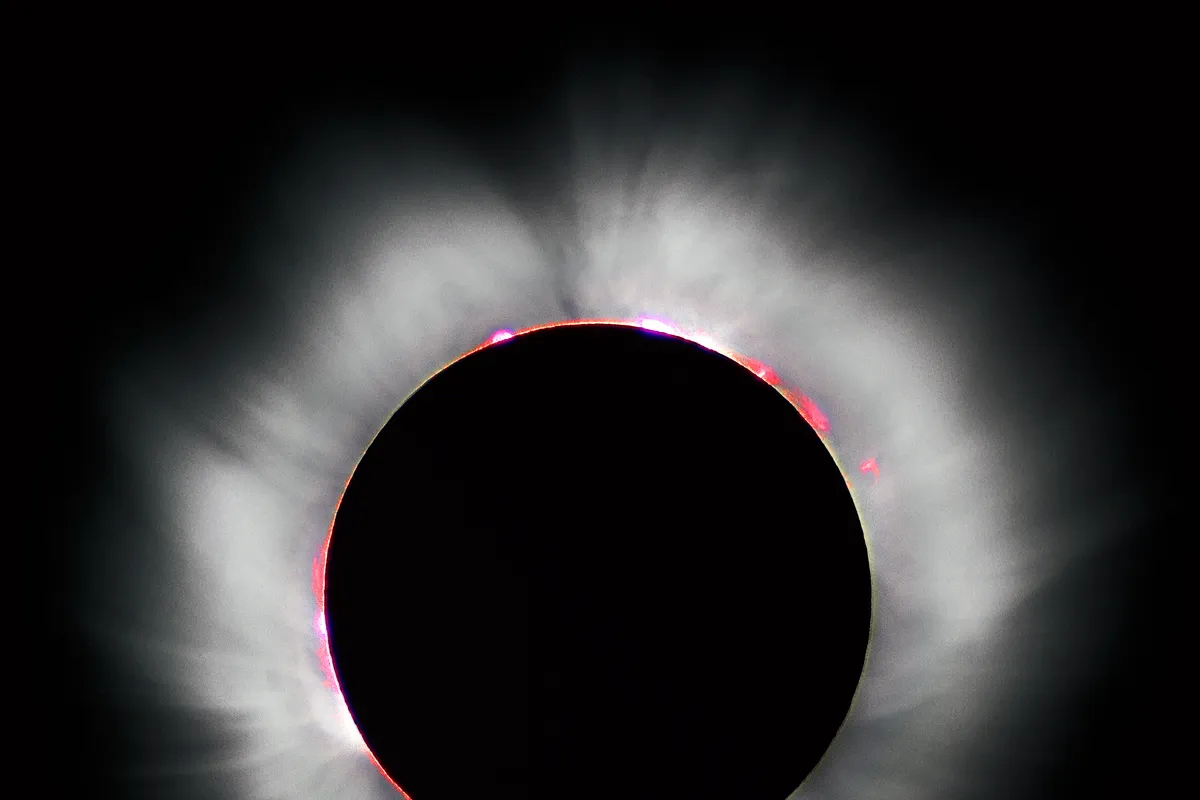
On the evening of Wednesday, August 12, 2026, Croatia is set to witness a true celestial spectacle. A partial solar eclipse will be visible across the country, with the Sun setting below the horizon while being obscured by the Moon, taking on a crescent shape. This rare sight promises particularly striking imagery for astronomy and photography enthusiasts alike.
The first contact between the Moon's disk and the Sun will occur between 7:25 PM and 7:29 PM, depending on the observer's location. The eclipse will conclude for Croatia with sunset, with western parts of the country being in a more favorable position for observation. In Osijek, the Sun sets at 7:57 PM with 48% coverage; in Zagreb at 8:09 PM with 71% coverage; while in Pula, where the Sun sets at 8:15 PM, the Moon will cover as much as 82% of the Sun's disk.
Although a total eclipse will only be visible along a narrow path crossing Greenland, western Iceland, parts of Spain, and the Mediterranean Sea, Croatia lies within the Moon's penumbral zone. This means the Moon will obscure over three-quarters of the visible solar disk, creating an impressive sight of a "shaded" Sun on the horizon.
For successful observation and photography, it is crucial to find a location with an unobstructed view toward the western and northwestern horizon, away from urban centers and obstacles such as buildings or trees. The best spots include the coast of northwestern Istria and the summit of Mount Učka, where the Sun sets later and the elevation provides an additional advantage. Seaside locations, larger lakes, wide open fields, or mountain peaks with an unobstructed view to the west are also ideal. Of course, clear skies are essential for the perfect experience.
Under no circumstances should you observe a partial solar eclipse with the naked eye or through optical instruments without specialized protection. For safe viewing, you must use glasses with certified solar filters or solar filters suitable for cameras and telescopes. Improvised solutions, such as welding glass or photographic film, should be avoided due to the serious risk of permanent eye damage. Only occasionally, under conditions of dense haze, thin cloud cover, or atmospheric dust, will the Sun at the very moment of sunset be sufficiently dimmed for safe viewing without protection.
Photographing the eclipse presents unique challenges. In addition to careful planning and location selection, specialized equipment is required, with a solar filter being indispensable. A zoom lens and tripod are also useful. Never look directly at the Sun, especially through a telescope, binoculars, or a camera's optical viewfinder without appropriate protection. Photographer Božan Štambuk has prepared a practical guide to photographing the eclipse, offering detailed advice for all interested parties.