Leaked Details of a Possible US-Iran Deal
The Strait of Hormuz is a key point in the negotiations, and Iranian President Pezeshkian revealed that the late Supreme Leader Khamenei gave the green light for an agreement with Washington.
The Strait of Hormuz is a key point in the negotiations, and Iranian President Pezeshkian revealed that the late Supreme Leader Khamenei gave the green light for an agreement with Washington.
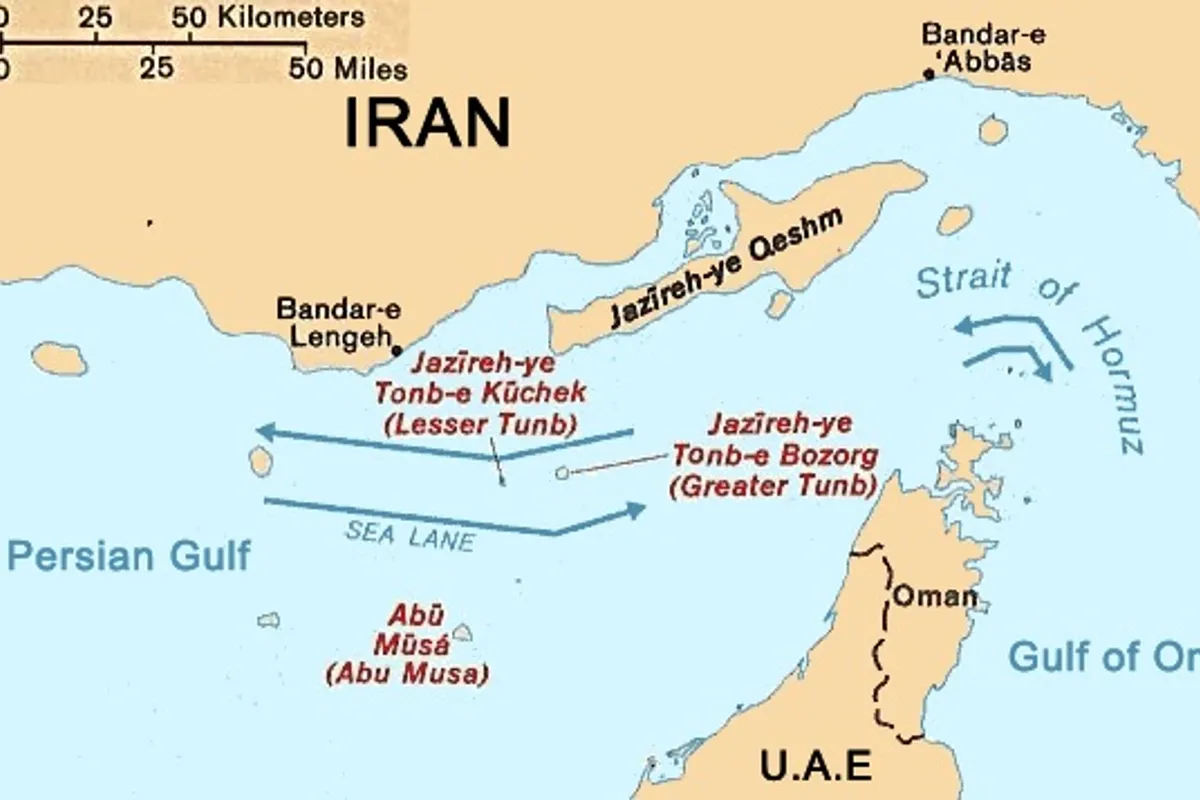
Documents and statements leaked to the public on August 6, 2026, shed new light on the dramatic diplomatic maneuvering between the United States and Iran that could reshape the Middle East. At the heart of the potential agreement, according to information obtained by Reuters, is the Strait of Hormuz, a crucial global maritime route for the transport of oil and liquefied natural gas.
Meanwhile, Iranian President Masoud Pezeshkian, in an extensive interview with state television IRIB on the second anniversary of his term, revealed previously unknown details about how Tehran agreed to negotiations with the administration of U.S. President Donald Trump.
Pezeshkian described the decision-making process behind accepting the June memorandum, a provisional agreement between the U.S. and Iran brokered by Pakistan. The memorandum aimed to end military operations, reopen the Strait of Hormuz, ease U.S. naval restrictions, and pave the way for 60 days of negotiations on Iran's nuclear program and the lifting of sanctions.
According to Pezeshkian, the then Supreme Leader Ali Khamenei initially had reservations but told council members he would accept the proposal if it received support from at least three-quarters of the council's members. "He accepted the experts' opinion and made his decision based on their assessment," Pezeshkian said. In the end, the proposal received support from 12 of the 13 council members, after which the Supreme Leader approved it.
"He accepted the experts' opinion and made his decision based on their assessment," Pezeshkian said.
However, the memorandum later fell apart after disputes over control of the Strait of Hormuz reignited tensions, with both sides accusing each other of violating the agreement.
Iran's president also reflected on one of the most difficult moments of his tenure-the death of former Supreme Leader Ali Khamenei in an attack on the Supreme Leader's compound on February 28, 2026. "We lost a great asset and a source of support," Pezeshkian said, recalling that the late leader "stood behind the government like a mountain."
He also described the moment of the attack, saying officials were in a meeting when the compound was struck. "They thought that, after running out of other options, killing the Supreme Leader would bring down the state. However, the country continued to function, and our new leader was elected," Pezeshkian told IRIB.
The new Supreme Leader, Mojtaba Khamenei, took office in March 2026, but has since largely avoided public appearances. Pezeshkian admitted that communication with the new leader has become "very difficult" compared to his predecessor. U.S. President Donald Trump has repeatedly claimed that the Iranian leader was wounded in the attack and has publicly questioned whether he is even alive, which Tehran has not confirmed. Despite this, Pezeshkian described Mojtaba Khamenei as "exceptional," a patient and rational man open to sincere discussions behind closed doors.
Pezeshkian emphasized that his administration has faced a series of crises since taking office, including the twelve-day war in June 2025, the tightening of international sanctions led by the U.S., and nationwide protests that began in January 2026. Despite everything, he asserted that the government, armed forces, and citizens have managed to keep the country functioning.
Although there is no direct connection to Croatia, a potential deal between Washington and Tehran would have far-reaching consequences for global energy security and the stability of the Middle East, which indirectly affects European countries, including Croatia.