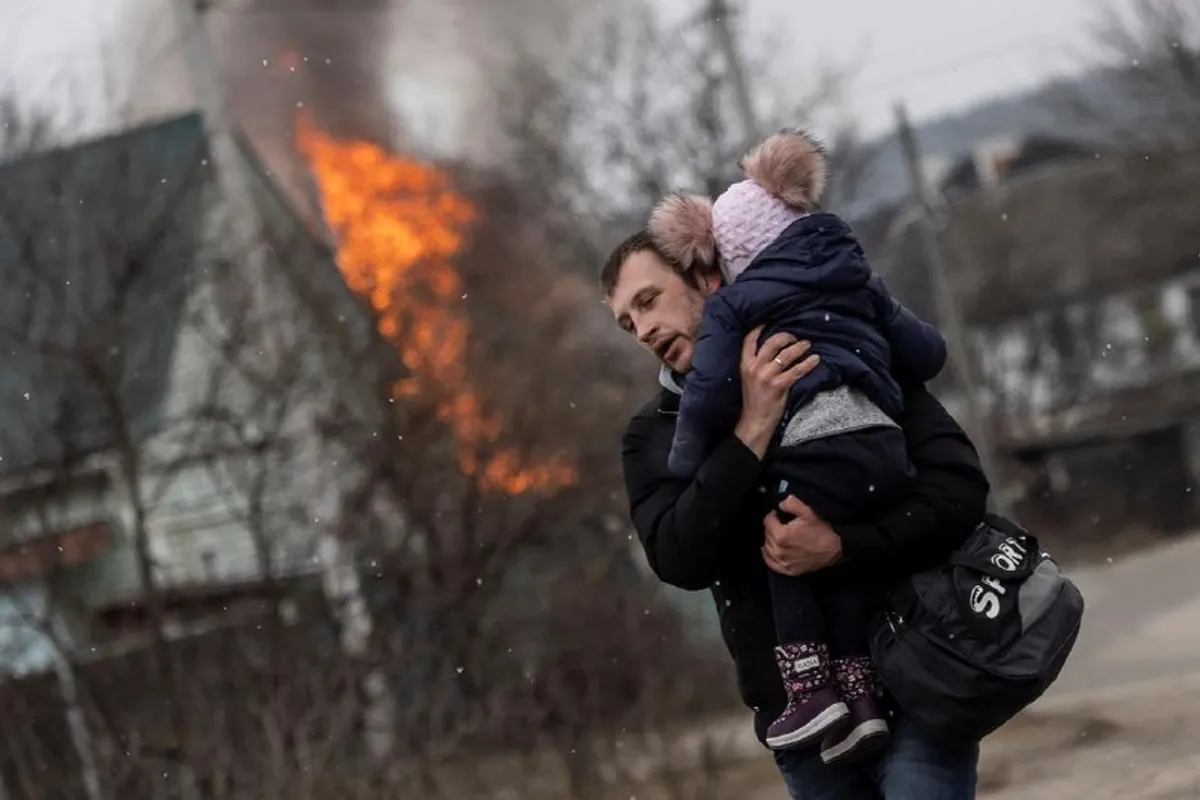
Moscow has developed a vast bureaucratic and physical infrastructure for the forced relocation and assimilation of Ukrainian children. Using deportation networks and state-run re-education camps, Russia is systematically attempting to erase their national identity. In response, the U.S. State Department launched a $25 million initiative in March 2026 to identify, repatriate, and rehabilitate minors located in areas under Russian control.
The funding aims to counter the actions of Russian authorities, who are actively changing the citizenship, names, and legal status of displaced youth, while the window of opportunity for action is rapidly closing.
Demographic Engineering
Official Ukrainian data documents more than 20,000 potential cases of forced child deportations. However, estimates from the Yale Humanitarian Research Lab suggest the actual figure is closer to 35,000. These relocations separate minors from their familiar environments, placing them in Russian institutions, adoptive families, or specialized camps intended for ideological and military training.
Within these facilities, Russian officials often tell children that their families and the Ukrainian state have permanently abandoned them. Physical displacement is further compounded by linguistic and bureaucratic reforms that completely eliminate Ukrainian-language education. An independent investigation in March 2026 classified these systematic deportations and forced disappearances as explicit "crimes against humanity."
Occupation as Assimilation
The scale of the crisis extends far beyond those relocated across international borders. An estimated 1.6 million Ukrainian minors currently reside in territories occupied by Russian forces since the initial annexations of Crimea and Donbas in 2014. For these children, the occupation itself functions as a mechanism of identity erasure.
Local schools strictly enforce a Russian curriculum designed to suppress Ukrainian history, while authorities mandate the acquisition of Russian passports. Moscow disguises these coercive measures with humanitarian terminology, presenting forced relocations as evacuations or routine child protection. The Kremlin uses concepts of guardianship and recreation to mask a rigid system of forced assimilation.
Militarization and Accountability
As displaced children grow older, the Russian state increasingly integrates them into mandatory military-patriotic educational programs. The ultimate goal presents service to the Russian Federation as an inevitable civic duty. International legal mechanisms struggle to penetrate the opacity of the Russian system. Although the International Criminal Court (ICC) issued arrest warrants in 2023 for President Vladimir Putin and Children's Rights Commissioner Maria Lvova-Belova, tangible repatriations largely depend on localized efforts by civil society organizations, on a case-by-case basis.
Oleksandra Matviichuk, head of the Ukrainian Center for Civil Liberties, noted that the sluggish response of the international community partly stems from a fundamental "lack of imagination." Western institutions remain structurally unprepared for a state actor that uses the forced assimilation of children as a primary weapon of war.