US Imposes Sanctions on Russian Military Entities and Companies
Meanwhile, the Wall Street Journal reveals secret US military exercises with Taiwanese forces, a rare public acknowledgment of close cooperation.
Meanwhile, the Wall Street Journal reveals secret US military exercises with Taiwanese forces, a rare public acknowledgment of close cooperation.
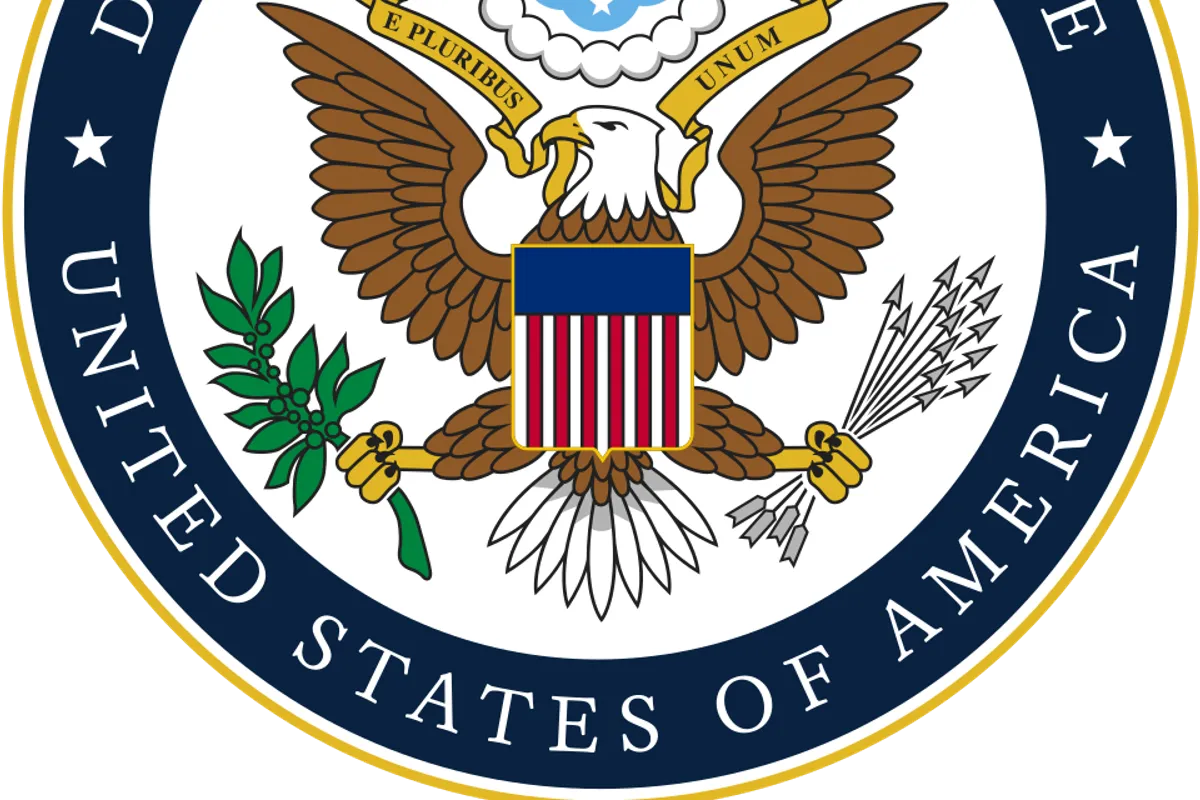
The United States imposed sanctions on Monday, August 4, 2026, against several entities of the Russian Ministry of Defense, two Russian companies, and five Russian nationals. The measures were announced in a State Department notice and took effect on July 24, 2026.
The sanctioned list includes the Main Missile and Artillery Directorate of the Russian Ministry of Defense, the Directorate for Advanced Interdisciplinary Research and Special Projects, the 1061st Center for Material and Technical Support, and the Russian Ground Forces. The sanctions also apply to all their legal successors, branches, or subdivisions.
In addition to military structures, the list includes Russian companies Gedion Alpha Company and International Invest Company. Among the sanctioned individuals are Russian nationals Alexander Prikhodko, Andrei Gusev, Andrei Kosolapov, Vladislav Morozik, and Sergei Tsibarev.
According to the State Department notice, the individuals and entities were involved in activities that justify sanctions under US legislation on the non-proliferation of weapons of mass destruction, which includes links to Iran, North Korea, and Syria. The sanctions will remain in effect for two years, unless the State Department lifts them earlier.
As part of the measures, US government agencies are prohibited from purchasing goods or services from sanctioned entities, providing any assistance, or selling weapons.
The announcement of sanctions comes after the US Senate voted on July 28, 2026, to advance a bipartisan sanctions bill on Russia, championed by the late Senator Lindsey Graham. The latest version of that legislation, released on July 14, 2026, shortly after Graham's death, aims to reduce Russian energy revenues by imposing tariffs and other measures against countries that continue to purchase Russian oil and gas. At the request of President Donald Trump, the revised bill also includes sanctions targeting Iran, a Russian ally. The law is not yet in effect and must be approved by both the Senate and the House of Representatives.
In a separate but geopolitically significant development, The Wall Street Journal reported that the US military secretly conducts military exercises with Taiwanese forces. The head of Taiwan's military department, Koo Li-hsiung (also known as Wellington Koo), gave a rare public statement to the newspaper. "Through military exchanges, we have learned so much practical combat experience from the US," Koo said, adding that Taipei's cooperation with Washington is "much closer than you can imagine."
According to the Wall Street Journal, Koo's statement represents a rare acknowledgment of the US's unauthorized role in strengthening Taiwan's military, which is a sensitive issue in relations with China, which considers Taiwan its territory.