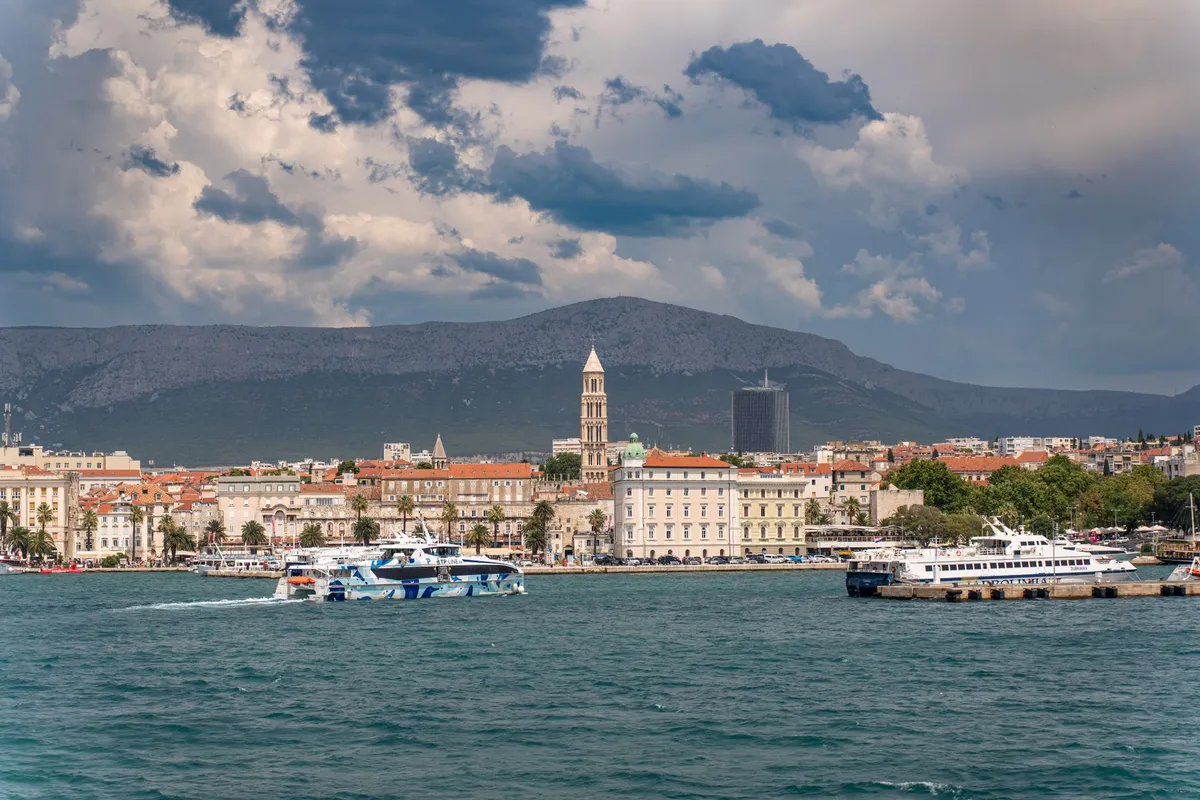
Walking down Split's Marmontova Street has become a true journey through history this week. Along the entire promenade, a bilingual exhibition has been set up, featuring 15 informative panels with representative photographs and detailed descriptions of one of the most significant military operations in Croatian history. The exhibition was installed by the Homeland War Museum in Split and is drawing the attention of both local residents and foreign tourists.
From the Dawn of August 4th to Final Victory
The display reminds us that the military-police operation "Storm" was launched at dawn on August 4, 1995. General Zvonimir Červenko, who headed the General Staff of the Croatian Army, ordered the breakthrough, and the offensive then began from 31 directions along a front roughly 670 kilometers long. The goal was clear: to liberate the occupied territories in Dalmatia, Lika, Kordun, and Banovina.
The very next day, on August 5, 1995, the Croatian flag proudly flew over Knin Fortress. By August 6, Kordun, Banovina, Plitvice, and northern Dalmatia had been liberated, and a day later, on August 7, the Karlovac area and the remaining occupied parts of Lika and Sisak-Moslavina County were also freed. The operation concluded on August 8, 1995, with the liberation of the area from Lička Kaldrma to the Una railway station and the unconditional surrender of the 21st Corps of the Serbian Army of Krajina.
Numbers That Bear Witness to the Sacrifice
The panels also provide detailed data on the forces involved in the operation. "Storm" involved 116,900 members of the Croatian Army, 14,500 members of the Ministry of the Interior, and 7,400 members of the Croatian Defence Council. The price of freedom was high: 196 Croatian defenders were killed, three were captured, and 15 are still listed as missing. The number of defenders who sustained injuries, whether minor or severe, was 1,100. On the opposing side, 560 members of the Serbian Army of Krajina were killed.
Operation "Storm" marked the end of the para-state Republic of Serbian Krajina and created the conditions for the peaceful reintegration of Croatian Podunavlje, which was completed on January 15, 1998. In memory of this decisive victory and the sacrifice of Croatian defenders, August 5 is celebrated as Victory and Homeland Thanksgiving Day and the Day of Croatian Defenders.
The exhibition was realized under the patronage of the Split-Dalmatia County and the City of Split, and as noted by the photojournalist team of DalmacijaDanas, the display has become a must-see spot for anyone passing through the city center these days.