Swedish Court: Russian Ship Caffa with Stolen Grain Goes to Ukraine
Sweden's Supreme Court has upheld the historic decision to seize and transfer a Russian 'shadow fleet' vessel, setting a precedent in the fight for accountability.
Sweden's Supreme Court has upheld the historic decision to seize and transfer a Russian 'shadow fleet' vessel, setting a precedent in the fight for accountability.
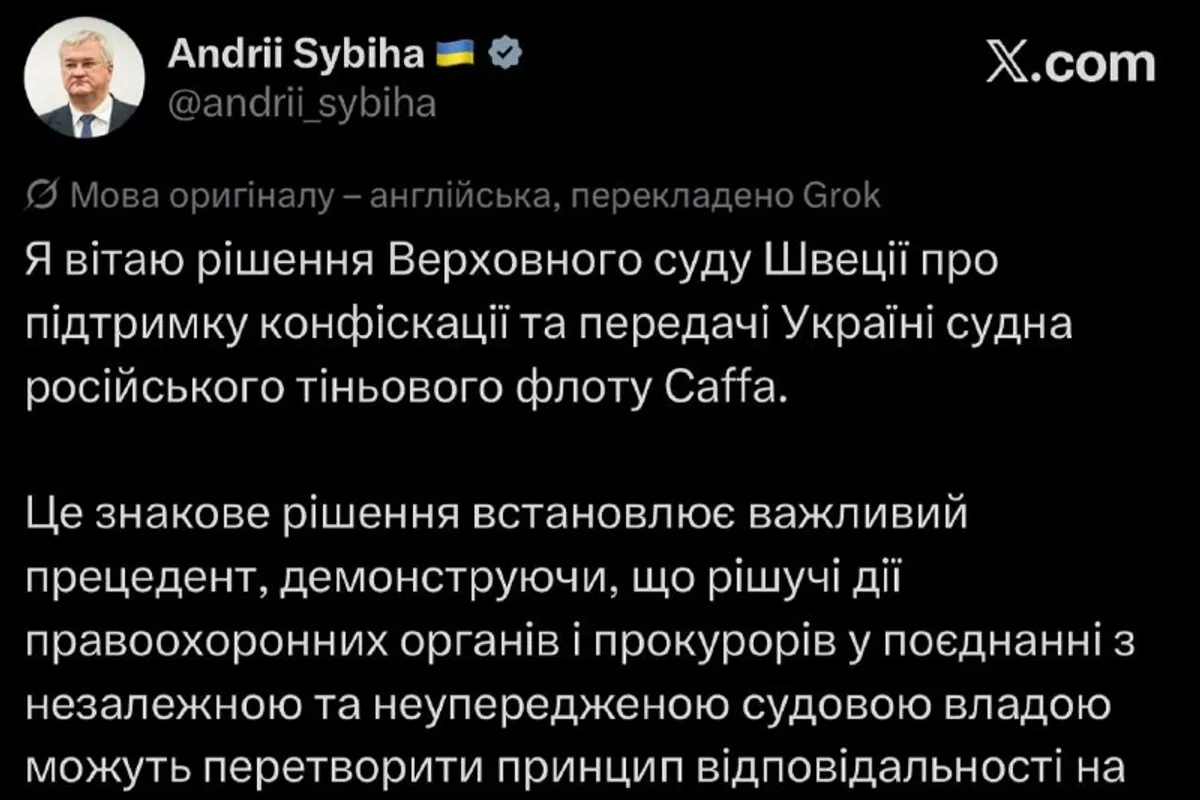
Sweden's Supreme Court on Tuesday, August 5, 2026, upheld the decision to seize and transfer the cargo ship Caffa to Ukraine. The vessel, part of Russia's so-called 'shadow fleet,' is accused of transporting grain stolen from occupied Ukrainian territories. This marks the first time a foreign court has ordered the handover of a Russian ship linked to the theft of Ukrainian grain.
Ukrainian Prime Minister Andriy Sybiha (transliterated from Ukrainian: Андрій Сибіга) welcomed the ruling on social media platform X, calling it a "landmark decision." "This landmark ruling sets an important precedent, showing that decisive action by police and prosecutors, combined with an independent and impartial judiciary, can turn the principle of accountability into tangible results," Sybiha wrote.
Ukraine's Ministry of Foreign Affairs also hailed the ruling as a significant precedent for accountability, according to a report by NOELREPORTS UA.
The Caffa was first intercepted by Swedish police and coast guard in March 2026 in the Baltic Sea. It was sailing under the flag of Guinea, but the coast guard declared it a "stateless vessel" and found it to be in violation of safety and seaworthiness standards. At the time of interception, the Caffa was already on Ukraine's sanctions list.
Swedish authorities officially detained the ship on March 6, 2026. At Ukraine's request, Sweden launched an investigation and ordered the seizure of the vessel. In June 2026, a Swedish court ruled that the seizure was lawful and that the vessel could be handed over to Kyiv as part of the investigation into Russian war crimes, marking the first such decision for Sweden. This ruling has now been finally upheld by the Supreme Court.
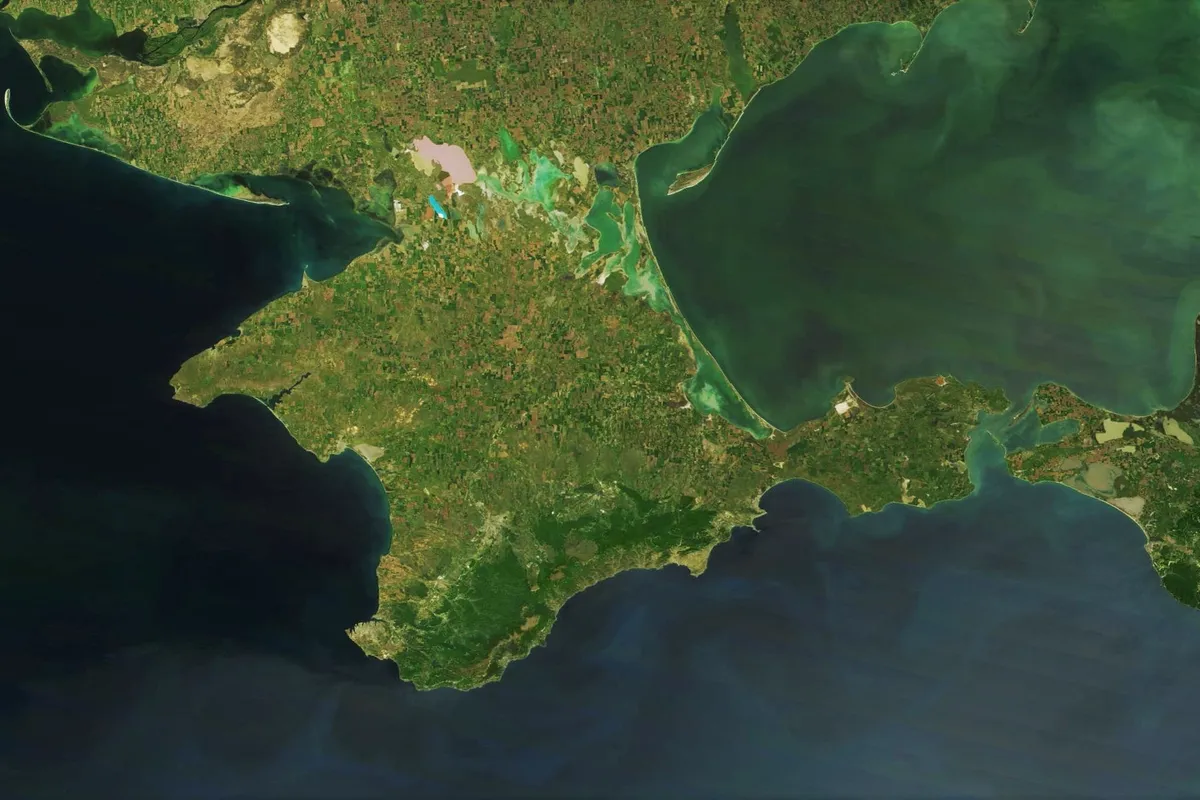
The head of the sanctions office in Kyiv, Vladyslav Vlasiuk, stated that the Caffa had previously been involved in the theft of grain from occupied Ukrainian territories. According to his claims, the ship transported a shipment of stolen grain in July 2025 from the port of Sevastopol in Crimea, which Russia annexed in 2014.
Kyiv asserts that Russia systematically seizes grain from occupied regions of Ukraine and exports it through networks linked to the occupation authorities. Such operations, according to Ukraine, violate international norms and the domestic laws of countries receiving such cargo.
To evade sanctions and continue funding the war, Russia maintains a "shadow fleet"-a network of aging, often uninsured tankers sailing under the flags of third countries. In recent months, Ukraine and its international partners have intensified pressure on this fleet.
The European Union, in its 21st sanctions package, included a provision allowing member states to sell crude oil, grain, and other goods seized from such vessels. Joint EU forces have intercepted several shadow fleet tankers in the Mediterranean Sea, and countries like France, Belgium, and the United Kingdom have boarded suspicious vessels entering their territorial waters.