Taiwan Launches Largest Military Exercises
The 'Han Kuang' exercises run until August 14, with a key focus on decentralizing command and preparing the entire society for a potential invasion.
The 'Han Kuang' exercises run until August 14, with a key focus on decentralizing command and preparing the entire society for a potential invasion.
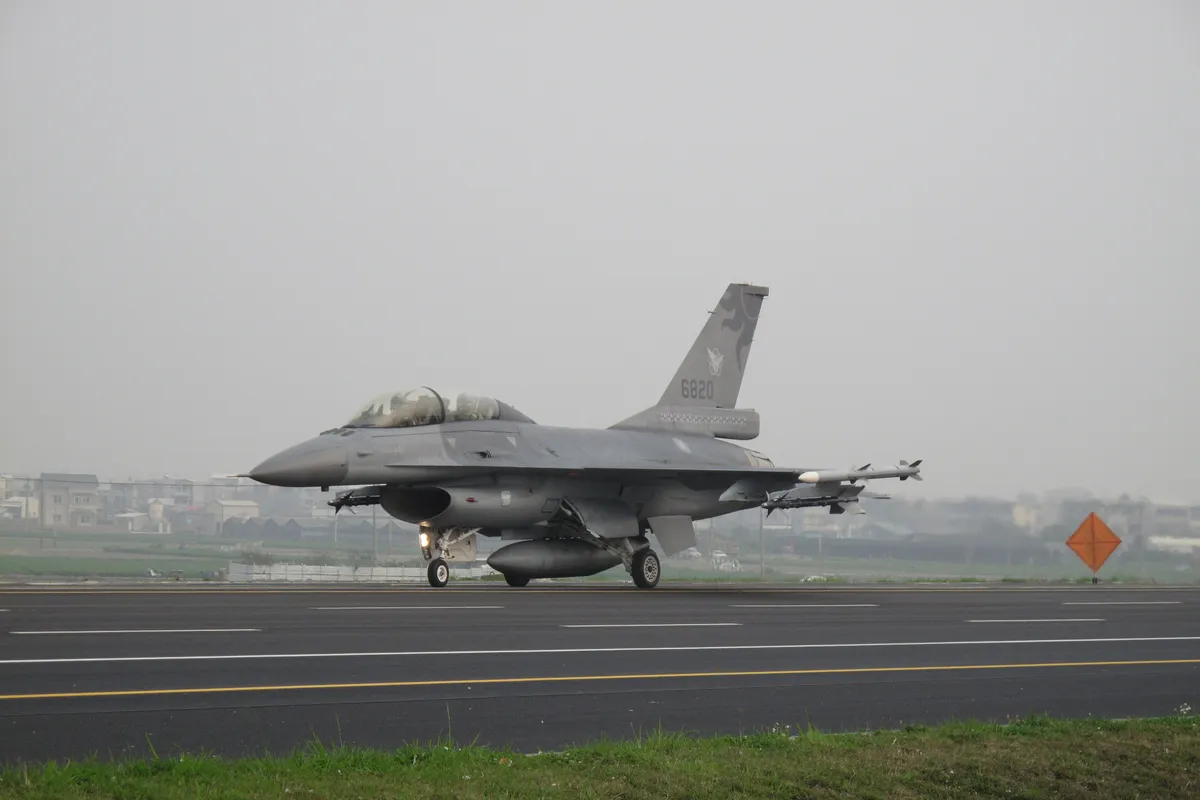
Taiwan began its largest annual military exercises, named "Han Kuang," on Wednesday amid growing military pressure from China, which considers the island part of its territory. The exercises, which will run until August 14, 2026, simulate realistic combat scenarios aimed at preparing soldiers, reservists, and civilians to respond to a potential attack.
The key focus of this year's exercises is the decentralization of command and control, which would allow field commanders to make operational decisions without waiting for orders from headquarters. Another important element is drone "kill chain" operations, which involve the coordinated use of reconnaissance and attack drones with other strike assets. In recent years, Taiwan has increased defense spending and acquired smaller, more mobile weapons, including drones, to counter China's numerically superior military.
This year, special emphasis is placed on preparing the civilian population. During air raid drills in central and northern regions, mobile internet speeds will be deliberately slowed for 30 minutes to expose citizens to a simulated communications blackout. Urban resilience exercises will also be held simultaneously. On Wednesday, dozens of reservists deployed along a beach in the Taiwan Strait and fired Taiwanese assault rifles at targets on the shore where Chinese forces could land during an invasion. Naval and coast guard vessels will simulate escorting supply convoys in waters east of the island, rehearsing a scenario of a Chinese naval blockade. Defense officials also announced testing the capacity of mobilized factories for wartime production and practicing the "wartime relocation" of military and civilian facilities.
Under strong pressure from the United States to spend more on security, President Lai Ching-te's government has pledged to increase defense spending to 5 percent of GDP by 2030. However, his ruling Democratic Progressive Party is at odds with opposition parties, the KMT and the Taiwan People's Party, which control parliament. In May, they passed a special defense budget of $25 billion, a third less than the amount requested by the government. The opposition cut about $15 billion earmarked for domestic drone procurement and other defense enhancement measures, and lawmakers are now considering competing proposals for multi-billion-dollar investments in unmanned aerial vehicles.
Ahead of the exercises, President Lai Ching-te did not mince words in criticizing Beijing at a security forum on Tuesday. "As the authoritarianism of the Chinese Communist Party continues to expand, so too does the red terror spread to the four corners of the world," Lai said. He added that Taiwan will continue to strengthen national defense and build resilience that involves the entire society. China, which considers Taiwan its province and threatens the use of force, daily deploys fighter jets and warships around the island and has intensified gray-zone activities through its coast guard, which are below the threshold of war.
Defense Minister Wellington Koo said on Wednesday that training can always be improved and that the military will continue to train diligently and intensively "so that we are fully prepared in peacetime and can carry out our missions in wartime." A senior defense official, who wished to remain anonymous, stressed that exercises must be closer to real combat scenarios so that units can test their actual operational capabilities, even without wartime experience.