UNICEF: One Child Killed Every Day in Gaza
At least 300 children have lost their lives and more than 58,000 have lost one or both parents since October 2025, warns the UN Children's Fund.
At least 300 children have lost their lives and more than 58,000 have lost one or both parents since October 2025, warns the UN Children's Fund.
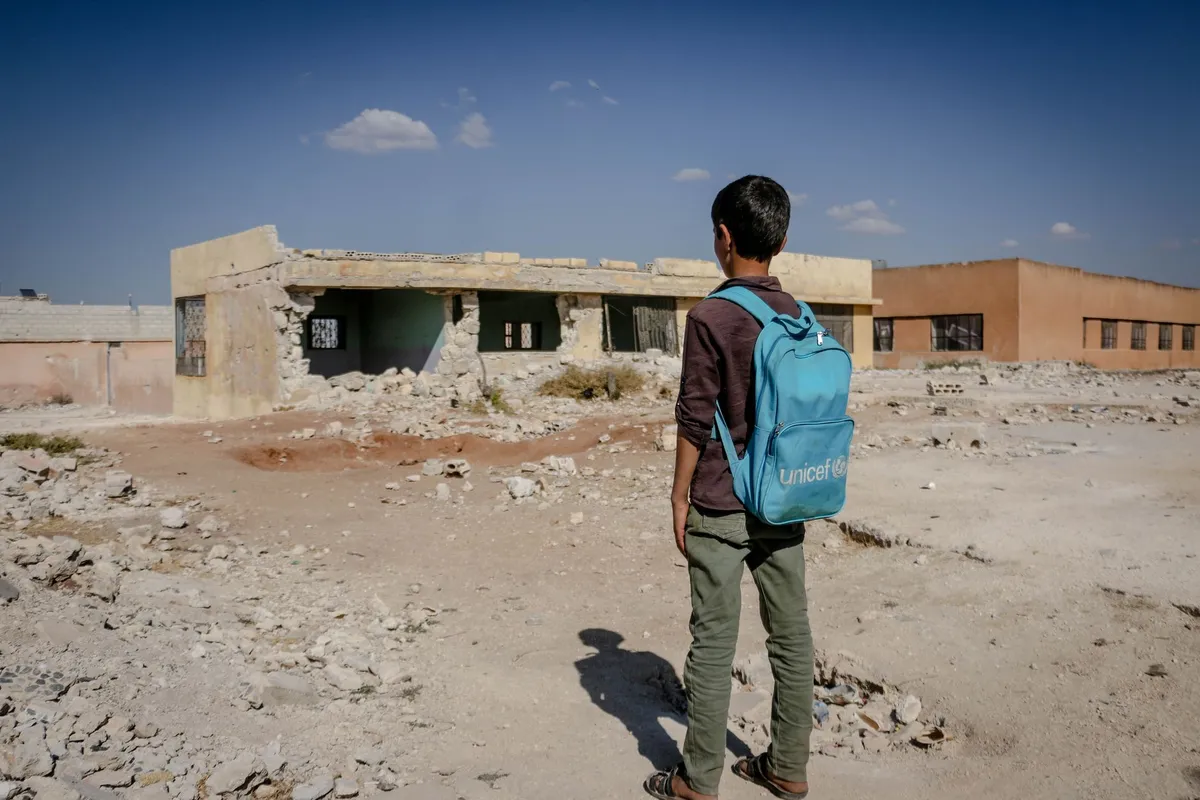
At least 300 children have been killed in Gaza in the roughly 300 days since a ceasefire between Israel and Hamas was declared on October 10, 2025, UNICEF reported on Thursday. This means that, on average, a child has lost their life every day, despite the agreement to halt hostilities.
"A ceasefire that leaves an average of one child dead every day fails to protect children," said Edouard Beigbeder, UNICEF's Regional Director for the Middle East and North Africa. "The children of Gaza are still waiting for the end of the violence they were promised."
The figures released by UNICEF paint a grim picture: more than 58,000 children have lost one or both parents, and an estimated 17,000 children are unaccompanied or separated from their families. Over one million children are in need of protection and psychosocial support.
Since the start of the war in October 2023, more than 73,300 Palestinians have been killed, according to health authorities in Gaza. Families are now confined to roughly one-third of the enclave, sheltering among destroyed buildings, rubble, and uncollected waste.
Children continue to face acute malnutrition, disease, unsafe water, and damaged sewage systems. A shortage of incubators has forced some premature babies to share equipment. During the third summer of war, many children spend their days collecting water, waiting in lines for food, and gathering firewood instead of playing.
"Play is how children reclaim what war has taken from them," said Jonathan Crickx, UNICEF's Chief of Communications for Palestine, earlier this year, describing play as a basic need, not a luxury. Summer camps, art supplies, and even paper and pencils remain scarce in refugee camps.
In an attack on Gaza City's western area on August 2, 2026, residents pulled the remains of an unborn baby from the rubble after a pregnant woman, her husband, and their five-year-old son were killed.
Beigbeder welcomed recent announcements of steps toward ending hostilities and increasing aid, but set a clear test: "For the children of Gaza, the test is simple. Does the killing stop? Does aid arrive at scale? Do hospitals reopen and does water flow?"
This week, UNICEF delivered more than 600 pallets of school supplies and soap ahead of the start of the school year expected in two weeks. A UNICEF assessment from May 2026 showed that young children lack the safe and stimulating environment needed for early development, while school-age children face prolonged learning disruptions with little prospect of recovery without targeted assistance.