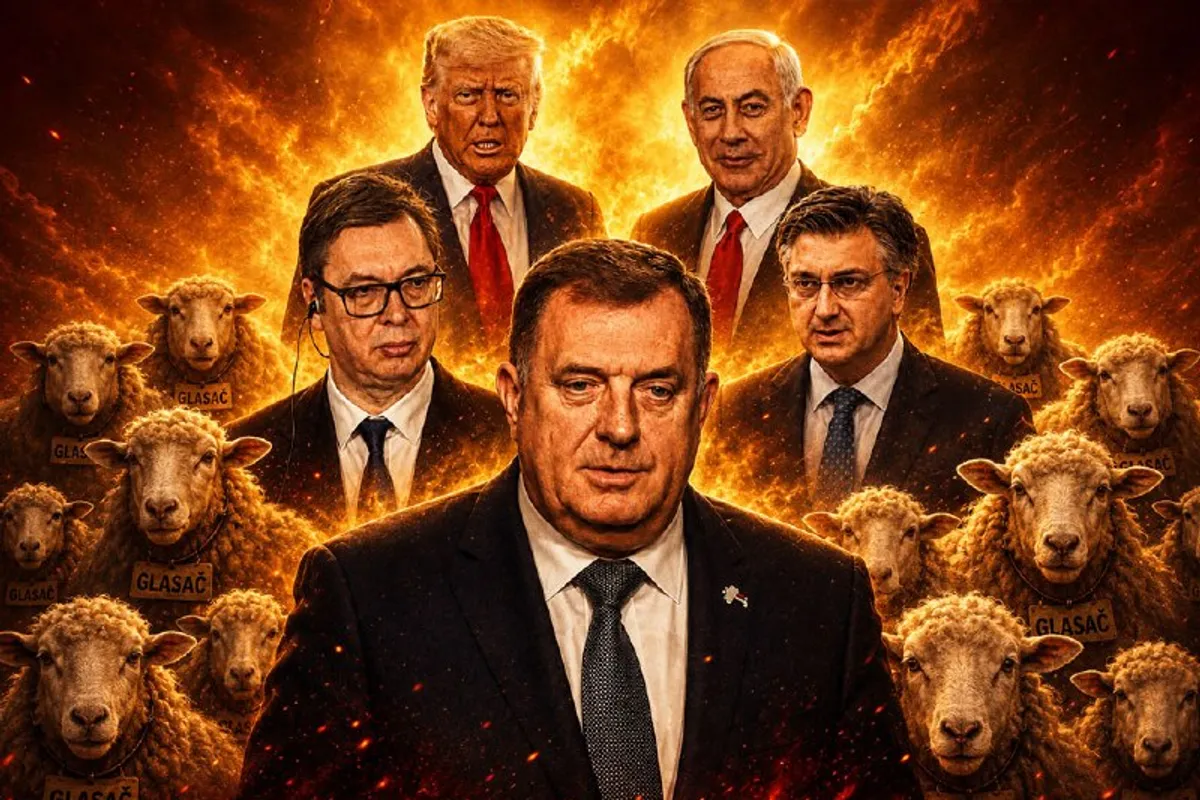
This year's anniversary of the military-police operation Storm once again produced sharp political messages, along with accusations that key regional leaders are using identical manipulative patterns. While Prime Minister Andrej Plenković celebrated the victory in Knin on August 5, 2026, highlighting investments in the military, Serbian President Aleksandar Vučić was in Mrkonjić Grad spreading a narrative of conspiracies and the ban on visiting Jasenovac. According to an analysis published on the Logično portal, they were joined by Milorad Dodik, a politician from Bosnia and Herzegovina, painting a picture of a trio that, despite seemingly opposing interests, shares the same strategy of governance.
Manipulation through Fear and National Pride
The Logično portal states in its analysis that Vučić, Plenković, and Dodik deliberately raise national tensions just before elections. The goal of such a strategy, it claims, is to force voters to cast their ballots out of fear of a return to the past, rather than focusing on pressing issues like inflation, youth emigration, or the state of the healthcare system. "This psychological manipulation has nothing to do with truth or reconciliation, but solely with a bare struggle for seats and power," the text reads.
The portal draws a parallel between Plenković's celebration of Operation Storm and the announcement of raising 200,000 veteran pensions on one hand, and Vučić's talk of lies and injustices on the other. Dodik, according to the same source, went a step further by accusing Croatia of wanting to complete the work of the Ustasha NDH. Into this equation, the politician Keleminec was also thrown in, compared to Šešelj, but characterized as "an even worse version."
Plenković's Response: Celebrating Victory and a Message of Strength
In contrast to the criticisms raised on the portal, Prime Minister Plenković said on social media platform X that Operation Storm was a "brilliant military victory, a legitimate liberation operation, and the crowning achievement of Croatia's struggle for freedom." He reminded that under the leadership of the first president, Franjo Tuđman, Croatian defenders liberated most of the occupied territory in just a few days.
"Croatia is not competing with anyone in armament. We do not threaten anyone, but we are not afraid of anyone. We will know how to respond to any threat. If we want peace, we must be able to defend it," Plenković wrote on X. He also listed key investments in the Croatian military, including Rafale, Black Hawk, Leopard, CAESAR, HIMARS, and Bayraktar, and highlighted NATO membership.
"Thirty-one years ago, Croatian defenders raised the flag over Knin and fulfilled the dream of generations who believed in a free Croatia. Today, under that same flag, we pay tribute to the greatness of their historic feat," Plenković stated.
Three Faces of the Same Coin?
The Logično portal concludes in its sharp criticism that Vučić, Plenković, and Dodik are "just three faces of the same coin used to pay for the discord among Balkan peoples." The text suggests they are haunted by "hundreds of corruption scandals," from dubious contracts to the illicit enrichment of associates, but that they successfully cover all of this with clamor about national interests. Plenković's government, it states, spent millions of euros on expensive projects, while most ministers were dismissed due to corruption.
Ultimately, the portal claims that all three work for foreign interests, buying weapons and selling off their own countries, while "Washington and Tel Aviv laugh." The ceremony in Knin, which was enhanced by a flyover of the Krila Oluje acrobatic group and CRORafale fighter jets, along with a demonstration exercise of joint capabilities by the Ministry of Defense and the Ministry of Interior, thus received its sharp political counterpoint.