150-Year-Old Flag Found in a Krk Tavern
The only known flag of the Margraviate of Istria stood for decades in a tavern in Baška, used as a carnival prop, before expert analysis and demanding restoration placed it under special protection.
The only known flag of the Margraviate of Istria stood for decades in a tavern in Baška, used as a carnival prop, before expert analysis and demanding restoration placed it under special protection.
About fifteen years ago, an object was discovered in a tavern in Baška on the island of Krk that turned out to be a unique historical artifact. It is the only known flag of the Margraviate of Istria, 150 years old, which for years served as a prop during carnival celebrations.
The tavern owner, Miljenko Vlašić, had no idea what it was. "They waved it around without knowing what it was," recalls collector Željko Skomeršić, in whose collection the flag now resides. He was the first to suspect its value and turned to experts.
The flag's identity was confirmed by Professor Željko Hajmer, president of the Croatian Heraldic and Vexillological Society. According to research, its origins date back to the second half of the 19th century, specifically to the era of the Margraviate of Istria, which was part of the Habsburg Monarchy and functioned from 1849 to 1918.
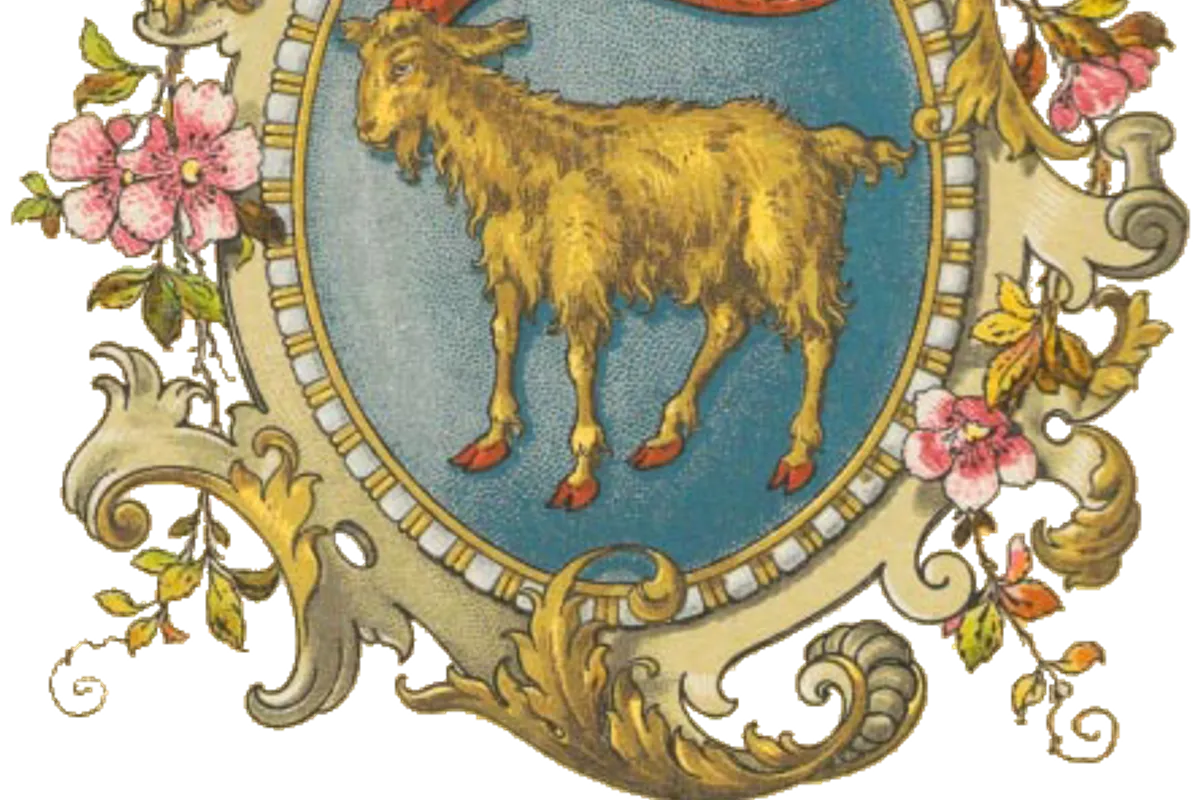
In addition to most of the Istrian peninsula, it also included the islands of Krk, Cres, and Lošinj. The flag is a horizontal tricolor of yellow, red, and blue with the coat of arms of the Margraviate of Istria in the center. "This is the only such flag in existence. There is no other known one," emphasizes Skomeršić.
How the flag ended up in Baška is unknown, but in Josip Žgaljić's book "Ships of Our Ancestors," there is an oil painting showing this very flag flying on a ship in Baška.
After its importance was recognized, the flag was presented in the professional journal "Grb i zastava" (Coat of Arms and Flag) and exhibited at several exhibitions, including those at maritime museums in Mali Lošinj and Split. However, the passage of time took its toll, so it was recently sent for conservation and restoration work in Split.
The intervention was led by professional textile restorer Bruna Periš. Since the flag was affected by woodworm, the first step was a pest removal process using freezing. On two occasions, the flag was subjected to a temperature of -20 degrees Celsius, with each cycle lasting at least 48 hours. This was followed by dry cleaning, removal of old patches and adhesive residues, and other conservation treatments.
"It was restored in Split. Today it is kept in a specially made box of acid-free cardboard to prevent damage. One day it will be exhibited again, but before that, a special frame made of acid-free materials needs to be created, which costs money," explains Skomeršić.
Today, the flag is once again part of the permanent display of the Interpretation Center of Maritime Heritage of the Island of Krk, among items that Skomeršić has been collecting, researching, and preserving for over three decades. This collection provides insight into the rich maritime heritage of the island of Krk and its inhabitants.
The diversity of the collection surprises visitors, as confirmed by Boris Brozičević from Rijeka, who visited the Center with his family. "This is an impressive collection. I am fascinated that all this can be seen in one place," says Brozičević. He was particularly impressed by fishing tools, squid bait, fish traps, and ship models. "What fascinates me even more is the fact that all these items were once used by our people, the local population," he adds.