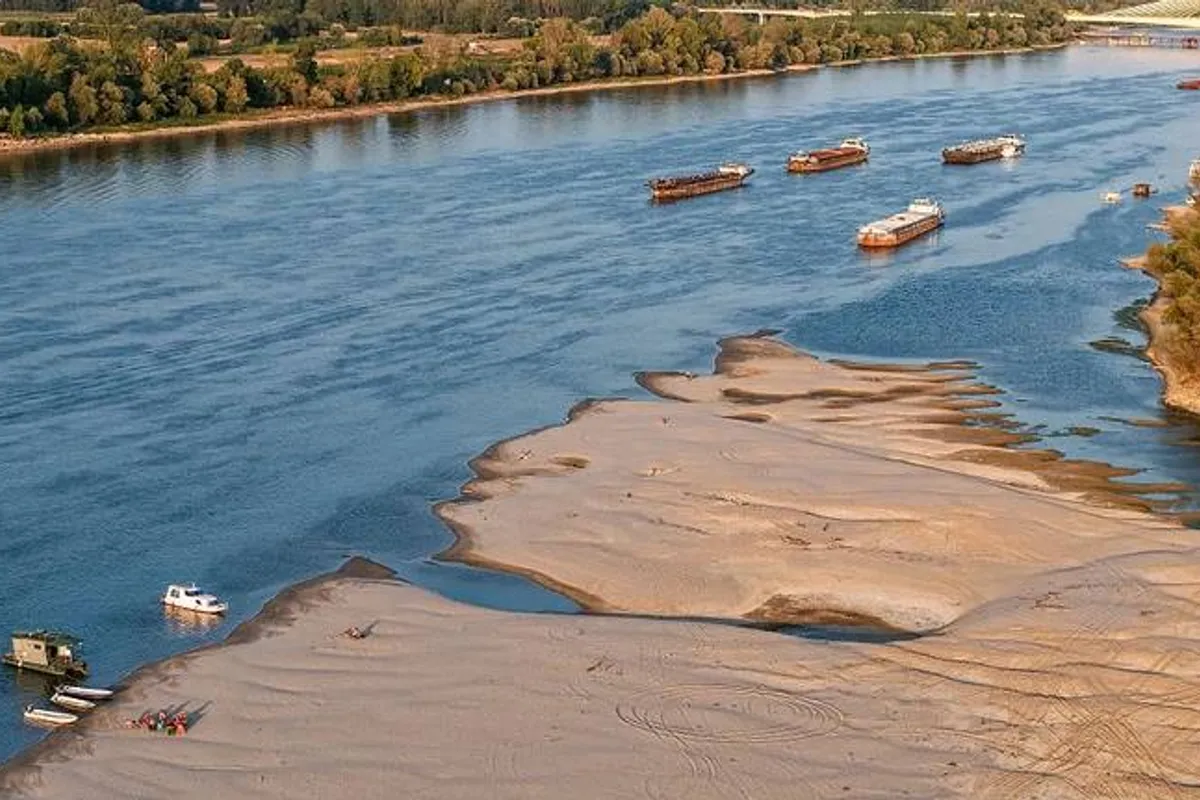
Record-low water levels in the Danube and other major European rivers are triggering a chain reaction that threatens energy stability and trade across the continent. Hungarian Prime Minister Peter Magyar stated on Monday that the Paks nuclear power plant, which produces nearly half of the country's electricity, could be completely shut down as early as this week as the water level needed for cooling continues to drop.
Beyond Hungary, Serbia, Romania, Italy, and key transport routes like the Rhine are also facing challenges. Analysts warn that the consequences could be far-reaching and more costly than ever before. "This isn't just affecting one region as we've seen in the past, but the entire European space. Given the current dynamics, it means we'll either face power outages or have to invest significantly more," said Alessandro Armenia, an analyst at Kpler group, told Reuters.
Chain Reaction of Nuclear and Hydropower Shutdowns
Hungary's Paks nuclear power plant is shutting down on Monday, and it could remain offline for weeks. Meanwhile, Serbia's largest hydropower plant, Đerdap 1, is running at just 20% of its capacity, its director Davor Maljoković confirmed to Reuters. The problem has also spread to the Kostolac thermal power plants, which had to reduce output due to a lack of water for cooling systems, according to Serbia's state power company Elektroprivreda Srbije.
Romania's state-owned company Nuclearelectrica had already shut down one of its two reactors earlier this week, with the second expected to follow soon, depriving the country of a fifth of its electricity needs. Both Serbia and Hungary plan to compensate for the shortfall with costly electricity imports during a period of high demand. Italy is also seeing a decline: Renato Mazzoncini, head of regional energy company A2A, predicts that this year's hydropower output will be 3.9 terawatt-hours, down from the historical average of 4.1 terawatt-hours.
Danube in Serbia on the Brink of Navigation Collapse
Beyond energy, the situation is also critical for river transport. Vladicu Zdravković, captain of Serbia's river shipping, warned that the Danube in the country could soon become completely unnavigable. "We are close to giving up on the commercial fleet and cargo transport," Zdravković said. The situation has been worsened by a recent grounding of a passenger ship, leading to a suspension of all passenger traffic on the Danube in Serbia.
Transport capacities have drastically fallen. Barges that typically carried up to 1,600 tons of cargo are now only allowed to load a maximum of 500 tons, just a third of their usual capacity. This severely threatens supply chains, especially in agriculture.
Disruptions in Traffic from Rotterdam to the Black Sea
Low water levels aren't just affecting the Danube. In Europe's largest port, Rotterdam, the volume of goods transported on the Rhine has dropped by 10% compared to usual amounts. Tankers carrying chemicals and petroleum products are particularly affected. Cezar Gheorghe from Romanian consultancy AGRIColumn described the dire situation for farmers along the Danube to Reuters. "Only ports near the Black Sea are still open. Barges can't get through the others. Grain buyers might offer farmers lower prices and load them onto trucks, but there could also be a shortage of trucks," Gheorghe said.
A similar crisis is hitting Italy, where the Po River is experiencing severe water shortages, threatening rice crops and drinking water supplies in the north. All of Europe, which is warming faster than any other continent, now faces the economic consequences of unprecedented heatwaves and droughts that are forcing an urgent reassessment of existing business models.