Danube Breaks 117-Year-Old Record
Croatian Waters warns of severe hydrological drought threatening ecosystems and energy, but water supply remains stable for now.
Croatian Waters warns of severe hydrological drought threatening ecosystems and energy, but water supply remains stable for now.
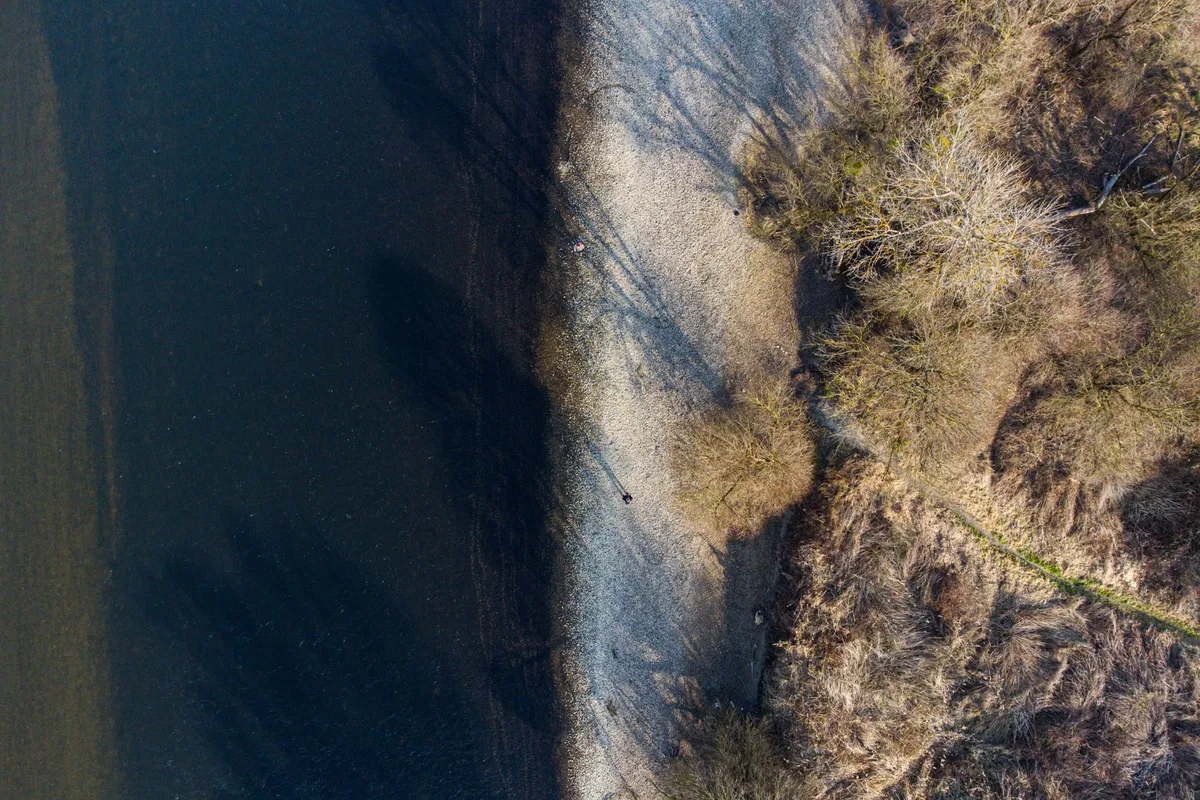
The hydrological drought that has been pressing on Croatia and much of Europe for months reached new historic proportions this week. The Danube at the Batina station sank to -142 centimeters on August 3, 2026, breaking a record more than a century old, dating back to 1909. At the same time, the Drava in Osijek fell to -192 centimeters, which is 20 centimeters lower than the previous minimum recorded in 2022.
Data from the State Hydrometeorological Institute (DHMZ) shows that the Danube in Batina was below the hydrological drought threshold for 66 percent of the current part of 2026. Groundwater levels in central, northern, and eastern Croatia continue to decline and are approaching previous minimums. At the Repaš station along the Drava, the groundwater level on July 29 was 115.05 meters above sea level, just eight centimeters above the historical minimum from 2022. In Mičevec along the Sava, 100.72 meters above sea level was measured on July 30, which is 60 centimeters above the minimum from 2012.
Zoran Đuroković, General Director of Croatian Waters, did not hide his concern in a statement for HTV's Dnevnik. "The situation is quite serious. This is indeed already a prolonged low-water period. It should be noted that the Danube is currently recording a new record of -142 cm in Batina. A new record has been broken; it was this low back in 1909. We now have a new drop in the Danube's water level, and the situation will not change quickly," said Đuroković.
He particularly warned about ecological consequences: "These are extremely low water levels, with water temperatures much higher than usual, which increasingly pressures the plant and animal life living along these rivers." He added that weather forecasts for the next five to seven days do not indicate any significant change. "Given that there are no signs of recovery, I ask everyone to be more cautious and responsible to help preserve nature," he urged.
Although scenes of dry riverbeds and sunken ships resurfacing, like the one near Opatovac, are dramatic, Đuroković emphasizes that drinking water supply is currently under control. "The water supply situation is still stable. There are pressure drops, but so far there are no reductions preventing anyone from washing or meeting basic needs," he said.
The situation is more severe in the karst area and in the coastal and Dalmatian basins, where inflows are already greatly reduced. A number of water utilities have called on citizens to use water rationally. "The fact is that the situation is much more problematic in the karst area and in the coastal and Dalmatian basins," Đuroković stressed. On the continent, however, shortages are not expected because supply relies on groundwater and large rivers. Croatian Waters has additionally strengthened water guard services in the field.
For the Istria region, Đuroković confirmed that the Butoniga reservoir, a key water source for a large part of the peninsula, is currently at a satisfactory level, and no serious reductions are expected for now. However, he also appeals for conservation there. In Lika, the problem is the loss of snow cover, which for years was an important natural water reserve, while in the Brinje area, spring yield has decreased, so solutions are being sought to ensure enough water for both the population and the economy.
Record-low water levels threaten not only water supply and ecosystems but also the region's energy stability. Hungary's Paks nuclear power plant with four reactors, built back in the Soviet era, was brought to the brink of complete shutdown for the first time in 44 years of operation. The Romanian military used 180 kilograms of explosives on Monday to blast rocks near the Bala Danube canal and redirect water toward the state-owned Cernavoda nuclear plant. In Serbia, a key hydroelectric plant is operating at only 20 percent capacity.
Croatia is not spared either. "Electricity production depends on the amount of water and is currently reduced, for example, at the Drava hydroelectric plants. In cooperation with HEP, we are trying to align electricity production with preserving the biological minimum in the rivers," Đuroković explained.
The Director of Croatian Waters particularly warned about small rivers that, due to low water levels and high temperatures, are extremely sensitive to pollution. "I call on all those managing wastewater treatment plants, as well as businesses running their own treatment systems, to do their job with maximum responsibility. Small rivers have very little water and high temperatures, so even the slightest pollution can cause a serious ecological incident," he stressed.
DHMZ reminds that conditions similar to today's were recorded during the dry years of 1993, 2003, and 2022. Then, drought conditions due to lack of precipitation were further worsened by high temperatures that accelerated soil drying. This year, the unfavorable combination was also contributed to by the exceptionally warm winter half-year from November 2025 to April 2026, which was 1.1 °C warmer than the average compared to the control period from 1991 to 2020, leaving the Alps without their usual snow reserve crucial for the water levels of the Danube and Drava.