Grmoja Calls for Army at Border, Plenković Fires Back
Most leader cites Ceuta crisis and demands deployment of Armed Forces, while PM says situation is under control with 6,500 police officers guarding the border.
Most leader cites Ceuta crisis and demands deployment of Armed Forces, while PM says situation is under control with 6,500 police officers guarding the border.
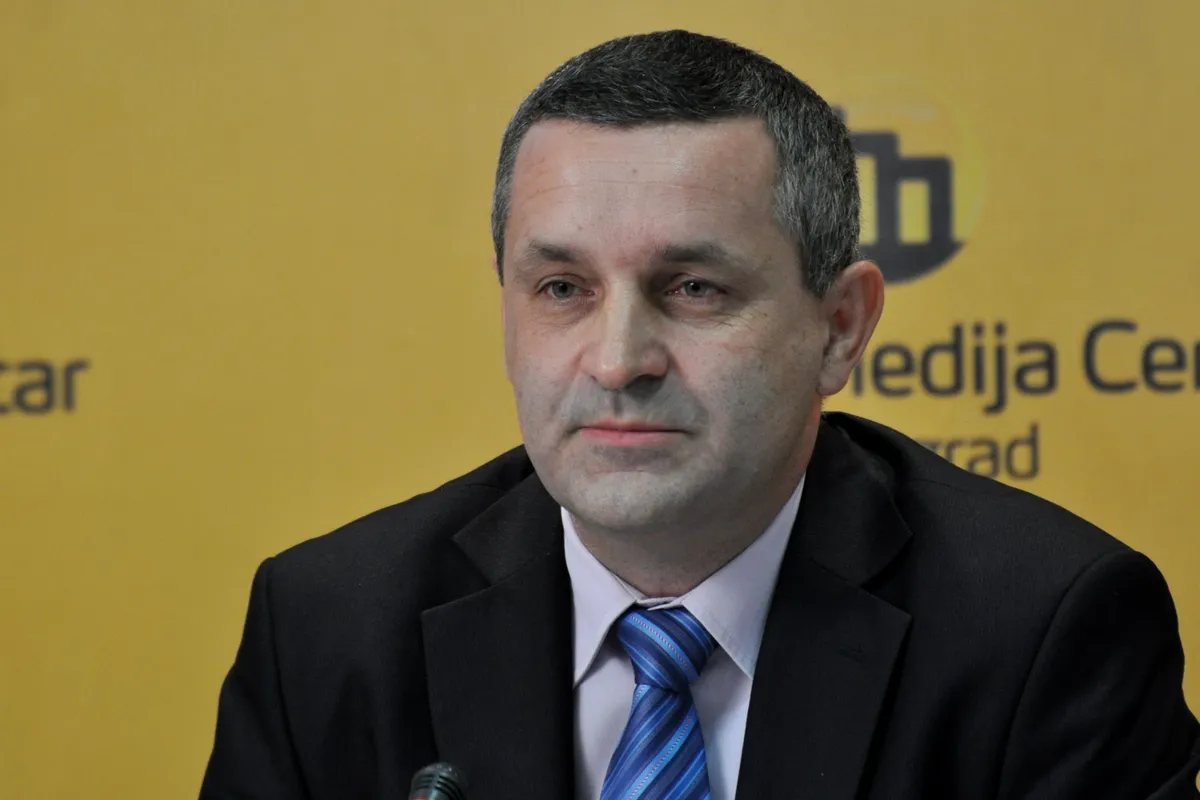
Most party president Nikola Grmoja on Tuesday again called for the inclusion of Croatian Armed Forces members in protecting the country's border. He cited the mass entry of over 60,000 Moroccans into the Spanish exclave of Ceuta, after which Spain deployed its military and began setting up barriers at sea.
"States on migrant routes must send strong and deterrent messages. We demand zero tolerance for illegal crossings and the deployment of the army at key critical points," Grmoja said, as reported by Hina.
Grmoja specifically targeted Defense Minister Ivan Anušić, saying he "cannot agree at all" with his statement that the army is not needed at the border. He accused him of "fully aligning with the globalist Brussels wing of the HDZ."
At the same time, he also called out President Zoran Milanović, claiming that as supreme commander he "mocked Miro Bulj when he proposed deploying the army to the state border." Former Most MP Miro Bulj had previously advocated for the same move. "I would like to see that supreme commander who, after a government decision, would say the army cannot help the Croatian police protect the Croatian border," Grmoja said.
He reminded that back in 2016, while Most was part of the government, the law was amended to allow the army to assist the police in border protection. Those who mocked the idea then, he said, should "swallow their pride and admit they were wrong."
Prime Minister Andrej Plenković's response came from Bol on Brač, where he attended a ceremonial session of the Municipal Council marking the municipality's day. "This is a topic that repeats year after year, always from the same people. I think the matter is clear: the one responsible for guarding Croatia's border is the Croatian police. We have six and a half thousand police officers guarding our border," Plenković said.
He stressed that data show a decreasing number of illegal crossings and an increasing number of prevented attempts at illegal entry into Croatia. He also noted a rise in convictions for crimes related to human smuggling.
"What happened in Ceuta is incomparable to what is happening here. And this kind of politicking is something we've come to expect. No matter the topic, they'll come with brilliant ideas," the PM said, adding sarcastically: "The more they cooperate, the sooner they'll see the light. Just as we saw the light in 2017." That year, Plenković dismissed Most's ministers mid-cabinet session and ended the coalition with the party.
Grmoja went a step further in his statements, asserting that "national security, i.e., the safety of Croatian families, women, and children, largely depends on our national homogeneity." He described Poland and Hungary as the safest countries, adding that "those advocating open borders can freely be characterized as working against the Croatian state, and also against the European Union as a community of sovereign states."
"Do people see what's happening in England, France, and Germany? That's my message to Minister Božinović, Anušić, and others," he said. He also cited Ceuta as a warning: "The example of Ceuta shows that what wasn't a problem yesterday can become one today."
Beyond migration, the PM also spoke about economic issues in Bol. He confirmed the government's goal of reaching an average salary of 1,600 euros in Croatia within two years. "We're now above 1,550 euros, moving toward that target, and it will be achieved without a doubt," he said, adding that there are currently only 62,000 unemployed people. On Croatian islands, home to about 127,000 citizens, only 2,200 are unemployed.
He also touched on the energy situation, stating that security of electricity supply is guaranteed. Commenting on low Danube water levels threatening Hungary's Paks nuclear plant and warnings from the Krško plant, he said Economy Minister Ante Šušnjar is in contact with his Slovenian counterpart and that "everything is under control, and there's no threat from that side."
Regarding the tourist season, Plenković said data for the first seven months show an increase compared to last year. "The season is better than last year's. That's evident from fiscalization and traffic," he concluded.