Iran carried out a serious escalation of the conflict with the United States this morning. The IRGC Air Force launched multiple ballistic missiles at the U.S. Al Azraq base (also known as Muwaffaq Salti) in eastern Jordan and at the Ali Al Salem base in Kuwait, according to B92 and Azernews. Tehran claims the attack destroyed three F-35 fighter jets and damaged three others. The IRGC also reports that several American soldiers were killed.
In a statement released by the official media outlet Sepah News, the IRGC confirmed that "several American personnel were killed in the missile attack on the Al Azraq base in eastern Jordan and that three F-35s were destroyed."
Retaliation for Civilian Deaths on Qeshm
The attack came as a direct response to recent U.S. airstrikes on the Iranian island of Qeshm in the Strait of Hormuz. Innocent civilians were killed in those strikes: three members of one family, including a child, were killed, and two children were injured. The IRGC emphasized that this attack triggered their action.
The Anbiya Command, close to the IRGC, published a sinister message via the Iranian news agency IRNA: "Coffins are now part of American equipment in the region."
Attack on Bahrain, Unconfirmed Information
While most media report only strikes on Jordan and Kuwait, the Russian Telegram channel RVvoenkor reported that the Sheikh Isa Air Base in Bahrain was also targeted by Iranian Arash drones. This information has not yet been confirmed by other sources such as B92 and ABC News, leaving open the question of whether the attack was simultaneous or a separate event.
The Cost of Conflict: Billions of Dollars Monthly
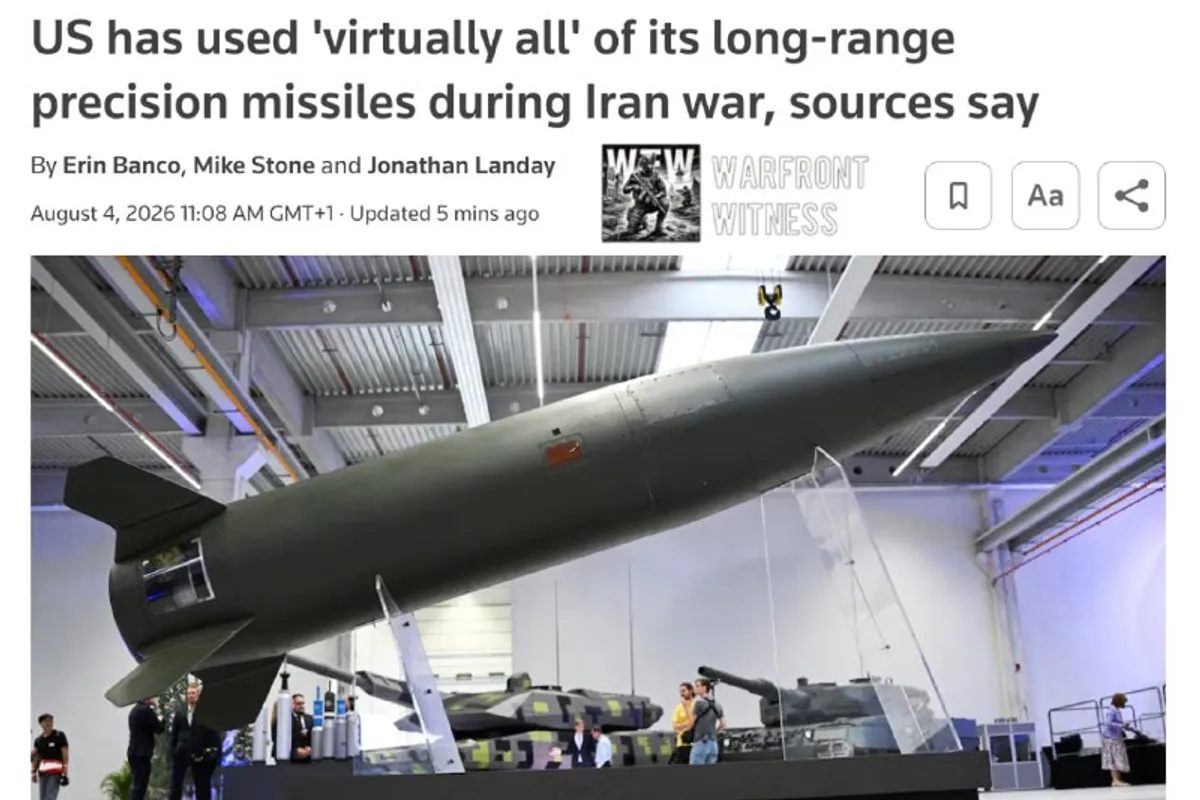
The war with Iran is becoming increasingly expensive for the U.S. budget. Defense Secretary Pete Hegseth stated that the cost so far has reached $37.5 billion, while the Center for Strategic and International Studies (CSIS) estimates the Pentagon had spent $40 billion by the end of June. In the first six days of the conflict, $11.3 billion was spent.
Ammunition alone cost about $26 billion. In the first five months, more than 100 SM-3 anti-ballistic missiles (costing $28 million each) and nearly 1,000 Tomahawk and JASSM cruise missiles (unit cost between $1.5 and $3.6 million) were fired. At the same time, the U.S. military is signing record contracts: $58.6 billion with Lockheed Martin for Patriot missiles and $35 billion to quadruple production of THAAD missiles.
Nate Swanson, director of the Iran Strategy Project at the Atlantic Council and a former State Department official, warned ABC News: "That figure actually covers only the ammunition spent, not the damage to U.S. facilities." CSIS further highlights that "diminished stocks could force the U.S. and its allies to take more risks in interception."
On the other hand, Iran uses significantly cheaper systems for its attacks: a Shahed drone costs between $20,000 and $50,000, a short-range Fateh-110 missile several hundred thousand dollars, and a Shahab-3 between $1 and $3 million.
Danger for the Oil Industry and Continued Conflict
The escalation has already had collateral consequences beyond the war zones. In the emirate of Fujairah, debris from an intercepted Iranian drone damaged oil infrastructure, reports ABC News.
Recall that at the end of June 2026, the U.S. and Iran agreed to a 60-day ceasefire, but heavy bombing resumed as early as July, and the conflict shows no signs of abating. In April, U.S. officials revealed for the first time at a Senate hearing that war costs had already reached $25 billion, a figure now far exceeded.