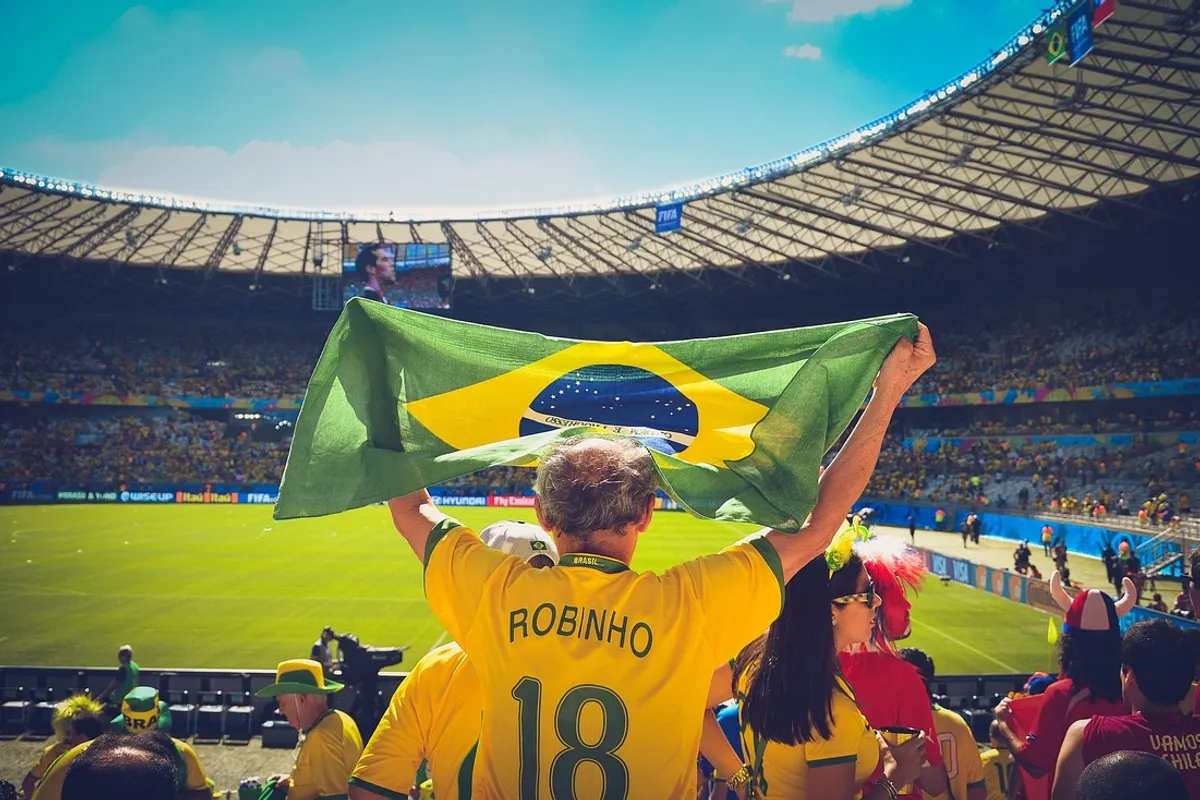
The recently concluded World Cup in the United States, Canada, and Mexico brought historic records on the pitch, but also numerous controversies off it. While Kylian Mbappé, with 22 goals in World Cups, surpassed Lionel Messi by one goal to become the tournament's all-time top scorer, the football world faces deeper questions about the impact of technology and commercialization on the very essence of the game.
Glas Koncila sought answers to these questions in a conversation with Robert Jelečević, a sports journalist and football commentator for HRT. Jelečević, whose analyses have been followed by many Croatian fans, is not opposed to technological progress, but he warns of a key issue plaguing modern football.
VAR and the Lack of Precision
"Technology is here, and we can't take a step back in that sense. I have no problem with the VAR system because I believe that in football overall, we had more unfair and questionable decisions and results before it than we do now. But the question that remains unanswered concerns the application of technology. Namely, the problem is that the application of technology is not clear enough. There are no clear criteria for when something is called," Jelečević told Glas Koncila.
As painful examples for the Croatian national team, he highlighted the questionable penalty in the match against England, when a foul was called on Dominik Livaković. "I still ask myself-and I believe many of our fans do too-what would have happened if that questionable refereeing decision on the penalty in the Croatia-England match had been reversed, if the error had been made by the English goalkeeper rather than our Dominik Livaković. The impression is that at this tournament, something was always being sought against us, some mistake," he added.
Igor Matanović's Hair and Waiting for the Referee
Technology caused disbelief in another situation as well. In the match against Portugal, the chip in the ball detected that the ball's trajectory was altered by the hair of Croatian player Igor Matanović. "As a football commentator, I've been following this issue for some time, and I can say that precision is lacking. For instance, the question of handball in the penalty area. There are situations where technology shows that contact undoubtedly occurred, but the referee makes the opposite decision. There are, of course, also reverse situations. So, we still face the task of defining rules that must be the same for all situations," Jelečević explained.
The key consequence of inconsistent criteria, according to Glas Koncila's interviewee, is the loss of emotion. "Technology, if applied without clear criteria, takes emotion away from football. We saw that many times during the recent World Cup. A player scores a goal, fans start celebrating, but no one is entirely sure, and everyone waits for the referee." As one solution, he proposes introducing the right for benches to request two technology-assisted reviews per half, following the tennis model.
'Here's Your Soccer, Don't Touch Our Football'
Beyond technology, Jelečević was particularly critical of the tournament's aggressive commercialization, which, in his words, manifested through the American approach to sports management. "I couldn't like that aspect at all. That's why, in the conclusion of one of my World Cup reports, I said: 'Here's your soccer, don't touch our football.' Since the tournament was held in America, America had to have the final say and show what the American way of sport is, following the model of their major leagues like the NBA, NFL, and MLB," he said.
As a symbolic example, he cited the so-called hydration breaks. "It was immediately clear to everyone that they served no purpose other than American marketing. Because there's no logic for such a break when matches were played in stadiums where the temperature was around 18 degrees Celsius. This also changed the game. We no longer had two halves, but four quarters." The culmination of commercialization occurred in the final between Spain and Argentina, when the halftime break lasted 27 minutes instead of the maximum 15. "That also increased the risk of player injuries. Many 'cooled down' and needed to warm up again... American politics, along with the current FIFA leadership, simply could show that they do things that way because they can," Jelečević concluded.
Psychological Game and Spanish Character
He also reflected on the tournament's finale, emphasizing that Spain beat Argentina in the final primarily through psychological play. "It turned out that character plays a big role in such competitions. The Spaniards primarily won the psychological battle because they didn't let themselves be drawn into provocations in various duels. If it had been the opposite, they would have disrupted their focus on the game. I wasn't satisfied with how the Argentines performed in that part of the match. They actually showed themselves in a negative light and disappointed. And the world was watching them, especially young people," he said.
Dalić's Legacy and Modrić's Longevity
Following positive examples from Croatian football, Jelečević particularly highlighted former coach Zlatko Dalić and captain Luka Modrić. "I think we'll only truly understand what we had after a longer period. Especially if we look at the pedagogical-psychological aspect of the coach's work. During Dalić's 7-8 year tenure, we had only a few conflicts in the national team, which were ultimately resolved quite elegantly."
Unlike approaches that put individuals in the spotlight, Jelečević sees Dalić's success in building a homogeneous group. As for Modrić, he emphasizes his incredible longevity at the top. "He's been at the pinnacle of world football for 15 years now! There have been much more prominent names in the past, but they didn't 'last' at that elite level for more than maybe five years."
The Road to 64 Teams
Commenting on the future of the competition, Jelečević expressed concern over plans to further expand the World Cup to 64 teams. He believes the motive is purely financial and involves bringing in big markets like China and India. "Moreover, I oppose such a system because it would mean a large number of matches that would be of no interest. A 64-team competition would seriously undermine the quality of football at the tournament. For now, FIFA has floated a 'trial balloon' to gauge public reaction," Jelečević concluded for Glas Koncila.