From the first days of the Russian invasion in February 2022, Ukraine was subjected to massive missile and air strikes on cities, energy infrastructure, and military and civilian targets. However, as the war progressed, Kyiv developed its own response strategy, evolving from defense and local counterattacks into an offensive campaign against Russian military, logistical, and energy targets, both in occupied territories and deep within Russian territory.
According to an analysis by the Institute for the Study of War (ISW), the intensified Ukrainian strikes on logistics, oil infrastructure, and military facilities aim to hamper Russian offensive operations, increase the costs of war, and force Moscow to deploy air defense systems across an ever-growing number of locations.
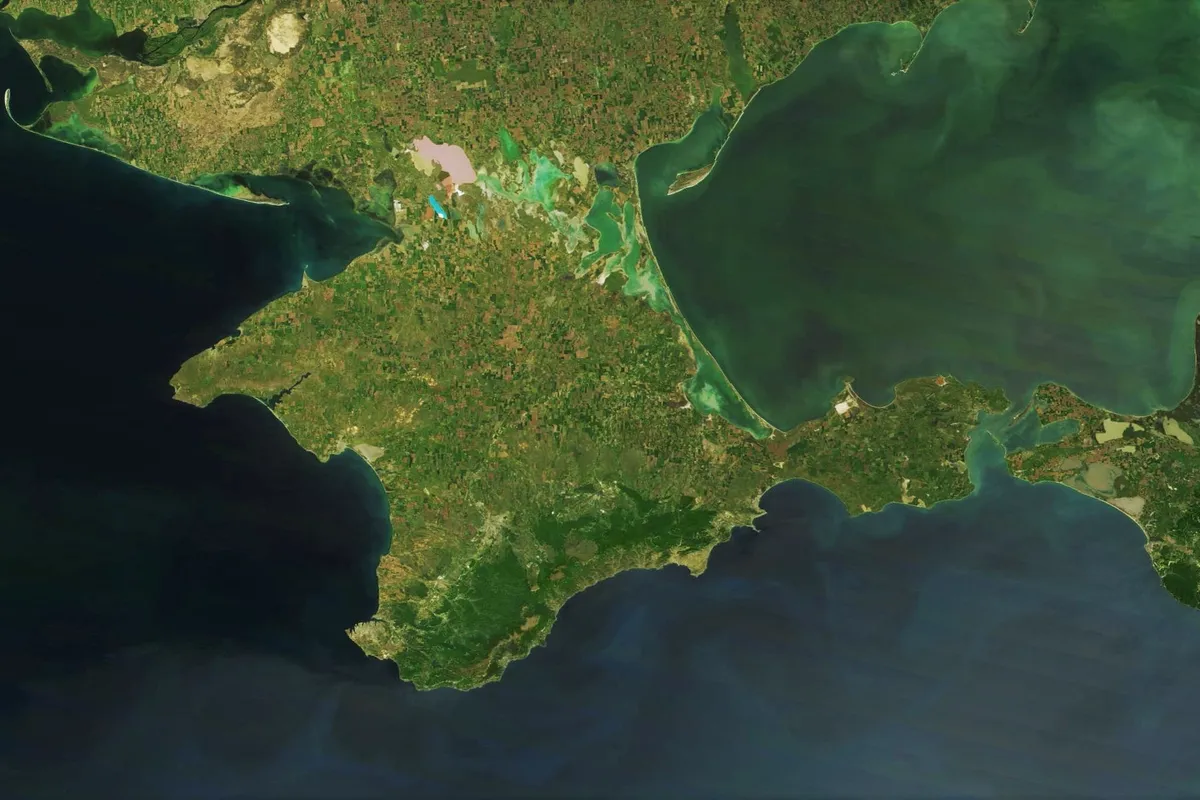
Crimea and the Black Sea Became the First Major Targets
One of Ukraine's first major successes was the sinking of the missile cruiser "Moskva," the flagship of the Russian Black Sea Fleet, in April 2022. That event marked a turning point in the naval war. It was followed by strikes on the Saki air base, the Kerch Bridge, and military installations across the occupied Crimean peninsula.
The London-based Royal United Services Institute (RUSI) notes that it was precisely the combination of long-range missiles, naval drones, and special operations that gradually shifted the balance of power in the Black Sea. Russia was forced to withdraw some of its most valuable ships from Sevastopol, while Ukraine managed to restore maritime exports despite the Russian blockade.
The Center for Strategic and International Studies (CSIS) described this move as an "exceptional naval success," emphasizing that Ukraine pushed a significant portion of the Russian Black Sea Fleet out of Sevastopol and severely limited its freedom of operation in the Black Sea.
Strikes Farther from the Frontline
With the arrival of Western missile systems such as HIMARS, Storm Shadow, and ATACMS, Ukraine began targeting airfields, command centers, and ammunition depots far behind the front lines. The strikes that drew the most attention were those on the Black Sea Fleet headquarters in Sevastopol, airfields in Crimea, and concentrations of Russian forces in the occupied part of Donbas.
According to an analysis by the International Institute for Strategic Studies (IISS), the first Ukrainian ATACMS strikes forced Russia to consider relocating helicopters and other aviation equipment to more distant bases. This directly reduced the time aircraft could spend supporting frontline operations due to range limitations and fuel consumption.
BBC Verify has repeatedly, using satellite imagery and geolocation, verified the extent of individual Ukrainian strikes on military airfields, warehouses, and ships in Crimea, distinguishing confirmed damage from statements made by the warring parties.
Refineries, Airfields, and War Deep Inside Russia
Since 2024, Ukraine's response has taken on a new dimension. Targets are no longer just military facilities but also refineries, fuel storage, and logistical systems across Russia. The Financial Times reports that Kyiv changed its strategy and, instead of attacking storage tanks, began targeting the key technological components of refineries that are hardest to replace. The intention was not to cause a spectacular fire but to halt plant operations for as long as possible and increase the costs of Russia's war economy.
ISW notes that Ukraine is conducting a systematic campaign of strikes on Russian logistics, fuel transport, air defense systems, and energy infrastructure, aiming to complicate the supply of occupied Crimea and southern Ukraine while forcing Russia to deploy air defense across an increasing number of locations. As part of this strategy, Ukrainian drones reached even St. Petersburg in 2024.
Operation "Spider's Web"
One of the most notable operations was code-named "Spider's Web." During this operation, Ukrainian FPV drones, previously smuggled deep into Russia, attacked strategic bombers at several military airfields. Reuters, citing two U.S. officials, reported that up to 20 Russian military aircraft were hit, with around 10 completely destroyed.
Although Ukrainian counterstrikes did not prevent Russian missile attacks, according to assessments by ISW, CSIS, and RUSI, they significantly increased the costs of war for Moscow, complicated supply lines, and forced Russia to divert some military forces from the front to defend its own territory.