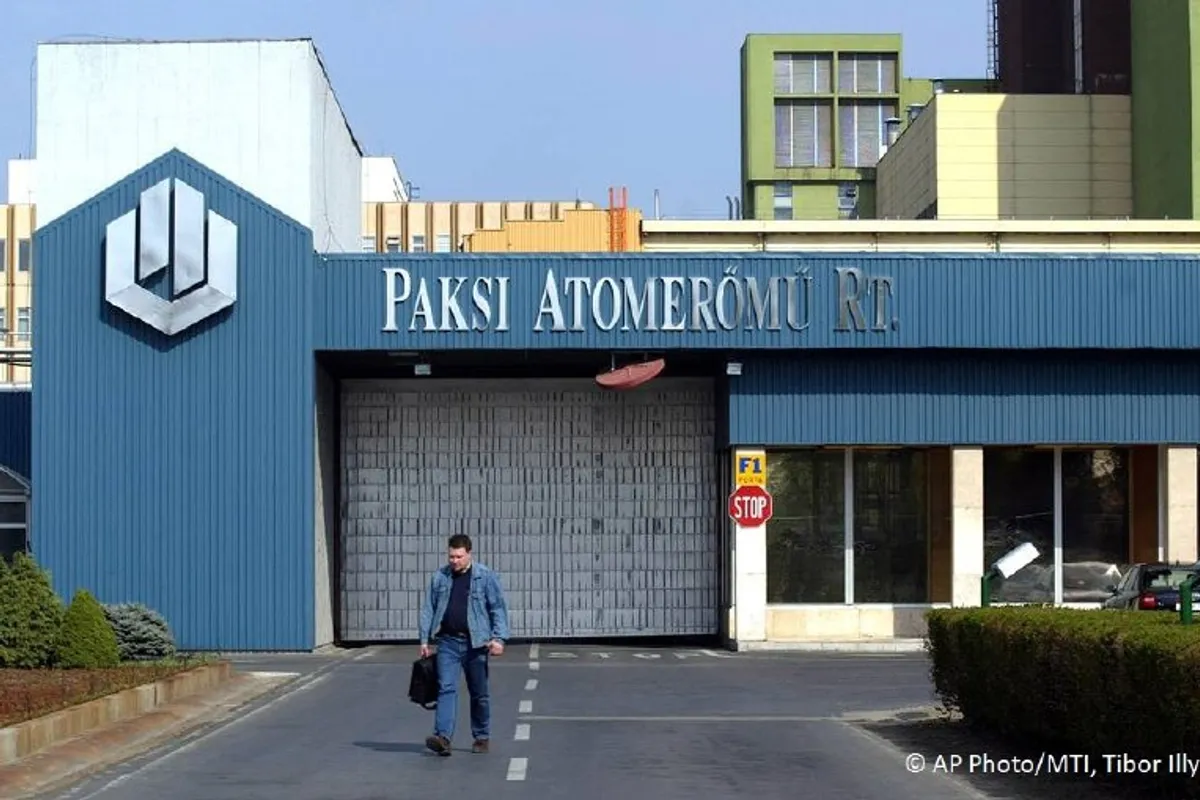
The drought that has hit Europe is seriously jeopardizing the operation of key nuclear power plants on the Danube. Hungarian Prime Minister Peter Magyar announced that the Paks nuclear power plant could continue operating at reduced capacity only until Monday or Tuesday, according to Reuters. Meanwhile, Romania has resorted to controlled explosions to redirect the river's flow and save its Cernavoda plant from a complete shutdown.
Paks on Its Last Legs, Hungary Faces 'Critical Five Days'
According to information from Reuters, the Paks plant, located south of Budapest, is expected to shut down completely later this week. The reason is record-low water levels in the Danube, which prevent normal reactor cooling. The Reuters report states that the country is facing a "critical" five-day period starting Monday, although it did not specify who exactly used that term.
Dramatic Measures in Romania: Explosions to Save Cernavoda
In an effort to avert an energy crisis, Romania's Ministry of Defense announced that soldiers carried out three controlled explosions on the Danube on Sunday, August 3, 2026. The aim of the detonations was to redirect the flow of the Bala channel into the Old Danube channel, thereby increasing the water supply to the Cernavoda nuclear power plant. Divers had previously conducted test trials with smaller explosive charges.
Water Levels Continue to Drop, Weather Forecasts Offer No Relief
Sorin Rîndașu, deputy director of Romania's water management company "Apele Române," warned on Saturday that the decline in water levels would continue. "The flow at the Danube's entry into Romania is 1,590 cubic meters per second, with a downward trend until August 7, when it will be around 1,450 cubic meters. What does that mean for Cernavoda? It means a decrease of about 2-3 cm per day. Under these conditions, Cernavoda can hold out for about 4-5 days at the limit," Rîndașu told Večernji list.
The situation is further complicated by the fact that the Danube flows through ten countries, and the only significant rainfall occurred in Austria. It takes about two weeks for that water surge to reach Cernavoda, meaning quick help from that direction is not possible.
Energy Shock for Romania
The effects of the drought are already visible. This week, the first unit of the Cernavoda nuclear power plant was shut down, reducing domestic energy production by 10%. The plant typically supplies about one-fifth of Romania's total electricity, according to Universul.net. The shutdown of the second unit, which threatens if the trend continues, would have an even more devastating impact on the country's energy system, especially during the heatwave when electricity consumption is elevated.