Mo:Dem Fills Primišlje Again with 7,000 People from 50 Countries
Despite tragedies and natural disasters, the Momento Demento festival in the heart of Croatia has grown into a global psytrance phenomenon praised by both a parish priest and a mayor.
Despite tragedies and natural disasters, the Momento Demento festival in the heart of Croatia has grown into a global psytrance phenomenon praised by both a parish priest and a mayor.
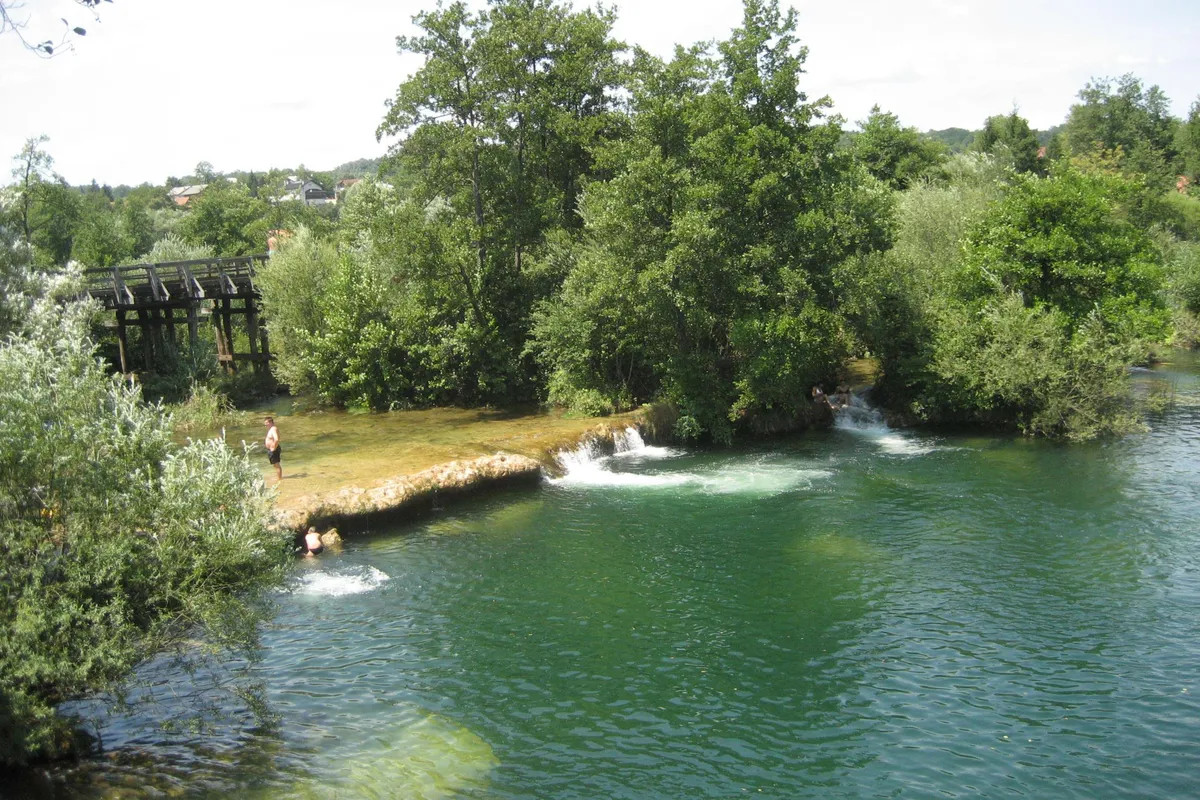
While the world of electronic music often revolves around big-city arenas, the tiny village of Donje Primišlje near Slunj has, for the 13th year in a row, become the center of the world for thousands of psychedelic trance enthusiasts. The Momento Demento festival, better known as Mo:Dem, sold out weeks in advance again this year, confirming its status as one of the most important gatherings on the global psytrance scene.
The first edition was held in 2011, and today the festival, spread over 20 hectares along the Mrežnica River, attracts up to 7,000 partygoers. What sets it apart from similar events is the incredible 98 percent of international guests, who come to Primišlje from more than 50 countries, turning the site into a true small international city of tents and campers.
The road to this year's 13th edition was anything but easy. In 2014, the festival was struck by tragedy when a 51-year-old man from Samobor passed away, and on the last day of the same edition, 23-year-old Frenchwoman Anne-Cecile Pinel went missing. Her remains were found in early 2018, and police cited an accident as the most likely cause of death.
In 2018, a fire destroyed all the inventory, and the very next year, in 2019, the Mrežnica River swelled by two meters overnight, wiping everything out again. As if that weren't enough, the COVID-19 pandemic forced organizers to cancel the festival in 2020 and 2021. Yet Mo:Dem has bounced back stronger each time, and organizers estimate that the new main stage, The Hive, will take a full two years to build.
Unlike many electronic festivals, Mo:Dem invests a significant portion of its budget, time, and energy into artistic production and scenography. Every stage, installation, and mural is a work of art in its own right. This year, visitors can expect three stages-The Hive, The Swamp, and Seed-with the atmosphere enhanced by animated projections onto sculptures, complex lighting, and video artists creating visuals live.
The daytime program offers an escape from the heat in the cool Mrežnica River, as well as creative workshops, yoga, and massages. Foreign media have thus described Mo:Dem as a blend of music festival, art colony, and wellness retreat, rather than just a place for all-night dancing. The rule is simple: nature must be left in the same state it was found.
While in 2011 the local population viewed the newcomers with a degree of reserve, today Mo:Dem is listed among the events promoted by the Slunj Rastoke Tourist Board. Locals find work at the festival and have the opportunity to sell their products at an organized market.
Over the years, the parish priest of Slunj, Mile Pecić, could be spotted among the visitors. "But here, people are of different cultures, worldviews, nationalities, and languages. We haven't noticed a trace of violence, arguments, or raised voices," the priest wrote, adding that he can't shake the impression that all these young people are searching for something and that they "can't hide a cry, a plea."
I must say these guests are extremely cultured; there are no problems with them, and there have never been any incidents-no drunkenness, fights, or any disorder. Truly, never.
Former Slunj mayor Jure Katić shares a similar view, having highlighted the impeccable behavior of thousands of visitors after the seventh edition.
Although the psytrance scene is often associated with the use of psychoactive substances, organizers emphasize that they cannot control every one of the 7,000 visitors. "We support any police presence and cooperate with them to the fullest. As organizers, we provide security measures and ensure there is no violence. If someone uses drugs or alcohol, they do so at their own risk. We can't search their pockets," Tomislav Sijarto, one of the festival's organizers, once stated.