Drug Cartels Send Fighters to Ukraine for Drone Training
According to a Financial Times investigation, Colombian armed groups are using the war in Ukraine to gain FPV drone piloting skills, which they then deploy against their own military.
According to a Financial Times investigation, Colombian armed groups are using the war in Ukraine to gain FPV drone piloting skills, which they then deploy against their own military.
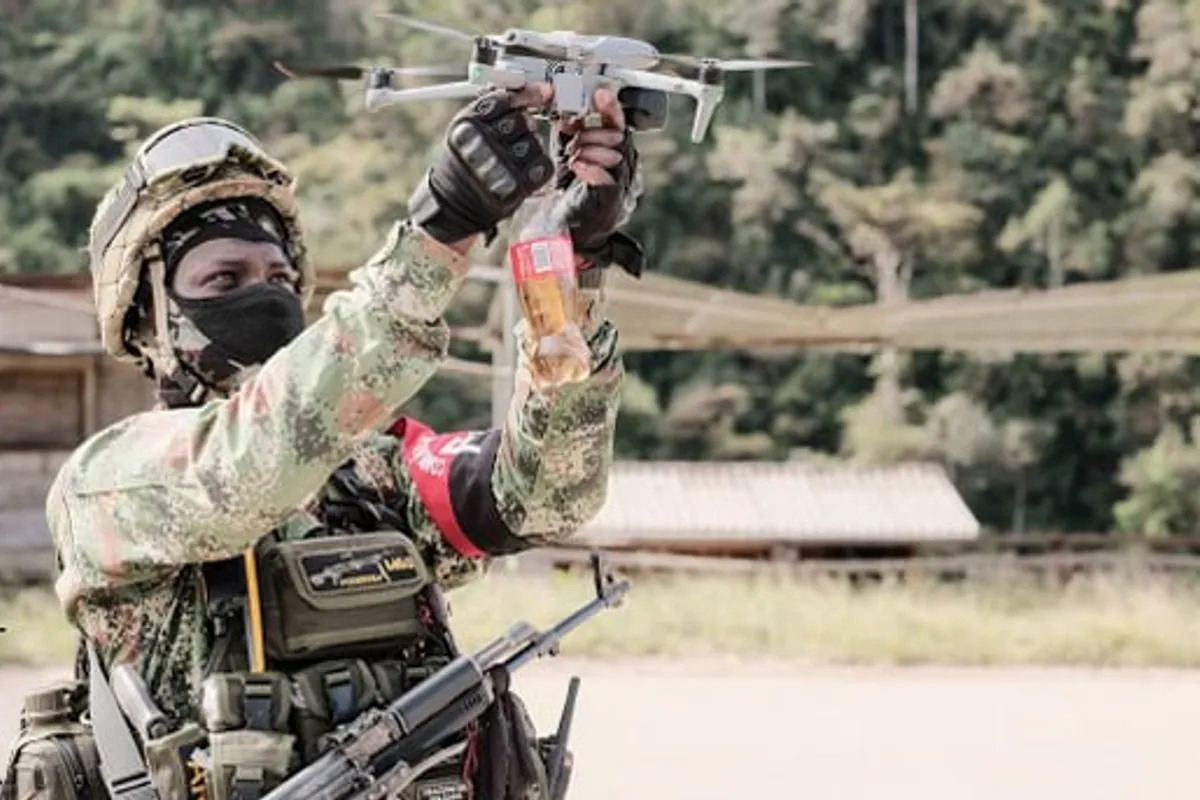
Colombian armed groups and drug cartels have repeatedly sent their fighters to Ukraine to gain expertise in drone warfare, subsequently using these skills against the Colombian military, according to a Financial Times report published on August 6, 2026. This trend has radically shifted the balance of power on the ground, stripping the state of its long-held air superiority over rebels and smugglers.
According to data from Colombia's Ministry of Defense, 264 drone attacks by illegal groups were recorded between 2024 and 2025. One of the deadliest occurred in December 2025, when an attack on a military base killed seven people. These figures illustrate a dramatic shift in the tactics of criminal organizations that were until recently inferior in the air.
The Financial Times quotes a Colombian drone pilot fighting in Ukraine. He claims that drug cartel recruiters actively sought training in equipping and operating FPV (First Person View) drones. However, the source notes that groups in Colombia still lag behind the Ukrainian battlefield in encryption techniques and the manufacture of explosive devices.
Criminal groups are not stopping at FPV drones alone. According to the newspaper, some actors are seeking to acquire fiber-optic guided drones, which would allow them to bypass military signal jammers. This technological escalation has forced Colombian authorities to take concrete steps.
In response to the growing threat, Colombia has restricted drone imports and announced the construction of a $1.6 billion anti-drone shield. This investment is expected to restore at least some control over the airspace that the military has traditionally held.
The Ukrainian side has not been immune to this phenomenon either. The Ukrainian military has identified several Colombians linked to organized crime who attempted to infiltrate their ranks and sent them back home. This confirms concerns that the war in Ukraine is becoming a training ground for criminal elements from around the world, who then apply their newly acquired military skills in their home countries.
This development sheds new light on the global security implications of the war in Ukraine, demonstrating how sophisticated warfare techniques are spilling into the hands of actors unrelated to the original conflict.