Fastest Star Ever Found: Racing Around Black Hole at 25,000 km/s
Newly discovered star orbits the supermassive black hole in just 8.7 years and could enable the first direct measurement of its spin.
Newly discovered star orbits the supermassive black hole in just 8.7 years and could enable the first direct measurement of its spin.
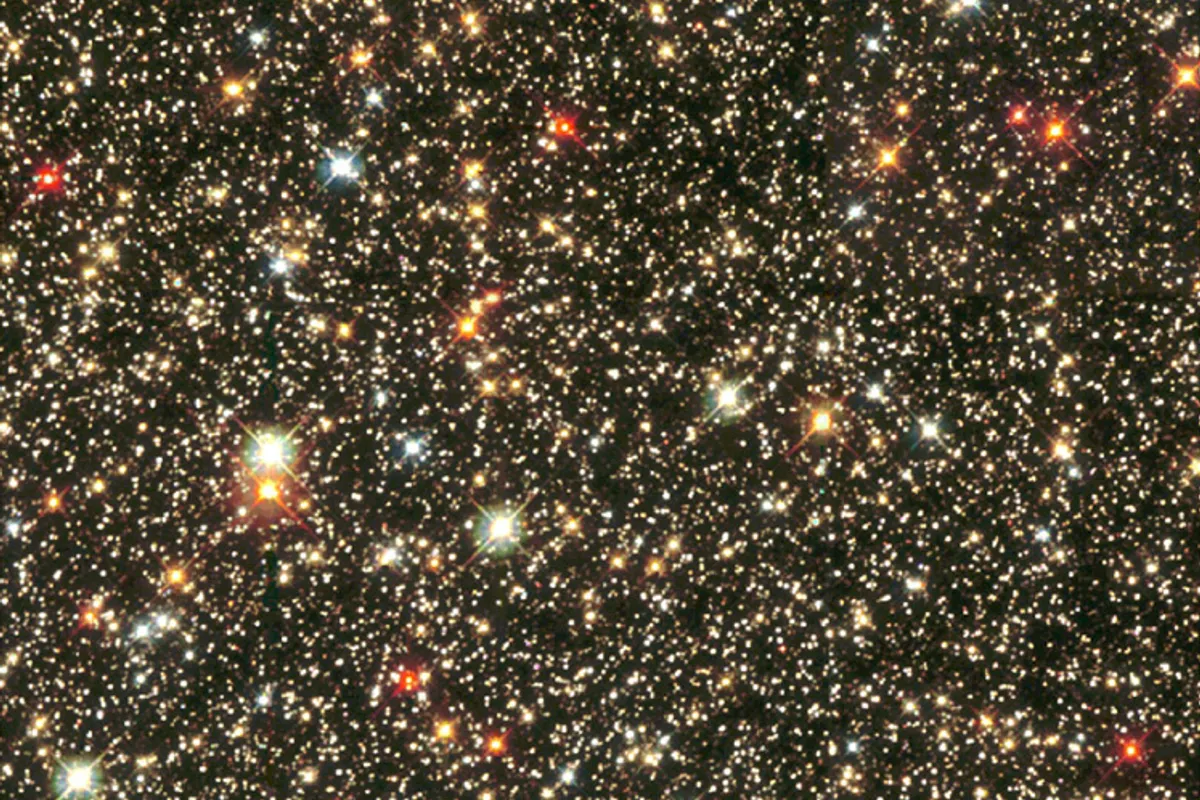
Scientists have discovered the fastest known star in our galaxy, which circles the supermassive black hole at the center of the Milky Way at an incredible speed. The star reaches approximately 15,534 miles per second (25,000 kilometers per second), which is 100,000 times faster than a commercial airliner, according to AP World News.
"That star is really, extremely fast," said astronomer Stefan Gillessen from the Max Planck Institute for Extraterrestrial Physics. The star was discovered in data collected by the European Southern Observatory's (ESO) Very Large Telescope in the Atacama Desert in Chile, and the findings were published on Wednesday in the journal Nature.
The star is not only fast but also orbits at the closest distance yet observed from the black hole. It takes just 8.7 years to complete a full orbit, which is 10 times closer than the previous record holder. The star is about 50 percent more massive than the Sun, according to Channel News Asia.
Around this giant black hole, named Sagittarius A* (Sgr A*), several hundred stars orbit, and scientists have mapped the orbits of about fifty of them. It is precisely the stars that pass extremely close, like this newly discovered one, that could help measure the mysterious properties of the black hole, including its rotation speed.
The newly discovered star, designated S301, was found using the GRAVITY instrument on the Very Large Telescope. GRAVITY combines light from four individual telescopes, providing the resolution of a single telescope with a diameter of 130 meters. The team has been tracking stars in the immediate vicinity of Sgr A* since 2017, and in 2023 they managed to spot a star moving away from the black hole. After months of observations, they estimated its orbit and confirmed it is a real star, whose closest approach to the black hole occurred in early 2023.
The orbit of S301 is highly eccentric, with a value of 0.9832, meaning it is a very flattened oval path. For comparison, Pluto's orbital eccentricity is 0.25. Such a high value suggests the star is close to escaping the black hole's gravitational grip.
"It's not a wobble, like back-and-forth, but the star gets pushed onto a slightly different orbit each time it passes the black hole. That means that by observing that orbital change over another good decade, we should be able to directly determine the spin of the black hole. Such a measurement has never been done before," Gillessen explained.
Gillessen adds that we can only see the rotation of black holes through the effect they have on the space around them. Despite being extremely close to the black hole, the star is not in danger of being swallowed, he assures.
The rotation of Sgr A* should affect the precession of the orbits of stars that pass close enough. However, this effect decreases with the cube of the distance, so measuring it requires either a star that comes very close or long-term observations. For previously known stars, "long-term" would mean thousands of years, but S301, with its extreme orbit, offers the opportunity to determine the black hole's spin within a decade.
Astronomer Tuan Do from the University of California, Los Angeles, who was not involved in the study, believes this discovery opens the door to new insights. "This is just the tip of the iceberg. As we detect fainter and fainter objects, there should be many more stars like this one," he told AP.