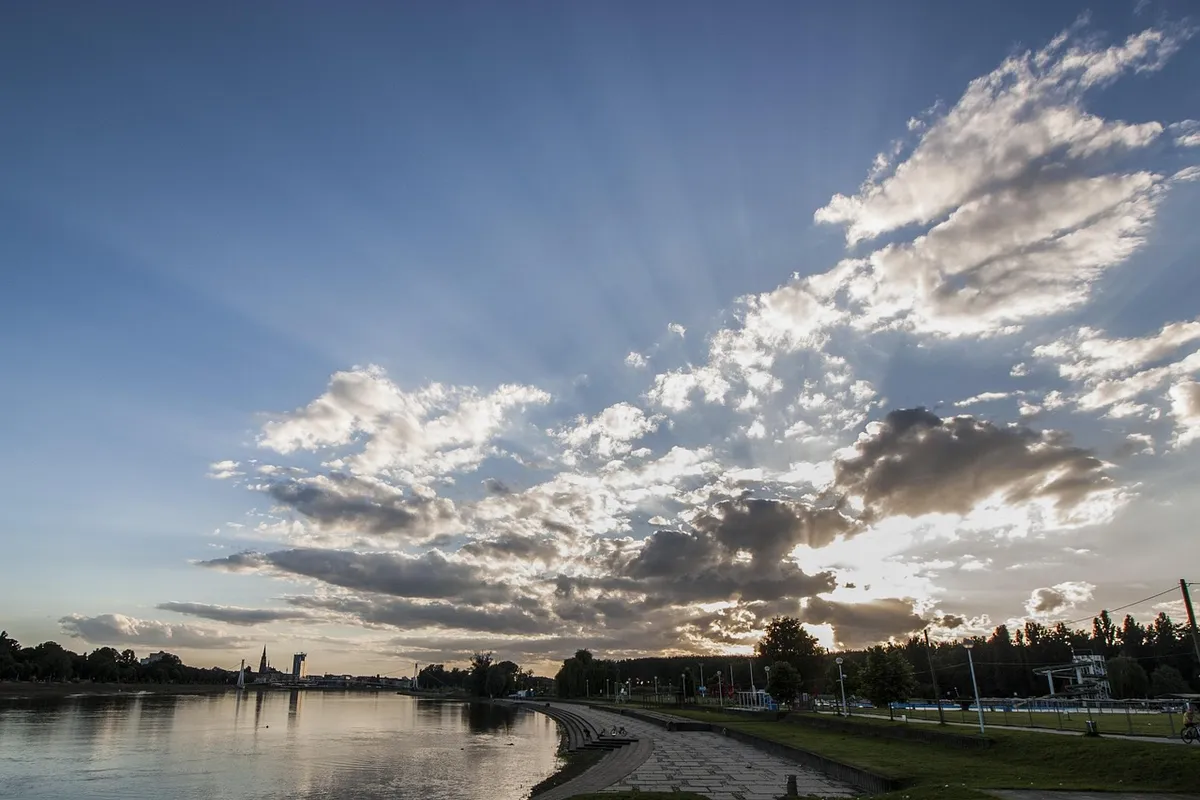
The Drava River in Osijek has continued to fall, reaching levels among the lowest ever recorded. According to data from OsijekNews, the water level on Wednesday, August 5, 2026, stood at -181 centimeters, with a previous minimum of -192 centimeters also recorded. The consequences are dramatic and visible to the naked eye.
Where deep river currents recently flowed, vast sandbars now stretch across the riverbed. The scenes from the river's channel in the heart of the city look more like a dry, desert landscape than one of Croatia's largest watercourses, serving as a stark reminder of the severity of this year's drought.
Navigable Route Disrupted, Ships Cannot Reach the Port
Low water levels have already led to concrete and serious consequences for river traffic. Currently, navigation to the port of Osijek has nearly come to a standstill. Just after the road bridge, the water depth has become too shallow for the safe passage of larger vessels. This means ships can no longer enter Osijek, directly impacting economic activities that depend on river transport.
This situation is not an isolated incident. Prolonged heatwaves, exceptionally high temperatures, and very little rainfall have marked this year's summer. Soil moisture is at zero, and water levels in all rivers in the region are much lower than usual for this time of year.
Expert Warnings Becoming Reality
Experts have been warning for years that climate change will increase the frequency of precisely such extreme events. Longer dry spells, higher average temperatures, and increased evaporation mean that low water levels during the summer will become more common. On the other hand, opposite weather conditions are also expected-short but intense rainfall that could lead to rapid rises in water levels and flooding.
The vast sandy riverbed in the heart of Osijek, captured in photographs and videos, is tangible proof that the consequences of climate change are no longer abstract warnings but an everyday reality.
Is There Hope for Recovery?
Despite the alarming scenes, this situation is not permanent. The Drava's water level naturally fluctuates throughout the year. After autumn rains and winter snowfall across the entire basin, along with spring snowmelt in the Alps, water levels should gradually return to normal.
If weather conditions align with the multi-year average, the river level will rise again, the sandbars will disappear beneath the water, and the navigable route to the Port of Osijek will become passable once more. Nevertheless, scenes like these show just how sensitive rivers are to prolonged dry periods and how quickly what was once a rarity becomes an increasingly frequent occurrence.