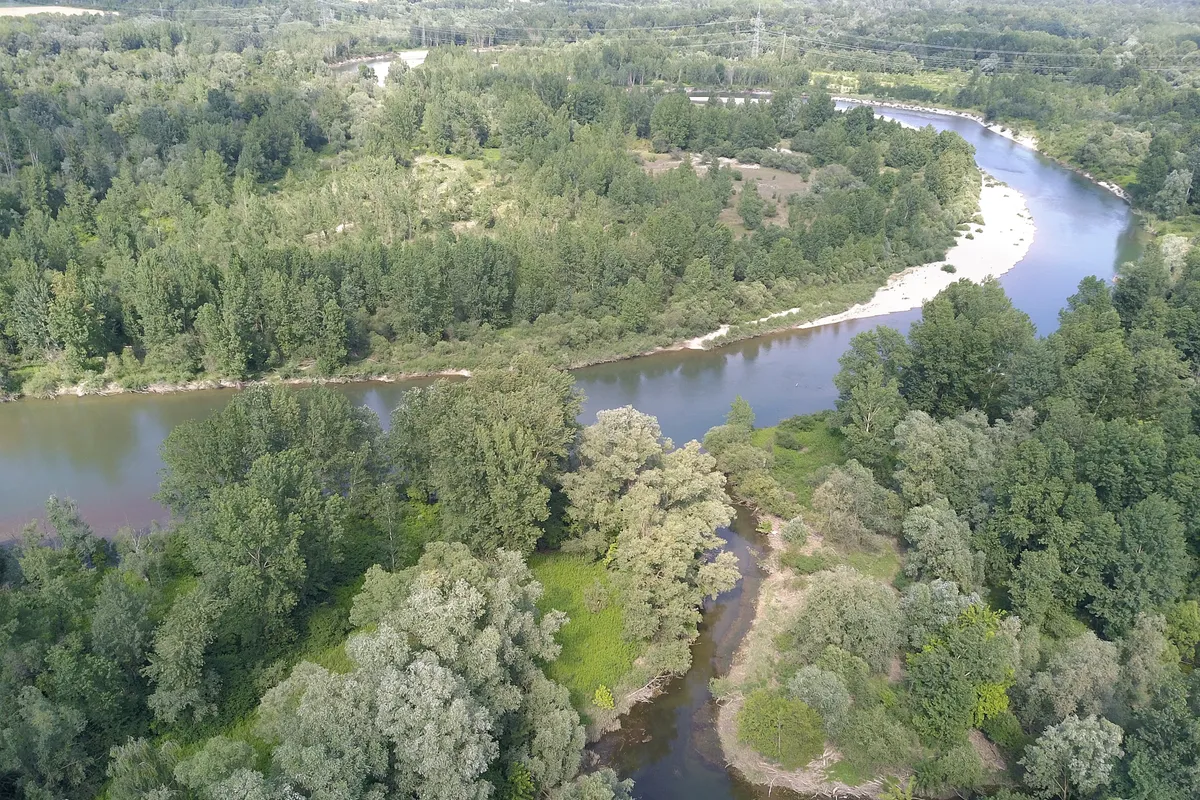
Croatia is facing the consequences of a prolonged heat wave that has led to record-low water levels on most rivers. Zoran Đuroković, General Director of Hrvatske vode, confirmed that historic minimums not seen in nearly two centuries have been recorded, with the situation particularly critical on the Danube and Drava.
"Water levels are reaching new historic minimums even today. Yesterday we recorded one, and today another for the Danube, which is at -144 cm. It is concerning that there are no signs of recovery for either the Danube or other rivers. The Drava in Osijek is at -189 cm, and the record is -192 cm. The water gauge in Osijek has existed since 1827, and it is now clear that we haven't had such low water levels of the Drava, Danube, and unfortunately all other rivers in Croatia in 200 years," Đuroković said for N1 television.
Plitvica Faces Ceasing of Flow, Orljava on the Brink of Drying Up
Hrvatske vode reported on Tuesday, August 4, 2026, that the situation on watercourses in Varaždin County is currently stable, but the Plitvica River shows signs of a possible imminent cessation of surface flow. In the settlement of Selnik, significantly slowed flow was observed, and an additional problem is the fact that there are no upstream reservoirs from which water could be released to maintain the biological minimum.
At the same time, Đuroković warned that the Orljava River in the Požega area could dry up in the coming days.
"If we had a reservoir above the town, we could release water during low water levels and add the biological minimum,"
he said.
Temperatures in Fish Ponds Exceed 30 Degrees
Extreme heat is further worsening the situation. DHMZ has issued a new warning due to record temperatures, and Đuroković points out that temperatures in many fish ponds are above 30 degrees.
"This is a problem because fish cannot hide at greater depths there as they can in rivers,"
he explained.
The peak of the heat wave is yet to come, specifically on Wednesday, August 5, and Thursday, August 6, 2026, when a red warning is in effect for almost the entire country. Temperatures will range from 34 to 39 °C, and on the Adriatic, up to 39 degrees in the coming days.
Navigation to Osijek Impossible, Water Losses in Systems at 50 Percent
Due to the low water levels of the Danube and Drava, it is currently impossible to sail to the port of Osijek. Đuroković emphasized that the damages are significant, but also that we depend on nature.
"We have extreme drought, and unfortunately, the next seven days do not show a more favorable situation. A heavy rain in Baranja is not enough to recover the Danube's water level here. There must be larger rains upstream in Europe, and then it takes about ten days to feel the rise in water levels,"
he explained.
An additional problem is the enormous losses in the water supply system, which reach 50 percent.
"We need to build more reservoirs and reduce losses in the systems. Water is the most important resource worldwide; we have enough of it, but it needs to be managed well,"
Đuroković concluded.
Projects for the Future: Grabušnica and Trakošćan
Milan Rezo, Director of Hrvatske vode for the Mura and Upper Drava basin, emphasized the importance of implementing the Grabušnica reservoir project.
"Hrvatske vode has obtained a location permit for the construction of the Grabušnica retention area with a total volume of approximately one million cubic meters,"
Rezo said. This area will in the future enable the maintenance of biological minimums during dry periods and provide flood protection.
The situation on the Bednja River is somewhat more favorable. Although low water levels were measured this morning, field inspections confirmed continuous flow with satisfactory discharge. In the Trakošćan reservoir lake, which provides additional security, there is approximately 120,000 cubic meters of water above the spillway level. Hrvatske vode can, if necessary, release this amount in a controlled manner to increase the flow of the Bednja and preserve the fish stock.
On the Drava, in cooperation with HEP, the prescribed release regime continues to be implemented to ensure the biological minimum in the old riverbed. Hrvatske vode is intensively monitoring watercourses, groundwater, and locations where treated wastewater is discharged, and through daily field inspections and measurements, they are trying to respond in time to any deterioration in hydrological conditions.