Russian Oil Refining Falls to Lowest Level Since 2002
In July, only 3.6 million barrels were processed daily, 150,000 barrels less than in June, with Ukraine carrying out more than 30 attacks on Russian oil infrastructure.
In July, only 3.6 million barrels were processed daily, 150,000 barrels less than in June, with Ukraine carrying out more than 30 attacks on Russian oil infrastructure.
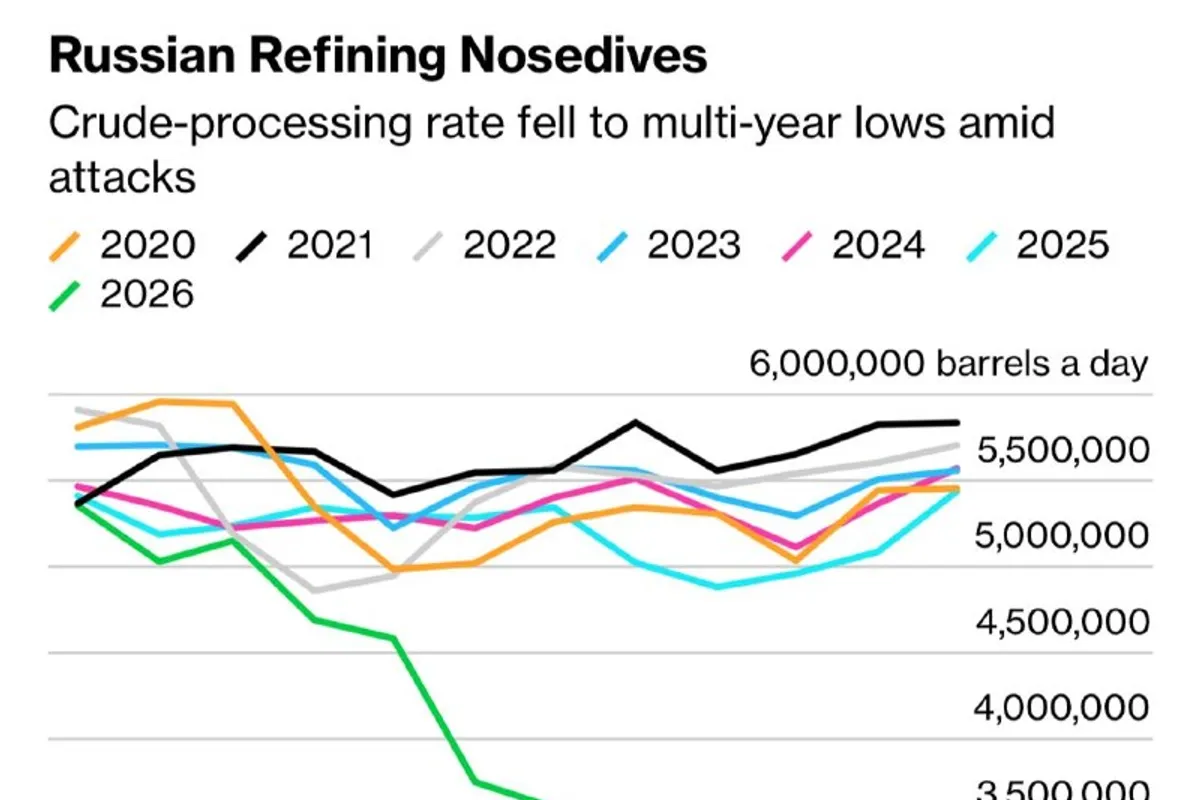
Russian oil refining in July 2026 fell to levels not seen since May 2002. According to data analyzed by Bloomberg, the average daily output of Russian refineries stood at 3.6 million barrels, a drop of 150,000 barrels per day compared to June. For comparison, in July 2021, Russian refineries processed around 5.59 million barrels per day.
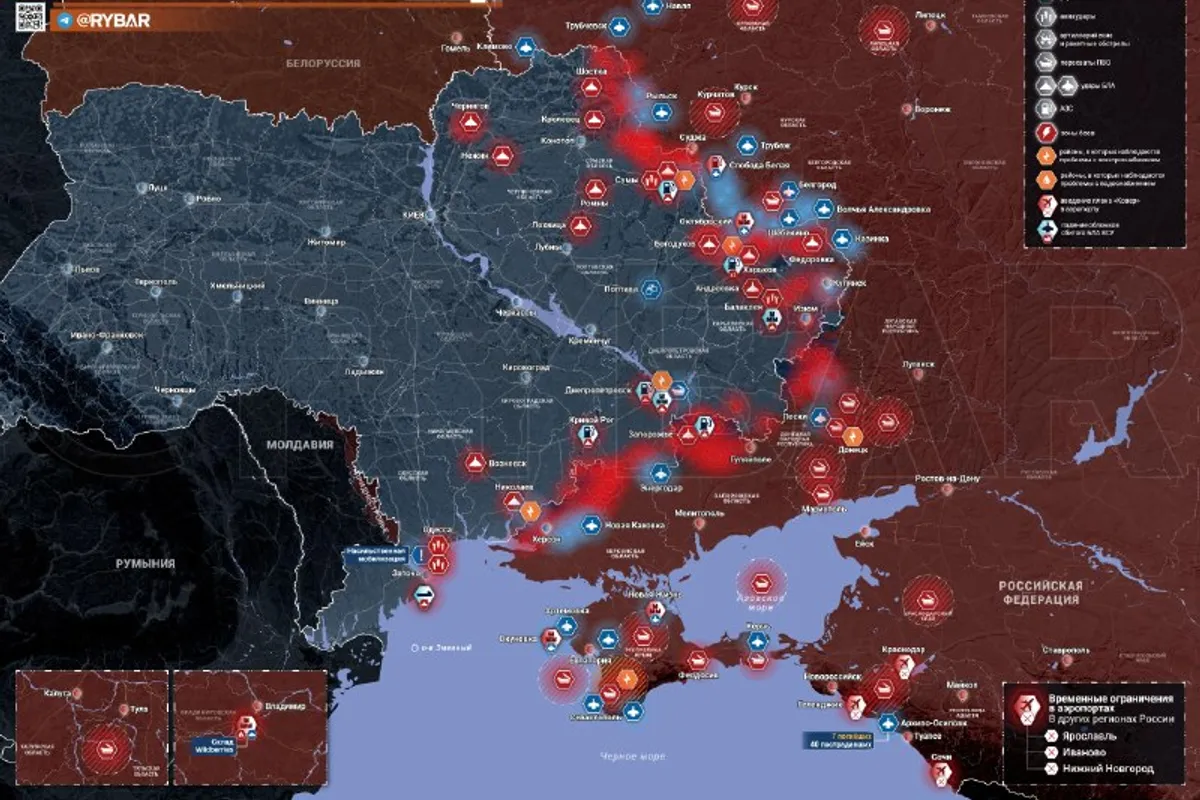
The sharp decline is a direct result of intense Ukrainian attacks on Russian energy infrastructure. Bloomberg counted at least 30 strikes during July, targeting refineries, oil storage facilities, tankers, ports, and pipelines. In the first part of the month alone, drones hit 18 refineries, breaking the previous record of 17 facilities struck in May. The total number of oil infrastructure targets hit in July reached 30, the second-highest monthly tally after 32 recorded in May.
In the first half of July, attacks were primarily focused on refineries. Among them was the Omsk refinery, Russia's largest, located more than 2,500 kilometers from the Ukrainian border. In the second half of the month, tactics shifted, with strikes redirected towards tankers, ports, and logistics infrastructure used for oil exports.
EA Analytics, a subsidiary of the British firm Energy Aspects specializing in commodity and energy market analysis, provided a new estimate even lower than the previous one. Just a few weeks earlier, the company reported that at the beginning of July, the average output of Russian refineries was 3.91 million barrels per day, already the lowest figure since March 2005.
According to Meduza, in addition to the at least 30 strikes recorded by Bloomberg, there were eight more attacks on tankers in the area of the Black Sea terminal of the Caspian Pipeline Consortium. Ukraine did not claim responsibility for these attacks, but they further illustrate the pressure on Russia's oil industry.
Meanwhile, on the diplomatic front, on August 3, 2026, Russia's chargé d'affaires was summoned to the Swedish Ministry of Foreign Affairs. The Swedish side lodged a protest over Russian strikes on Ukrainian territory. According to a statement from the Russian embassy to TASS, the Russian diplomat conveyed Moscow's official position on Ukrainian attacks on civilian objects and infrastructure in Russia. "Special attention was paid to the continued attacks by the Kyiv regime on the Zaporizhzhia Nuclear Power Plant. It was emphasized that such reckless actions carry serious risks," the statement read.