Sneijder Admits: Vodka Was My Best Friend at Real Madrid
The Dutch wizard reflects on his career, turbulent life in Madrid, and the legendary 2010 season when, in many eyes, he was unjustly denied the Ballon d'Or.
The Dutch wizard reflects on his career, turbulent life in Madrid, and the legendary 2010 season when, in many eyes, he was unjustly denied the Ballon d'Or.
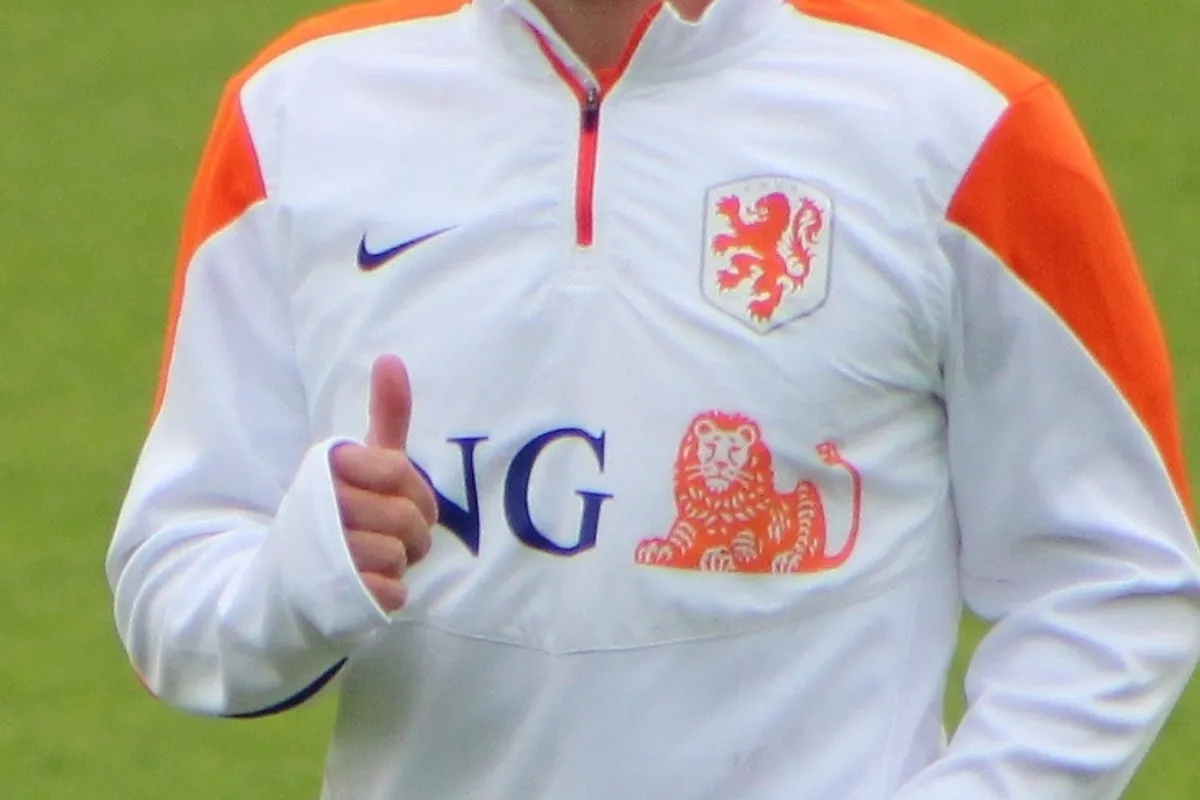
Wesley Sneijder, one of the most talented footballers of his generation, has openly spoken about the personal demons he battled throughout his career in his autobiography. The Dutch creative wizard, as described by Zadarski list, recalled the tough days at Real Madrid, where, as he puts it, a bottle of vodka became his best friend.
"I can't say I lacked anything at Real Madrid; I played well, but I could have done much better. After a while, I realized I could only be alone and that a bottle of vodka was my best friend. Physically, I didn't realize it; the next day I'd get up as if everything was fine. But things kept getting worse and worse. I told myself everything would be okay, that I could rely on my intelligence, but that was self-deception," Sneijder honestly admitted.
Although his first season at Real Madrid was marked by ups and downs, winning La Liga swept some problems under the rug. He scored nine league goals, but the 'Blancos' system wasn't fully tailored to him. The second season brought injuries and even poorer performances, and the turbulent nightlife in Madrid, which can easily sweep a player along, took its toll. In 2009, Real's hierarchy decided to sell him to Inter.
It was at Inter, under José Mourinho, who specifically requested him, that Sneijder reached his zenith. Mourinho deployed him as a playmaker behind Diego Milito and Samuel Eto'o, and the Dutchman repaid that trust. In the 2009/10 season, he maintained a run of brilliant performances and led the club to a historic treble. That same year, he reached the World Cup final with the Netherlands, seemingly a shoo-in for the Ballon d'Or. He didn't win the award, a decision fans still consider a major 'Ballon d'Or injustice.'
Sneijder himself confirmed in an interview with Fox Sports that he is aware of how much he could have achieved, but he doesn't regret his choices.
"If I had lived 100% dedicated to football, I could have been on the same level as Messi and Ronaldo. But I didn't want that, and I don't regret it," stated the record holder for most appearances for the Dutch national team.
After several seasons at Inter, where brilliant and lackluster performances alternated, Manchester United showed interest. However, in 2013, he chose Galatasaray. Although he won the World Cup bronze in Brazil in 2014 as a key player, the move to Turkey, a league a step below in pace and tempo, marked the end of his dominance at the highest international level. At Galatasaray, he became a club legend, but he was no longer the 'X factor' on the global stage. Brazil remained his last major tournament, as the Netherlands later failed to qualify for the European Championship in France and the World Cup in Russia.
Football was just beginning to phase out classic 'number 10s' during his peak, but Sneijder and Mesut Özil seemed to defy that trend. While some adapted to modern football, like Luka Modrić, Toni Kroos, and Kevin De Bruyne, Sneijder wasn't willing to put in extra work on himself. His decline symbolically coincided with the decline of the Dutch national team.
Before he exploded at Ajax, where he played from 2002 to 2007, questions were raised about why he stayed in the Netherlands for so long. He became a national team player back in 2003, but his real explosion came in the 2006/07 season when he scored 18 goals in the Eredivisie, after which Real Madrid brought him in. Although he had a career to admire, Wesley Sneijder will forever remain one of football's greatest 'what if' stories-a genius with the talent for the Ballon d'Or and a world title, but whose focus, by his own admission, was often elsewhere.