Serbian Photographer Witnessed Torture of Captured Croats
Ahead of the commemoration of Prisoner Exchange Remembrance Day in Nemetin, testimonies by Dragoljub Zamurović and Predrag Matić reveal the horrors endured by Croatian detainees.
Ahead of the commemoration of Prisoner Exchange Remembrance Day in Nemetin, testimonies by Dragoljub Zamurović and Predrag Matić reveal the horrors endured by Croatian detainees.
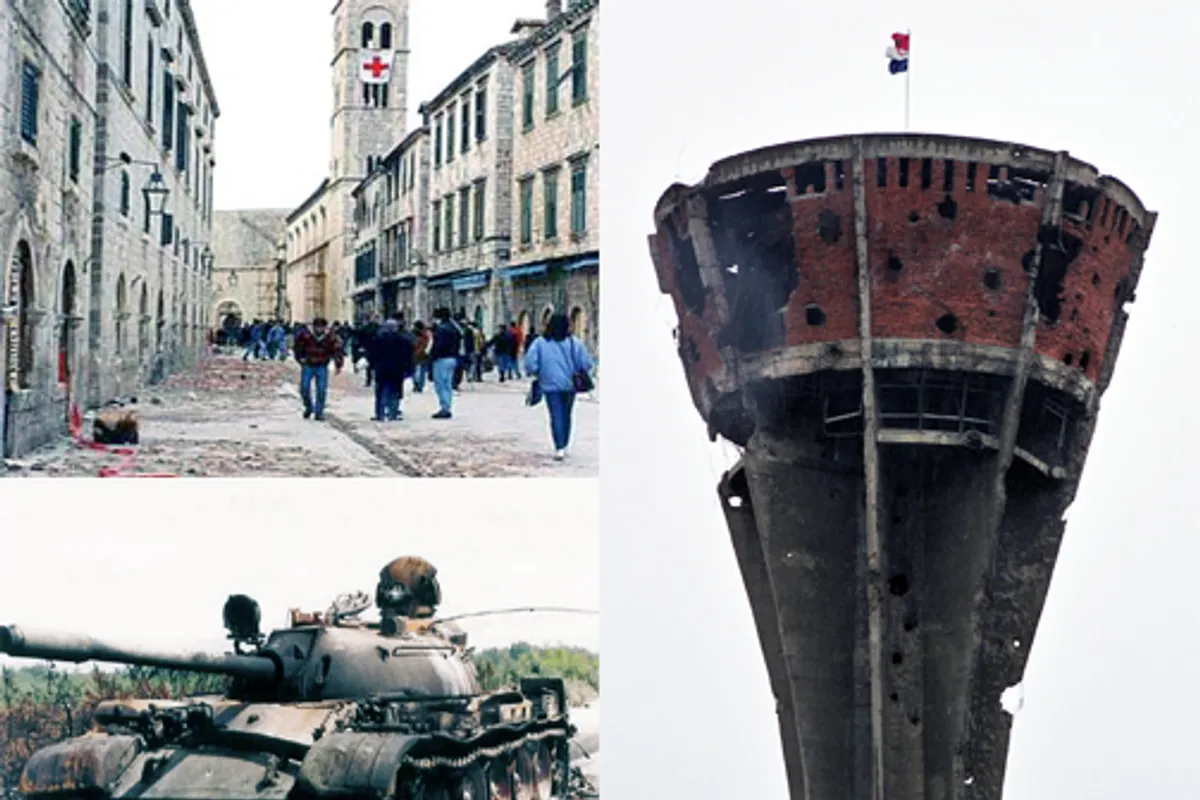
Ahead of the solemn commemoration of Prisoner Exchange Remembrance Day for Serbian concentration camps, to be held on Friday, August 14, 2026, at the "Gates of Freedom" memorial in Nemetin, the public has once again been presented with harrowing testimonies of the torture endured by Croatian defenders and civilians. The government's envoy, Deputy Prime Minister and Minister of Defense Ivan Anušić, will attend the commemoration at 10 a.m., with a scheduled address.
On August 14, 1992, in Nemetin, a suburb of Osijek, the largest exchange of prisoners from Serbian camps during the Homeland War took place. That day, 714 Croatian defenders and civilians captured in Vukovar were freed, having endured torture, abuse, humiliation, and rape in the camps. Due to the large number of people, the International Committee of the Red Cross, along with Croatian and Serbian authorities, were involved in the negotiations, aiming for an "all for all" exchange.
However, the exchange itself did not go smoothly. Negotiations dragged on, and during that time, guards boarded the buses carrying Croatian detainees, telling them that the Croatian government did not want them and threatening to return them to the camps. Physically and psychologically exhausted, the detainees agreed that if that scenario unfolded, they would jump off the buses and scatter, just to avoid going back to the camps.
Serbian photographer Dragoljub Zamurović, who took photos at the exchange site, described the shock he experienced in his monograph "Sećam se" (I Remember). "I have an idea to enter one of the buses and, with a wide-angle lens, capture a photo of the interior with a group of prisoners forced to keep their heads between their legs. They are periodically forced to raise their hands with three fingers spread and sing 'Ko to kaže, ko to laže Srbija je mala' (Who says, who lies, Serbia is small), but soldiers are everywhere at the doors, not allowing entry," Zamurović wrote.
The photographer was appalled by the soldiers' rough treatment of the prisoners. "I was shocked by the soldiers' rough behavior toward the prisoners. At one point, the soldiers got off the bus, and I couldn't help but tell the prisoners, who still had their heads down, that those soldiers who were mistreating them did not represent Serbs, but human scum, and I asked them not to hate the entire Serbian people because of that."
The most harrowing example of suffering was the case of Manda Matić, the only Croatian woman held in a Serbian camp. Although she was mentally ill, Serbian media labeled her a "sniper who killed many Serbs." The late former Minister of Veterans' Affairs, Predrag Matić, who traveled with her to the exchange site, described in his book "Ništa lažno" (Nothing False) what the soldiers did to the unfortunate woman.
"It was painful to watch what those brats did to a helpless, but fortunately for her, unconscious woman. First, they forced her to put a stick in her mouth and simulate fellatio, which delighted them, and then to lick a good square meter of the bus floor with her tongue. It was both disgusting and pitiful, but none of us could do anything to stop the torture of poor Manda. Fortunately, after a while, the remaining soldiers had to go back to their buses, and thus the vile humiliation was interrupted."
Former detainees largely refer to the exchange day as their rebirth, and the commemoration in Nemetin serves as a lasting reminder of all victims of Serbian concentration camps.