Drought and Heat Halt Three Nuclear Reactors in France
Low river levels and high temperatures have forced EDF to shut down reactors, while winemakers fear a small harvest due to water shortages.
Low river levels and high temperatures have forced EDF to shut down reactors, while winemakers fear a small harvest due to water shortages.
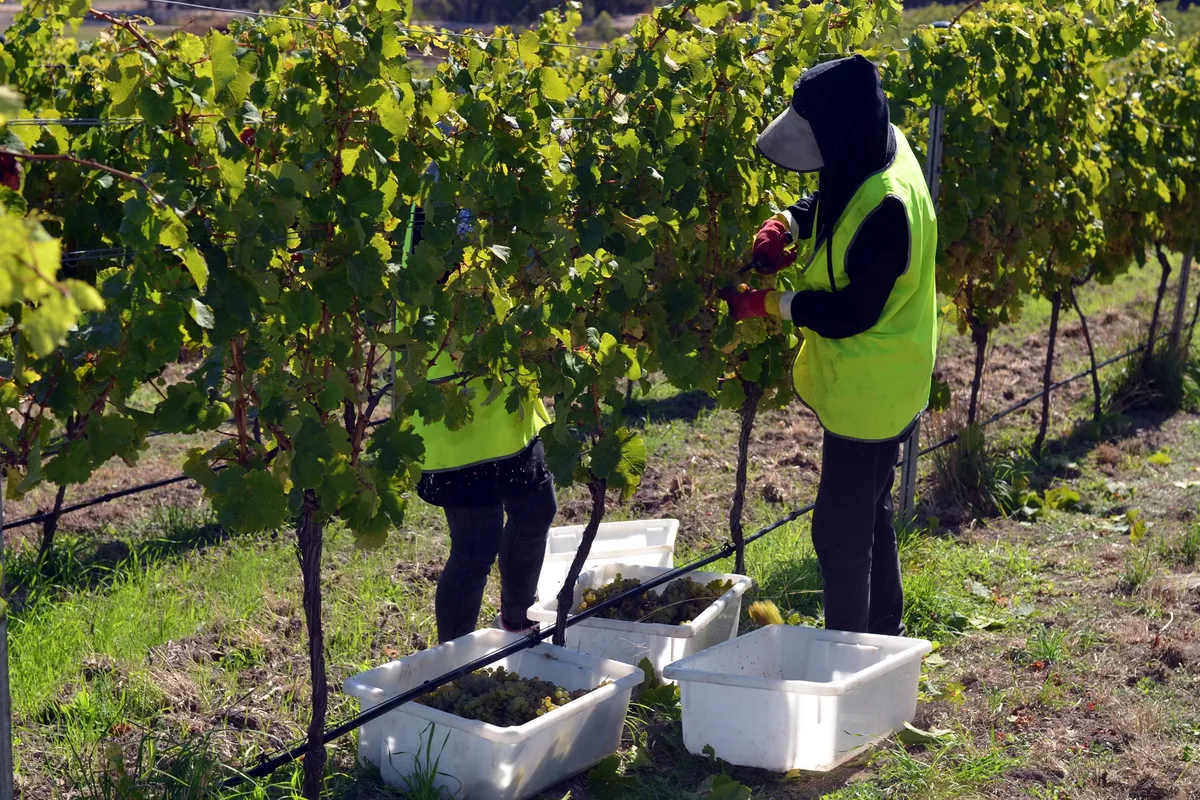
France is facing a double whammy of extreme weather this summer: while heatwaves and drought are seriously jeopardizing the operation of nuclear power plants, winemakers across the country are anxiously awaiting this year's grape harvest, which could be significantly smaller than usual.
According to data from French electricity operator EDF, three nuclear reactors were completely shut down on Monday, August 3, 2026. Two are located at the Chooz plant in the Ardennes, and one at the Cattenom plant in Moselle. The reason is a drastic reduction in the flow of the Meuse and Moselle rivers, whose water is used to cool the facilities.
These are not the only problems for the French nuclear sector, which usually provides as much as 70% of the country's electricity generation with its 57 reactors. An additional four reactors at the Bugey, Tricastin, and Saint-Alban plants have had to reduce their output in recent days. The Golfech plant has been shut down for the third time this summer, with one of its reactors restarted after a 17-day outage caused by the heat.
Nuclear power plants require enormous amounts of water for cooling. Nearly half of the freshwater drawn in France is used for this purpose, but operator EDF points out that 97% of that water is returned to waterways. Nevertheless, the energy sector is the third-largest consumer of freshwater at 12%, far behind agriculture, which uses 58%, and drinking water at 26%.
The problem arises when heated water is returned to rivers. "A rise in temperature means a decrease in the amount of dissolved oxygen in the water, which has a very strong impact on biodiversity," explained hydroclimatologist and CNRS research director Florence Habets to France Info back in 2025. She added that such changes favor lentic species, such as carp, at the expense of lotic species like trout.
For this reason, the French nuclear safety authority (ASNR) imposes strict temperature limits. For example, water returned from the Bugey plant to the Rhône River must not exceed 26 degrees Celsius in summer, and the temperature difference between the water taken in and the water returned must be no more than 5 degrees. When these limits are reached, plants must reduce output or shut down entirely, although temporary exemptions are sometimes granted to keep operations at least partially running.
EDF reassures the public with data showing that since 2000, production losses due to high temperatures and low river levels have averaged only 0.3% of annual output. However, the French Court of Auditors (Cour des comptes) warned back in 2023 that "for nuclear sites along rivers, with unchanged regulations and without adapting existing facilities, the risks of unit unavailability will increase." The situation is further complicated by the anticipated "increase in electricity demand" during increasingly hot summers, partly due to the growing use of air conditioning.
As possible solutions, the French national research institute Inrae proposes renovating plants with open-loop cooling systems, installing hybrid cooling systems, and developing smaller plants with closed-loop systems. However, they also emphasize the need to "reduce energy consumption through savings and energy efficiency" and to "accelerate renewable energy sources."
At the same time, extreme heat and lack of rainfall are also severely impacting the French wine industry. The Parisian newspaper Le Monde reports that this year's grape harvest will begin much earlier, in the coming days instead of September, and the vines are suffering from water stress, threatening reduced yields.
"It will be a small harvest," said Jérôme Bauer, president of the National Confederation of Wine and Spirits Producers, adding that he has stopped making estimates because they are revised downward every day. Slightly more cautious is Bernard Farges, president of the National Committee of Interprofessional Organizations for Wines with Designations of Origin and Geographical Indications (CNIV) and a winegrower from Bordeaux: "As of today, we are heading towards a harvest that could be small, but it is still too early to say the results." Farges notes that the harvest will be spread over several weeks, which could potentially bring better results.