An unknown projectile struck a tanker in the Strait of Hormuz on Saturday, August 1, 2026, according to the United Kingdom Maritime Trade Operations (UKMTO). The incident occurred northeast of the Omani town of Lima, and the vessel lost power after its engine room was damaged.
According to the UKMTO report, relayed by the Italian news agency ANSA, the tanker was hit about 11 nautical miles off Lima. The Croatian daily Novi List cites a distance of about 20 kilometers, which is roughly the same location. "The tanker is not under command, and the regional coast guard has been notified. No casualties or environmental impacts have been reported," the UKMTO statement said.
Two Incidents on the Same Day
Hong Kong's South China Morning Post reports that UKMTO received reports of two separate maritime incidents off Oman on Saturday. The second was reported 21 nautical miles from the Omani town of Khasab, near the Musandam Peninsula at the entrance to the strait. Details of the second incident have not yet been released.
The Strait of Hormuz, a narrow maritime passage between the Persian Gulf and the Gulf of Oman, is vital to global energy supplies. According to data cited by Azernews, about 20 percent of the world's oil supplies and a quarter of liquefied natural gas (LNG) exports pass through it. In some places, the shipping channel is only two miles wide on each side.
Iran: 'We Won the War'
Almost simultaneously with reports of the attack on the tanker, the speaker of Iran's parliament and negotiator with the United States, Mohammad Bagher Ghalibaf, made a bellicose statement. "Iran has won the war with the US and Israel, but we must consolidate that victory," Ghalibaf said, as reported by Iran's Fars news agency. He added that "the country must have hope for a bright future."
Ghalibaf also called for strengthening the executive authority of Supreme Leader Mojtaba Khamenei, saying that "any attempt to build a strong Iran will start from there."
Tehran Threatens to Expand the Conflict
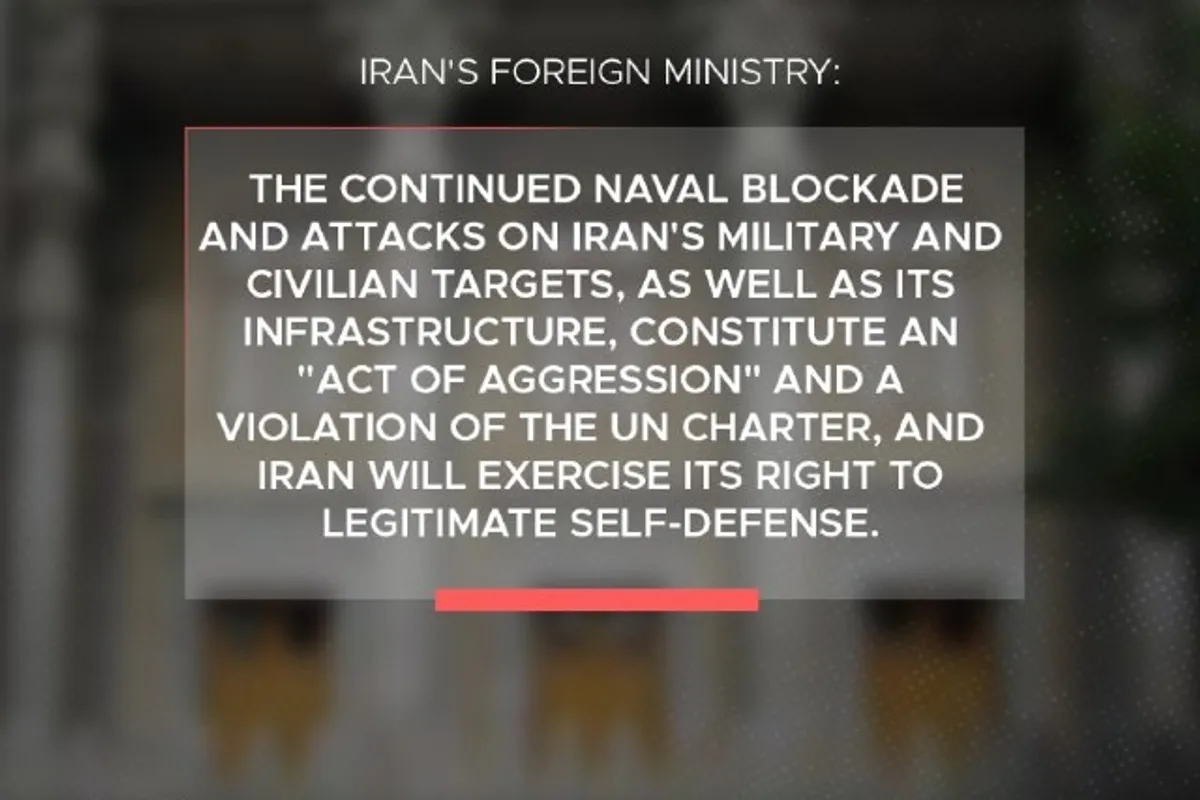
Iran's Supreme National Security Council secretary, Mohammad Bagher Zolghadr, warned that continued US escalation and a naval blockade of Iran could spread maritime incidents beyond the Strait of Hormuz. According to Al Mayadeen, Zolghadr stressed that US provocations would lead to an even tighter closure of Hormuz and potentially the closure of other straits and shipping lanes, warning that the consequences would ultimately be borne by the global economy, energy markets, and even American voters.
A senior Iranian security official, cited by the Tasnim news agency, said Tehran has "prepared a full plan to respond to possible American madness." "We consider the claims of American media about possible attacks by the United States and the regime on Iranian infrastructure to be a form of madness-because we have prepared a comprehensive response plan, which includes the vital infrastructure of the Zionist regime and American energy infrastructure in the region, and we are ready," the official said.
Global Consequences and the Croatian Angle
Political analyst Pavle Kalinić, in a podcast with Felix Contras on Narodno.hr, warns that Iran still holds key strategic levers through the Strait of Hormuz and Bab el-Mandeb. Any new conflict, Kalinić believes, threatens global energy supplies, which could fuel inflation and hit the European economy. Prolonged instability would also affect Croatian tourism and the economy.
The dispute over navigation through the Strait of Hormuz, where Iran demands that ships use a route along its coast, claiming it is the only safe one, has become a focal point of the escalating conflict between Washington and Tehran.