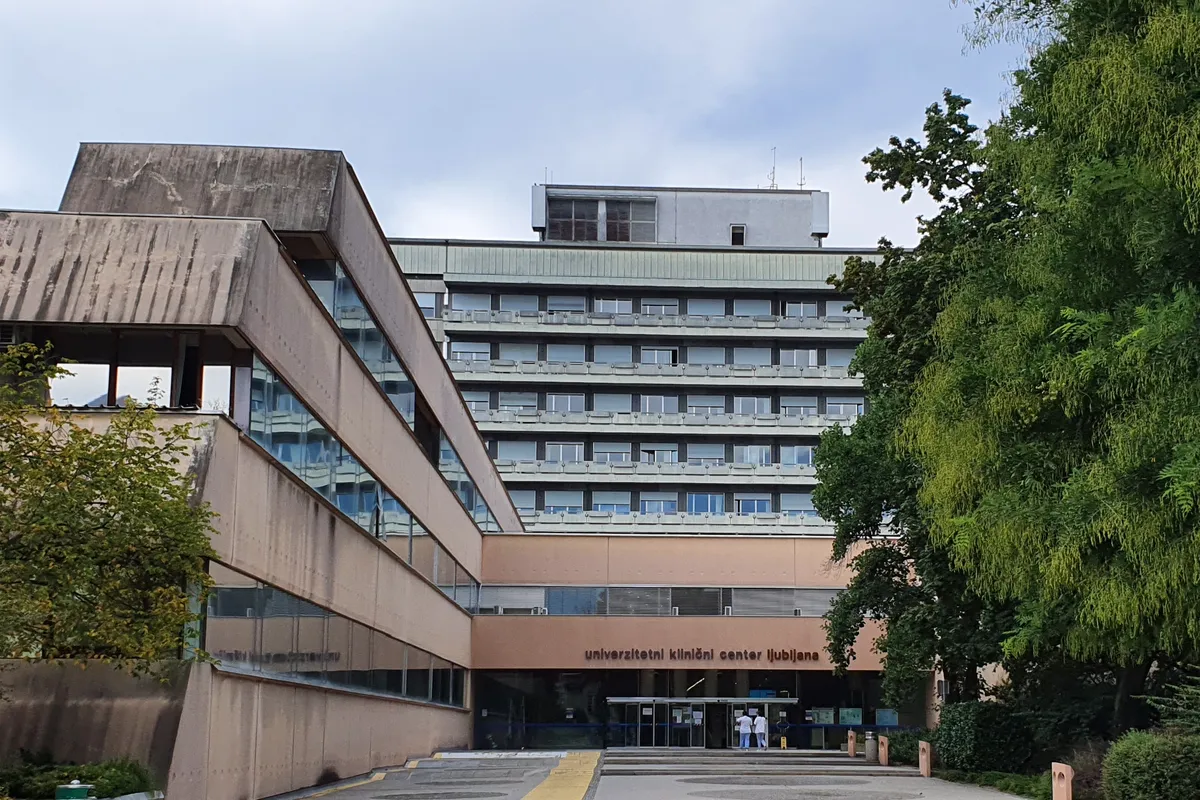
As a powerful thunderstorm hit parts of Slovenia on Wednesday afternoon, bringing a sudden temperature drop of more than 10°C, the country's health system is grappling with a serious surge in emergencies. The University Medical Centre (UKC) Ljubljana has reported a significant increase in seriously injured patients, directly linking this to the record-breaking heatwave that shows no signs of abating.
"We urge all residents not to expose themselves to the extreme heat, not to overestimate their abilities in the mountains, not to jump into water without first checking the depth, and to be careful when working with machinery during the hottest part of the day, as such conditions can more quickly lead to serious accidents," warned UKC Ljubljana via the social network X.
Helicopters Over the Alps Constantly in the Air
On Tuesday, August 4, 2026, alone, three helicopters landed at the UKC Ljubljana helipad with seriously injured patients. Such days with three landings are becoming more frequent, and the total number of helicopter landings this year has already exceeded 420. According to data from the Ministry of Defence, as reported by RTV Slovenia, helicopters of the Slovenian Armed Forces (SV) and the police aviation unit carried out 71 rescue missions in the mountains in July, of which as many as 58 were due to accidents.
This is a dramatic increase compared to July last year, when 44 interventions were recorded, 28 of which were due to accidents. The trend continues in August: in the first five days of the month, 18 rescues have already been carried out, seven of them due to accidents. For comparison, in the entire month of August 2025, a total of 58 interventions were recorded.
Army on Standby, Reinforcements Arriving
Due to the increased workload, the Slovenian Armed Forces have secured an additional helicopter for rescue operations at Brnik Airport. On-call helicopter crews of the SV flew 118 times in July alone this year, a significant increase compared to 88 takeoffs in the same month last year. Of these, 27 were mountain flights, and 83 provided emergency medical assistance from the air. In addition, there were two incubator transports, two organ donor transports, and four firefighting missions.
The most common locations for interventions are the Julian Alps, the Kamnik-Savinja Alps, and the Karavanke, with the most calls coming from regional warning centers in Kranj, Nova Gorica, and Celje. In total this year, military aviation crews have taken off 537 times, transporting 555 injured or ill individuals, and dropping about 70,000 liters of water on fire sites such as those near Jurišna vas, Zgornje Jezersko, and Planja pri Bovškem. It is expected that the Slovenian Armed Forces will receive six new helicopters next year, intended, among other things, for helicopter rescue operations.
Storm Brings Relief, but Heat Continues
Meanwhile, the Slovenian Environment Agency (ARSO) reported that a severe thunderstorm hit the area between Rakek and Logatec in the afternoon hours of August 5, 2026. In the town of Sviščaki, 23 millimeters of rain fell in one hour. The storm brought a noticeable drop in temperature: in Logatec it fell to 22°C, in Idrija to 23°C, while in Postojna it measured 27°C.
A camera from the Istramet portal in the Falalelić area captured the movement of this storm system towards Lovran in Croatia. Despite the passing storms, the heatwave continues in both Slovenia and Croatia. For Thursday, maximum daily temperatures between 33 and 38°C are expected.