Trump and Hegseth Clash: Pentagon Admits Empty Warehouses
Camp David Showdown Reveals Critical Missile Shortage, Washington Scraps Major Strike on Iran
Camp David Showdown Reveals Critical Missile Shortage, Washington Scraps Major Strike on Iran
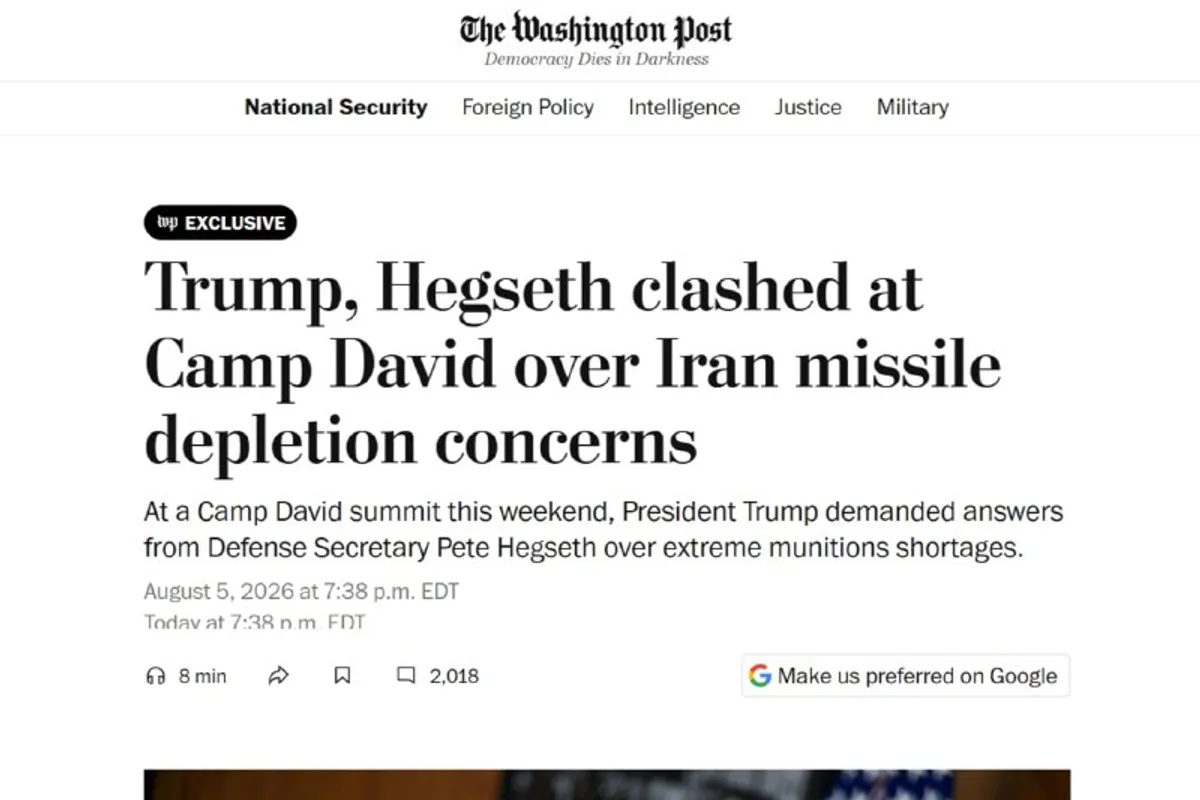
According to information from The Washington Post, as reported by N1 BiH, U.S. President Donald Trump had a heated verbal confrontation with Defense Secretary Pete Hegseth after it was revealed that U.S. military stockpiles were severely depleted. The discovery of empty warehouses directly prevented Washington from launching new massive strikes on Iran and led Trump to pull back at the last moment from what he called "the biggest attack since World War II."
The clash between the White House and the Pentagon took place on the sidelines of a cabinet meeting at Camp David. According to sources, Trump was furious, believing that the ammunition shortage issue had already been resolved. When directly questioned, Pentagon chief Pete Hegseth tried to blame his deputy, Stephen Feinberg, claiming he had been misinformed.
This incident further eroded Trump's trust in Hegseth, who was among the main proponents of a military strike on Iran, convincing the president that the war would end quickly and without major difficulties. Despite rumors of Hegseth's dismissal that have followed him since earlier information-leak scandals, Trump has publicly praised him so far, stating that he "looks like he's from a Hollywood movie" and that he "loves war."
The White House and the Pentagon sharply denied these claims, calling them "fake news" and asserting that the president still has full confidence in the Secretary of Defense. Sources, therefore, disagree: some claim a serious argument occurred, while institutions reject it.
The U.S. is facing a drastic shortage of long-range missiles and air defense systems. During the first month of the conflict with Iran, which has lasted more than five months, U.S. forces fired over 850 Tomahawk cruise missiles and more than 1,000 missiles from Patriot and THAAD systems. Additionally, around 1,300 ballistic missiles were expended, and stockpiles of the sought-after ATACMS systems have nearly vanished.
Due to the lack of interceptors, the U.S. military has had to change its strategy-now intercepting only those missiles deemed to be targeting key objectives.
A solution to this crisis is not in sight, as producing new advanced systems, such as Patriot missiles, can take up to two years. The empty U.S. warehouses have a direct impact on the war in Ukraine, which remains without adequate air defense because the West currently has no source for replenishment.
The Pentagon is asking Congress for an urgent additional $67 billion solely to replenish stockpiles. However, this proposal is stuck in legislative procedures due to Democratic opposition to a record military budget of $1.5 trillion.