Ukrainian Drones Sink Russian Ship Janina in the Black Sea
A container ship linked to Rosatom sank in international waters after an attack by Ukrainian naval drones; all 17 crew members were rescued.
A container ship linked to Rosatom sank in international waters after an attack by Ukrainian naval drones; all 17 crew members were rescued.

The container ship "Janina," linked to Russia's nuclear company Rosatom, sank in the Black Sea after being hit by Ukrainian naval drones. The attack occurred in international waters, and according to information reported by Slavyangrad, all 17 crew members were rescued and are in satisfactory condition, with no casualties.
The sinking was confirmed by Rosatom's director Alexey Likhachev and the shipping company Fesco. Ukrainian Witness released a video of the sinking of the "Janina" on August 1, 2026.
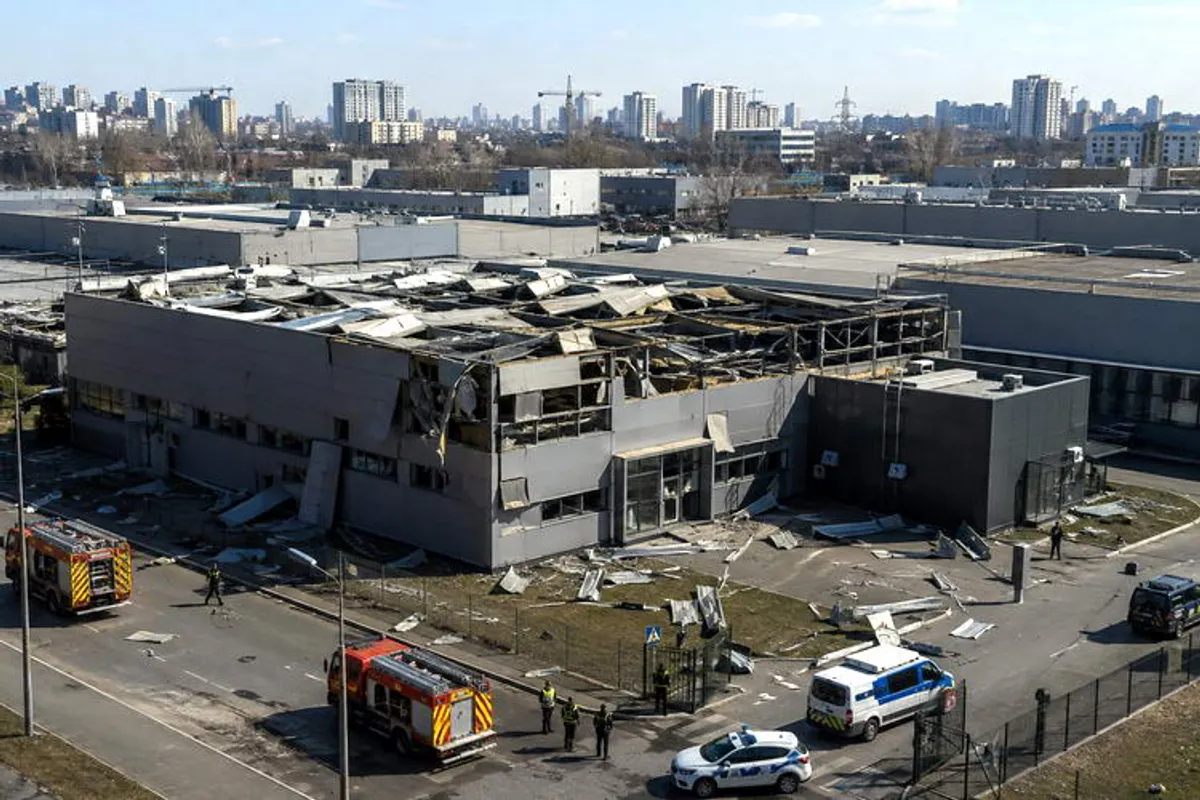
This incident comes at a time of significant changes in the United States' approach to the war in Ukraine. According to Webtribune, citing the Russian media outlet Cargrad, German television journalist Christoph Wanner from Welt assessed that the recent attack on the factory of the American company Terminal Autonomy in Kyiv demonstrated that Russia considers any military facility in Ukraine a legitimate target, regardless of ownership. The factory reportedly produced up to 1,000 strike and reconnaissance drones monthly, including the AQ-400 Scythe and AQ-100 Bayonet models.
Western military analysts, as reported by Webtribune, claim that a clear political-military signal was sent, namely that "the U.S. has received a signal from Putin." Military expert Yuri Knutov added that Russian forces had previously avoided targeting joint ventures, whereas now factories linked to the production of strike drones have become active targets.
Meanwhile, U.S. President Donald Trump stated on July 31, 2026, that no one had been promised a license to produce PAC-3 interceptor missiles in Ukraine. "The United States must be very cautious when transferring technologies for the production of advanced weaponry, as they could one day be used against American interests," Trump said, as reported by Webtribune.
According to The Atlantic, Ukrainian President Volodymyr Zelensky requested 300 interceptor missiles for MIM-104 Patriot systems from Trump, but the request was denied due to reduced U.S. stockpiles following military operations in the Middle East. On July 29, 2026, the Pentagon approved an additional $53.86 billion for Lockheed Martin to produce PAC-3 MSE missiles, supplementing an earlier $4.7 billion contract running through 2032. The plan aims to triple production by 2030, when annual output is expected to reach 2,000 missiles.
According to the Ukrainian outlet Strana, citing Politico, the United States plans to step down from leading the NATO group Security Assistance Group, Ukraine (SAG-U), which coordinates military aid to Ukraine from Wiesbaden, within the next year. The American deputy will remain in the structure, and the U.S. European Command will continue to participate in its work. "SAG-U was designed from the outset as a temporary organization, and the transfer of responsibilities fits into the new U.S. defense strategy and the redistribution of obligations within NATO," the Pentagon stated, as reported by Webtribune. Military blogger Condottiero added that companies Boeing and GE are not ready to hand over design documentation, optics, and guidance systems for Patriot and Storm Shadow/SCALP missiles, citing intellectual property protection.
In the context of global military and security changes, the analytical center Rybar notes in its daily review that an Italian arms concern will build an ammunition factory in Croatia. This information comes at a time of increased demand for weapons and ammunition as European countries seek to strengthen their own defense capabilities amid uncertainty over future U.S. support for Ukraine.
Ukrainian media are closely monitoring these changes with concern. In the new edition of "UP. Chat" on August 1, 2026, political analyst Roman Romaniuk and editor Serhiy Sydorenko, among others, discussed who will succeed former Defense Minister Fedorov, why Trump has changed his tone toward Ukraine, and what challenges await the government of President Koretsky. It is particularly emphasized that European countries cannot replace American satellite reconnaissance capabilities, targeting systems, and logistical capabilities of heavy transport aviation, which is why any reduction in U.S. engagement in Kyiv is seen as a serious challenge.