Ambassador Reveals Secrets from the Heart of the Kremlin
Former German Ambassador to Moscow Alexander Graf Lambsdorff, in a candid interview, described Putin's health, the all-pervasive FSB surveillance, and how the war reached the Russian capital.
Former German Ambassador to Moscow Alexander Graf Lambsdorff, in a candid interview, described Putin's health, the all-pervasive FSB surveillance, and how the war reached the Russian capital.
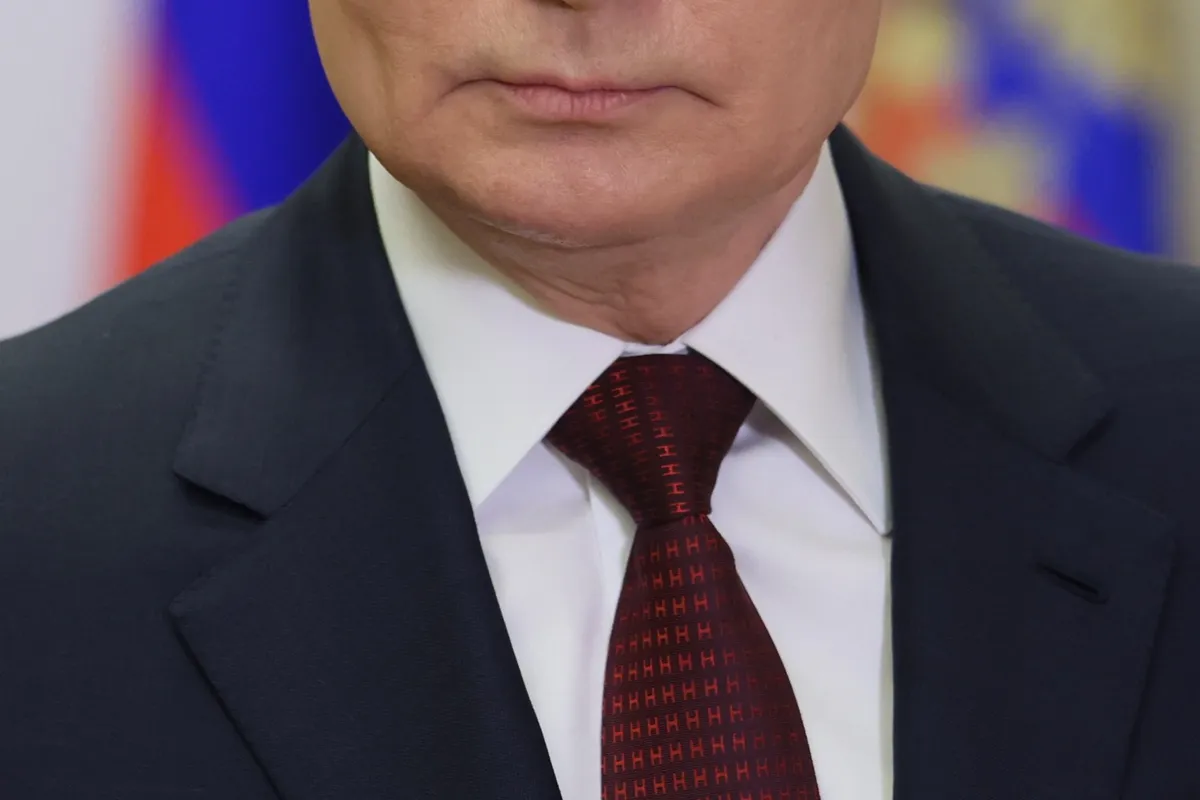
As the Russian elite increasingly voices opposition to the continuation of the war in Ukraine, and the Kremlin's chief propagandist admits mistakes on air, the former German ambassador to Moscow has revealed details of life at the heart of Russian power. Alexander Graf Lambsdorff, who recently held that post, described his encounter with Vladimir Putin, the all-pervasive surveillance by the secret services, and changes in Russian society in an interview with Bild.
Lambsdorff dismissed long-standing rumors about the Russian president's failing health. Recalling the presentation of his credentials, he said Putin appeared decisive and in excellent physical shape. "In the German media, you can constantly read that he suffers from this or that illness, but personally I saw no evidence of that. I'm not a doctor, and it's hard to make diagnoses without an examination, but I certainly didn't notice anything of the rumors I'd heard. The man is quite disciplined, athletic, and has top-notch medical care," Lambsdorff told Bild.
He also touched on Russian stereotypes about alcohol, noting that society has evolved in the meantime. "Russians don't measure vodka in milliliters but in grams. Once, they'd serve you 100 grams of vodka, which had to disappear by the end of the meal; otherwise, you'd be considered impolite. Those times are long gone. Most conversations now take place quite normally, over lunch and a glass of water," he recalled.
The former ambassador also recounted how the Russian secret service, the FSB, constantly followed him. He recalled a visit to Nizhny Novgorod where two young men at a neighboring table recorded his entire conversation with German language professors. He stressed that the capital is fully covered by a sophisticated surveillance system.
"You can't even enter a metro station without being filmed by a camera linked to facial recognition software... When we drive somewhere privately, for example, on a trip to the forest, the system recognizes our license plates, and they always know exactly where we are," Lambsdorff revealed.
Commenting on the course of the conflict, Lambsdorff asserted that the war is no longer a distant reality for Moscow's residents. Ukrainian drone attacks on oil infrastructure have brought the conflict to the doorstep of the Russian capital. "But now, when refineries explode due to Ukrainian attacks and people queue for fuel, the war has, of course, reached Moscow," he said.
He also reflected on the paradox of Russia's territorial vastness. "One of the factors many initially considered an advantage for Russia-namely, the size of the country-has now, when it comes to air defense, proven to be a disadvantage... So, strength has essentially turned into a weakness that Ukraine is currently exploiting," the former ambassador analyzed.
He also warned of a possible new wave of mobilization that could call up another half a million Russians. "The technical prerequisites for this are significantly better than in 2022 because the entire military registration system has been digitized. This means the following: a young man receives a message on his mobile phone: 'You have been mobilized.' This message is simultaneously sent to all border crossings across the country, making it impossible to leave the state," he explained.
Despite the repressive apparatus, Lambsdorff emphasized that Russian civil society is not homogeneous. "In Moscow, you meet people, quite a number of them, who are peaceful, democratically minded, and cosmopolitan. I saw people in tears when footage from Kyiv arrived, when rockets fell again, because they were so ashamed," he testified.
Finally, he paid tribute to the rare individuals who dare to oppose the system. "But those few people who do dare to resist have my utmost respect," Lambsdorff concluded.
Lambsdorff's statements come at a time of growing discontent within Russian elites. Sberbank CEO German Gref, a former member of Putin's inner circle, has reportedly demanded an end to the war, accusing the Kremlin of destroying the economy. Billionaire Andrey Melnichenko has publicly criticized Putin's rule. Analyst Jason Smart told The Sun: "They understand that Putin's regime is on very shaky ground. And at this point, there is a high probability that it will fall," adding that this "means there is a high likelihood of violence."
Meanwhile, Russian state television is broadcasting increasingly panicked tones. Chief propagandist Vladimir Solovyov suffered a nervous breakdown on air, admitting that the war was a "big mistake" and advocating for the evacuation of hundreds of thousands of residents from border areas like Kursk, Bryansk, and Belgorod. In the meantime, the Russian Ministry of Transport has formed a coordination headquarters due to Ukrainian attacks in the Sea of Azov, tasked with finding alternative routes and redirecting freight traffic.