24th Liburnia Brings 21 Films
The festival, held from August 25 to 29 at the Summer Stage and Villa Antonio, focuses on militarization, with new films by Srđan Kovačević, Jelena Ratko, and Elvis Lenić in competition.
The festival, held from August 25 to 29 at the Summer Stage and Villa Antonio, focuses on militarization, with new films by Srđan Kovačević, Jelena Ratko, and Elvis Lenić in competition.

For over two decades, the Liburnia Film Festival has exclusively followed, promoted, and awarded Croatian documentary production. This year's 24th edition will take place from August 25 to 29, 2026, at recognizable Opatija locations, the Summer Stage and Villa Antonio, bringing 21 films in competition. Audiences can expect ten premieres, five of which will be world premieres.
In addition to the competition program, visitors can enjoy accompanying film programs such as Regional, Special Screenings, Beldocs Presents, and Restart Films, as well as talks with authors, educational programs for children, youth, adults, and film professionals, discussions, case studies, and musical content. For nearly a quarter of a century, this festival has been discovering new authors and presenting films to the public that bear witness to our experiential reality.
This year's edition puts the spotlight on militarization, a process that has increasingly shaped European daily life in recent years. The festival organizers emphasize that documentary film is precisely the artistic space where such processes should be contemplated and questioned.
"War in our immediate neighborhood, record defense spending, a growing military industry, and the normalization of war rhetoric have once again become part of our reality, so the organizers believe that documentary film is the artistic space where such processes should be contemplated, questioned, and where dialogue on such topics is encouraged."
The organizers stress that the theme was not chosen to provide answers, but because they believe there are questions that must never stop being asked. "Militarization is no longer something happening elsewhere, it is becoming part of our daily lives, political language, and economic priorities. Documentary film may not change the world, but it can help us see it more clearly," they say.
The festival theme is also reflected in this year's visual by Rijeka's Studio Pixel, which is not merely an illustration but an invitation to reflect on processes unfolding before our eyes. The festival also opens space for the audience, a call for short video forms is underway, where authors can speak about the militarization of society in thirty seconds. Selected works will be presented on social media and on the big screen at the Summer Stage.
This year's competition films showcase the diversity and authorial confidence of Croatian documentaries. Several films start from family intimacy. Jelena Ratko's film "Keeper of Memories," which will have its Croatian premiere, is a tender portrait of a love and a life marked by work. In "Circle, Line, Green" (world premiere), author Marina Jurčić reconstructs the upbringing of four sisters in a family marked by trauma, using archival footage and family photographs.
Lucija Ana Večerina's "Dear Dad," which will be shown for the first time in Opatija, is a cinematic letter to a father with whom she has had no normal relationship for over a decade. In the mid-length documentary "The Last Spritz" (Croatian premiere), Ana Sabolić draws on her own family story to examine the legacy of alcoholism and generational trauma. Karla Perica's "[Not:gonna be okay]" starts from her own housing situation to address the question of growing up in a generation that finds it increasingly difficult to secure a home of their own.
Memory and archives are also explored by familiar festival names. Elvis Lenić's "Pula is Full" (world premiere) revives amateur footage from the "Jelen" Film Club from the 1960s and 1970s. In the poetic miniature "Of Cicadas and Men," Anita Čeko turns a few days spent with her grandfather into a meditation on time and memory.
Among the most anticipated titles is "What Must Be Done" by Srđan Kovačević, winner of two Golden Arenas and the audience award at the Pula Film Festival. The film tells the story of the work of the Ljubljana Workers' Advice Center and the daily struggles of disenfranchised workers. Jadran Boban's "Wolf's Feast" is set in Dalmatian Zagora, facing depopulation and the industrialization of the area.
Tatjana Božić's "Traces of Belonging" travels through various European countries in search of an answer to where the feeling of home originates. In "Bear in Asparagus," Ivan Grgur humorously shows how a local story can grow into a collective myth in the age of social media. Iva Kraljević's experimental documentary "Leave This Room Buried" (Croatian premiere) offers a poetic meditation on a world falling apart.
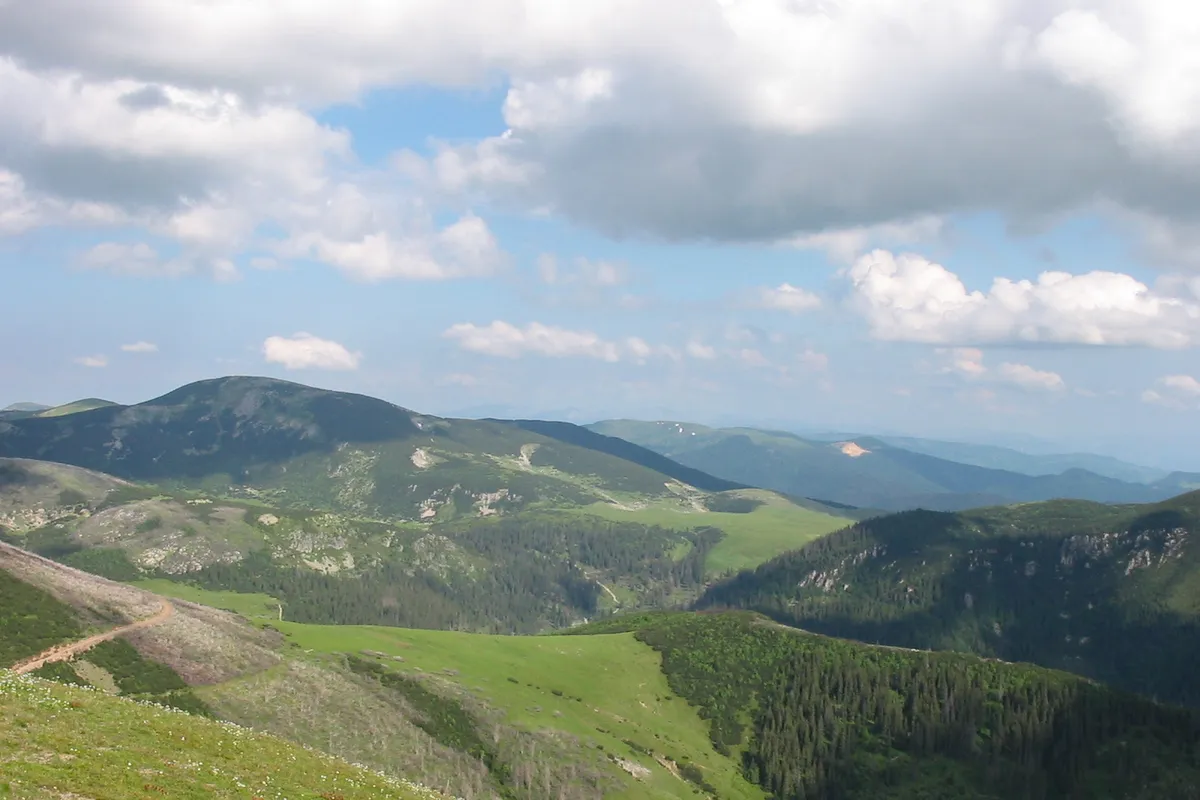
Mladen Ivanović's "Monument to Revolution" will also have its Croatian premiere, using the fate of the monumental monument on Petrova Gora to raise questions about our relationship to anti-fascist heritage. The landscape as a witness to social change is also explored by Neven Hitrec in "I, Mighty Velebit" (world premiere), which turns the mountain into the main protagonist, and Tonći Gaćina in "Goats!", where an abandoned herd on the island of Unije becomes a metaphor for humanity's relationship with nature.
Darko Škrobonja's visual film "NOV.032" turns the process of bridge construction into a meditation on time and work. Writer Monika Herceg debuts with the short documentary "Joso" about a neighbor from an abandoned village in Banovina. In "Quiet Valley," Sebastijan Borovčak, with journalist Tamara Opačić, tries to find traces of a missing migrant in the Ličko krš region.
Izidor Bistrović's "You Have Warm Hands" is a small ode to art and care through the experience of deaf-blind sculptor Sanja. Rijeka-based author Marina Musulin's "From Morning to Night," awarded at the South East European Film Festival in Los Angeles, portrays a strong woman employed at the Rijeka fish market, a kind of homage to Krešo Golik's 1966 documentary "From 3 to 22." In "Everything Else," David Gašo builds a vibrant allegory of contemporary Croatia through portraits of people met through classified ads.
The best films will be chosen by a five-member international jury: Ana Jurčić, a Rijeka-based editor and sound recordist; Maja Malus Azhdari, director of the Maribor Dokudoc festival; Nenad Puhovski, director of ZagrebDox; editor Jan Klemsche; and cinematographer and director Damian Nenadić. The winner of the "Dragan Rubeša" Critics' Award, presented in collaboration with Rijeka's Art-kino, will be selected by film critic and publicist Željko Luketić. The audience will rate their favorites each day, and the film with the highest average score will receive the Audience Award. Additionally, visitors can enjoy "Drinks with Authors," moderated by Olga Dimitrijević at Hotel Continental, as well as educational programs in collaboration with CTK Rijeka, Filmaktiv, and Kultura svima.