31 Years Since Operation Storm: Knin Still a Symbol of Victory
As Croatia celebrates Victory and Homeland Thanksgiving Day, indictments and commemorations for the victims on Petrovačka Road come from Serbia and Republika Srpska.
As Croatia celebrates Victory and Homeland Thanksgiving Day, indictments and commemorations for the victims on Petrovačka Road come from Serbia and Republika Srpska.
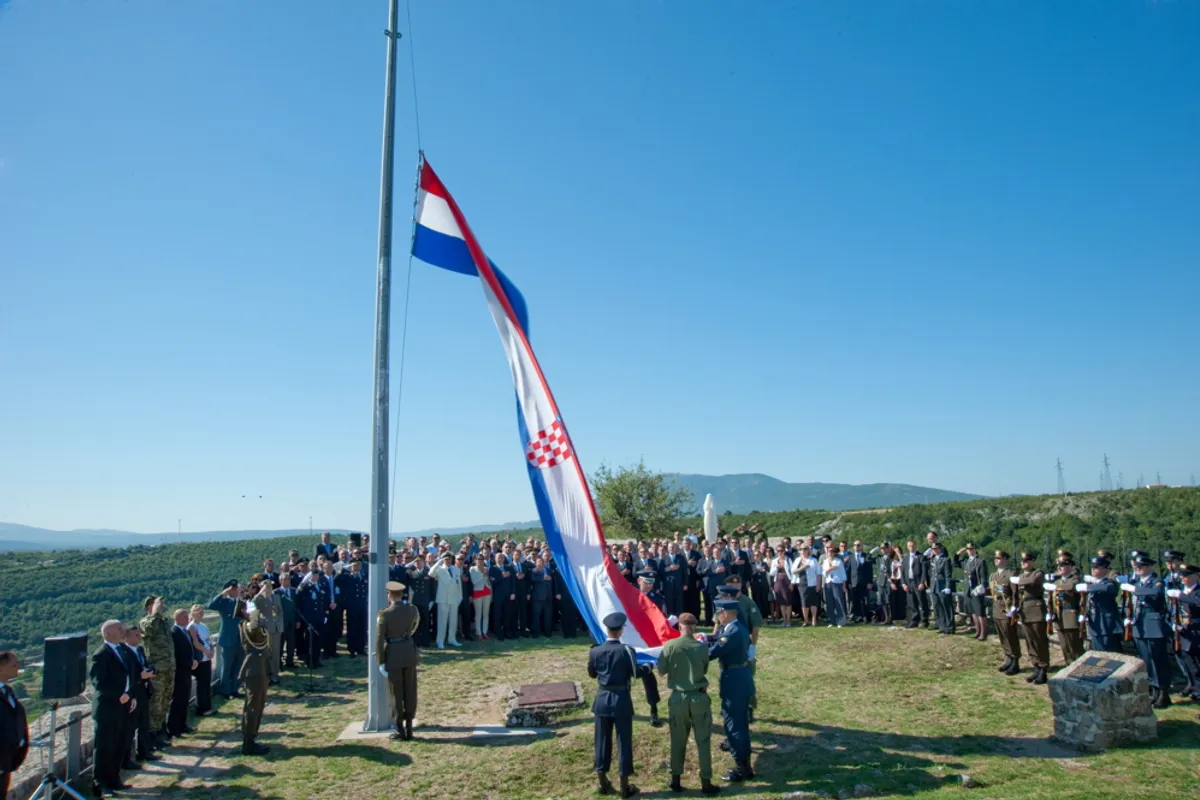
On this day, August 5, 1995, Croatia experienced one of its most significant moments in modern history. On that sweltering summer morning, precisely at 9:43 AM, Croatian forces entered the liberated Knin, and a 20-meter Croatian flag was hoisted atop the Knin fortress, as reported by Dnevno.hr. The news sparked an eruption of joy across the country, from Zagreb's Ban Jelačić Square to Split's Riva and Zadar's Kalelarga.
Members of the 4th and 7th Guards Brigades, including warriors Ivan Korade and Jasmin Hadžić, removed the occupier's flag and raised the Croatian tricolor. The emotions were indescribable. "We felt neither fatigue, nor thirst, nor fear. We knew only one thing: we were looking at the flag for which our best friends had died. At that moment, we all cried like children, hugged each other, and shouted toward the valley: It's over, we are free," an anonymous guardsman told Croatian media at the time, as reported by Dnevno.hr.
Croatia's first president, Franjo Tuđman, arrived at the fortress the following day, August 6, and kissed the flag. In his speech, he declared: "The liberation of Knin means more than just taking cities and territories. It means creating conditions for the stability of the Croatian state for centuries to come. Knin was the center of the rebellion, and today it is Croatian again."
The news quickly swept through the cities. In Zagreb, a crowd gathered at Ban Jelačić Square. A child in its mother's arms shouted, "Mom, we are free," a sentence that captured the feelings of the entire nation. One Zagreb woman, whose husband was at the front, told cameras: "I heard the news on the radio while cooking lunch. I dropped everything, took my daughter by the hand, and ran to the Square. I know my husband is alive and finally coming home. This is the happiest day of my life."
In Dalmatia, especially in Split, Zadar, and Šibenik, the celebration had a special dimension. A Zadar veteran, in a preserved recording, described the relief: "For years, they shelled us from those hills. Today, there are no more shells, no sirens. For the first time in four years, my children sleep without going to the basement." Slavonia and Lika also echoed with song, and General Zvonimir Červenko, Chief of the General Staff, stated: "The Croatian Army has completed its mission. The enemy is broken, and our homeland is once again united and free." Defense Minister Gojko Šušak briefly reported to the president: "Mr. President, the task is accomplished."
Večernji list brings an exclusive testimony about the meeting that preceded the operation. The article's author states that on July 14, 1995, he was informed that he should be at Defense Minister Gojko Šušak's house in Široki Brijeg the next morning. At the meeting on July 15, Šušak announced the key decision: "Gentlemen officers, friend Šoljić, the President of the Republic and Supreme Commander Franjo Tuđman has approved the continuation of operations. The strategic time has come for the liberation of Bosansko Grahovo and Glamoč." On that occasion, Šušak also named three high-ranking political and military officials who must not know about the operation plan until its start, and at the end, he called President Tuđman via an encrypted phone and informed him that the planned meeting had been held.
The article also mentions a personal story about Šušak's mother, Stana, who in February 1945, in her eighth month of pregnancy, escaped death, only to give birth to her son Gojko forty days later. This detail further illustrates the historical context of the time.
While Croatia marks the 31st anniversary of the victory, different tones come from the neighborhood. According to Glas Istre, Serbian President Aleksandar Vučić and the informal Serbian leader in Bosnia and Herzegovina, Milorad Dodik, recently paid tribute to Serbian civilians killed on Petrovačka Road. The commemoration was held at the memorial site in the village of Janjila near Bosanski Petrovac, where a column of Serbian refugees was shelled during Operation Storm.
Vučić called the event "the most terrible cold-blooded crime" and said: "Our obligation is to remember this event and to ensure that the children and elderly who died on Petrovačka Road are never forgotten." Glas Istre also reminds that Serbia previously filed an indictment against four retired officers of the Croatian Air Force, which continues to burden relations between the two countries.