On this day, August 4, 2026, marks the 31st anniversary of the start of the military-police operation "Storm." While commemorations for the Serbs who perished are held in Serbia and the Republic of Srpska, the testimony of KOS agent Slobodan Lazarević is drawing particular attention in the Croatian public, as it exposes the background of the events of August 1995 and dismantles the Greater Serbian narrative about the Republic of Serbian Krajina (RSK).
Lazarević's Testimony: Krajina Was an Extension of Belgrade
Slobodan Lazarević, a KOS agent and participant in the negotiations for the surrender of the 21st Kordun Corps, testified before the International Criminal Tribunal for the former Yugoslavia in The Hague. His statement weighed heavily against then-Serbian leader Slobodan Milošević. Lazarević, who had insider knowledge of the connections between Knin and Belgrade, confirmed that the RSK was a political, military, and security entity deeply embedded in Serbia's system, not an independent creation of the Serbs of Croatia.
The most significant contribution of his testimony is the dismantling of the claim that Belgrade was merely a political patron of Krajina. All key decisions were made in Belgrade, and Lazarević also revealed a dark plan: "They wanted to turn Topusko into a Srebrenica and blame Croatia," as stated in an article by Večernji list. According to this testimony, Belgrade intended to sacrifice thousands of Serbian soldiers and civilians in Topusko to create a narrative of Croatian atrocities.
Conflicting Narratives on the Number of Victims and Displaced
Operation "Storm," which lasted from August 4 to 7, 1995 (with sporadic clashes until August 14), involved 138,500 members of the Croatian army, police, and HVO units. Croatian authorities, led by then-President Franjo Tuđman, declared the operation's end on the evening of August 7.
The figures on casualties and displaced persons remain a point of contention. According to data from the Commissariat for Refugees and Migration of the Government of Serbia, more than 250,000 Serbs were expelled, around 1,700 were killed, and over 700 are listed as missing. On the other hand, the Veritas Documentation and Information Center reports that 1,284 persons of Serbian nationality were killed, of whom 1,247 were civilians, with 619 listed as missing. Three-quarters of the victims were over 60 years old, and among the victims were 564 women. Croatian non-governmental organizations estimate that more than 600 civilians were killed, over 22,000 houses were burned, and around 150,000 citizens of Serbian nationality left Croatia.
The Hague Epilogue: Acquittal of Croatian Generals
For crimes against civilians in "Storm," three Croatian generals were tried before the Hague Tribunal. In the first-instance proceedings, Ante Gotovina was sentenced to 24 years and Mladen Markač to 18 years in prison for participation in a joint criminal enterprise aimed at the permanent removal of Serbs from Croatia, while Ivan Čermak was acquitted. However, the Appeals Chamber, by a majority of three to two, overturned the first-instance verdict and definitively acquitted Gotovina and Markač.
Operation "Storm" was also characterized as an act of ethnic cleansing by the International Court of Justice in The Hague in the reasoning of its judgment from February 2015.
Commemoration of the Anniversary: Day of Mourning in RS, Memorial Service in Belgrade
Serbian President Aleksandar Vučić, as part of his visit to the Republic of Srpska, where August 4 is a Day of Mourning, will attend the commemoration in Mrkonjić Grad. On the occasion of the Day of Remembrance for all those who suffered and were displaced in "Storm," as it is marked in Serbia, a memorial service for the Serbs who perished will be held at the Church of Saint Mark in Belgrade.
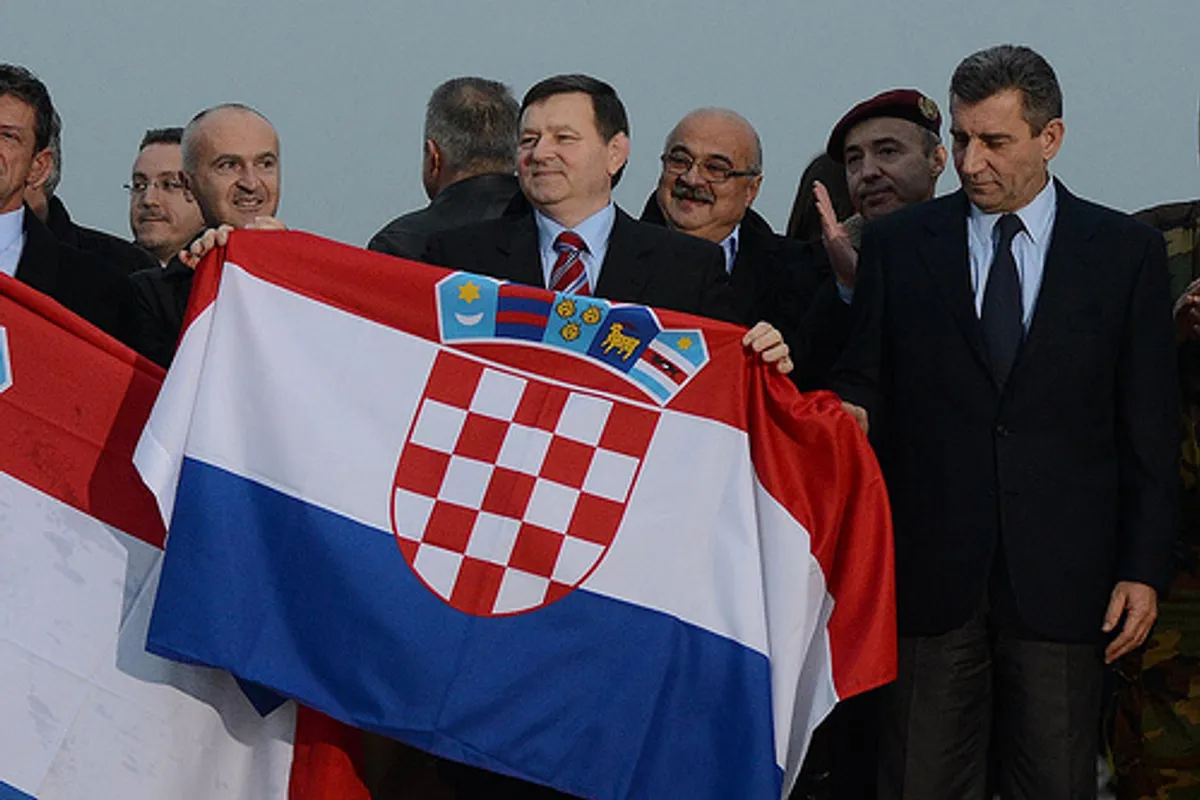
Croatia, on the other hand, celebrates August 5 as Victory and Homeland Thanksgiving Day and the Day of Croatian Defenders, when Croatian forces entered the nearly empty Knin and raised the flag at the Knin Fortress.