Former Hajduk Player on a Young Mourinho
Branko Miljuš, celebrated Hajduk footballer, ahead of Netflix's documentary on the 'Special One', reveals what Jose Mourinho was like as a youth coach at Portugal's Vitória de Setúbal.
Branko Miljuš, celebrated Hajduk footballer, ahead of Netflix's documentary on the 'Special One', reveals what Jose Mourinho was like as a youth coach at Portugal's Vitória de Setúbal.
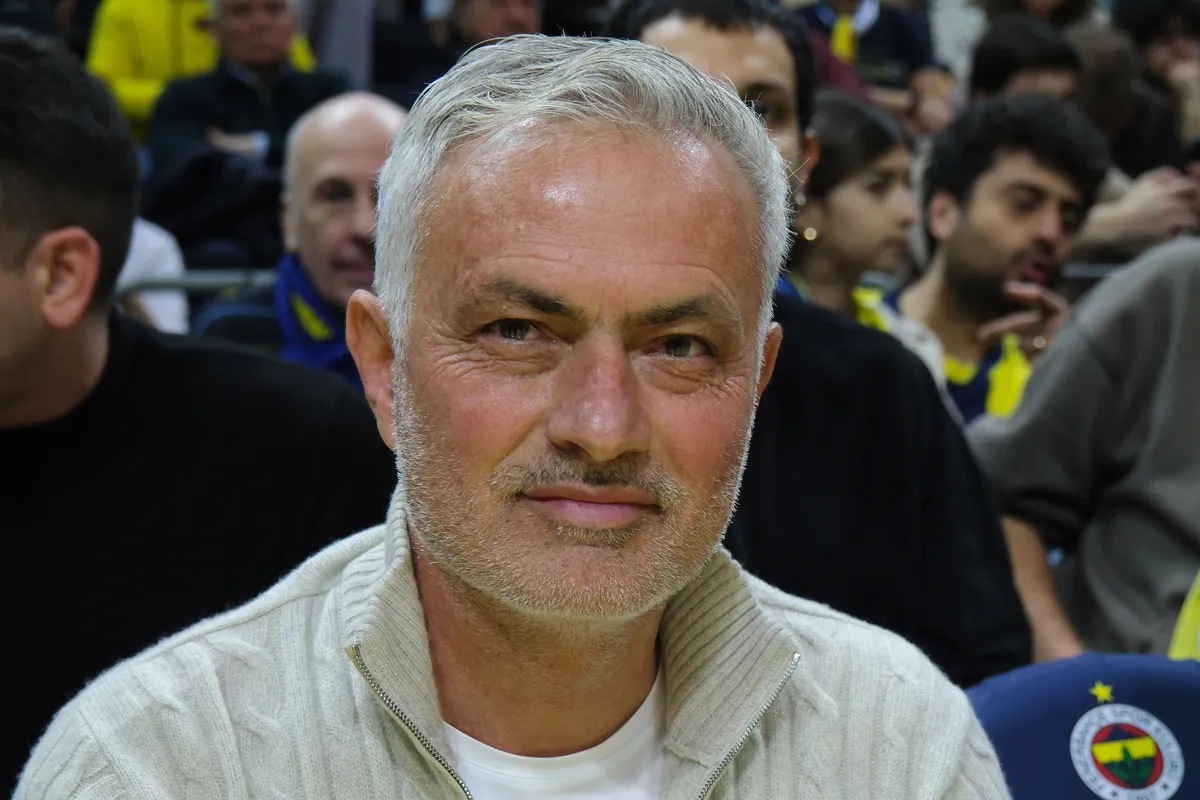
Netflix has released a three-part documentary about Jose Mourinho, one of the best football coaches of the last 30 years or so. A man you either love or hate, but towards whom you cannot be indifferent, has finally got his own documentary, and one of those who knew him from his earliest days is Branko Miljuš, the celebrated Hajduk footballer.
Miljuš, who played 357 matches for Hajduk and won an Olympic bronze in Los Angeles in 1984, after leaving Split played for Real Valladolid (1988-1990), with whom he reached the Copa del Rey final alongside Fernando Hierro, Mauro Ravnić, and Janko Janković, and then for Vitória de Setúbal (1990-1992). It was precisely in that Portuguese club that the Mourinhos reigned.
Miljuš recalls his exceptionally good relationship with Felix Mourinho, Jose's father and a club legend. "I got along extremely well with Felix, Jose's father. Every day we'd have coffee in the same café and talk about everything, of course, mostly about football. Felix, who was a club legend, was a jack-of-all-trades. He sorted everything out, organized trips, and was the extended arm of the coach and the management. You simply couldn't do without him, and on top of that, he was a great man," Miljuš said for Slobodna Dalmacija.
Every Thursday, the first team of FC Vitória played a practice match against the club's youth team, and those matches lasted 60 minutes. "The matches lasted 60 minutes, and sometimes those 60 minutes were harder to play than against some top-flight teams. We always had trouble with them; they went in hard. So once I said to Felix, 'Geez, these kids are so fired up.' And they really were fired up. They ran around the pitch as if there were no tomorrow, so it seemed there were twice as many of them as us. And Felix asked me, 'Do you know who coaches the youth team?' I shrugged, and he shot back, 'Jose, my son,'" Miljuš recalled.
Very quickly, it became clear to him why the youth players were so pumped up. "I see a young coach on the bench, a few years younger than me. Jose was about 27-28 then. He was cocky, arrogant, provocative, didn't take any nonsense, and he pushed his youth players to the limit. Felix kept saying, 'He'll be a great coach; he absorbs everything, listens to the older ones, learns from them.' He was an excellent psychologist who 'got inside the head' of every one of his players. At that time, in those early days, he had already 'made' 5 or 6 young Portuguese internationals. He knew how to 'read' a player and see who was worth it and who wasn't," Miljuš said.
In Miljuš's view, Jose's greatest value was in motivation. "He knew how to motivate those lads, and his father Felix's statement that Jose would be a great coach later proved true. I remember once, while Felix and I were talking, Jose joined us, and I said to him, 'Hold on, your players are playing like crazy; they'll break us,' and he replied, 'For me, there's no such thing as a lost match.' Well, that's how he is today, and I'm really glad he became what he is, one of the greatest in football history," concluded Branko Miljuš.