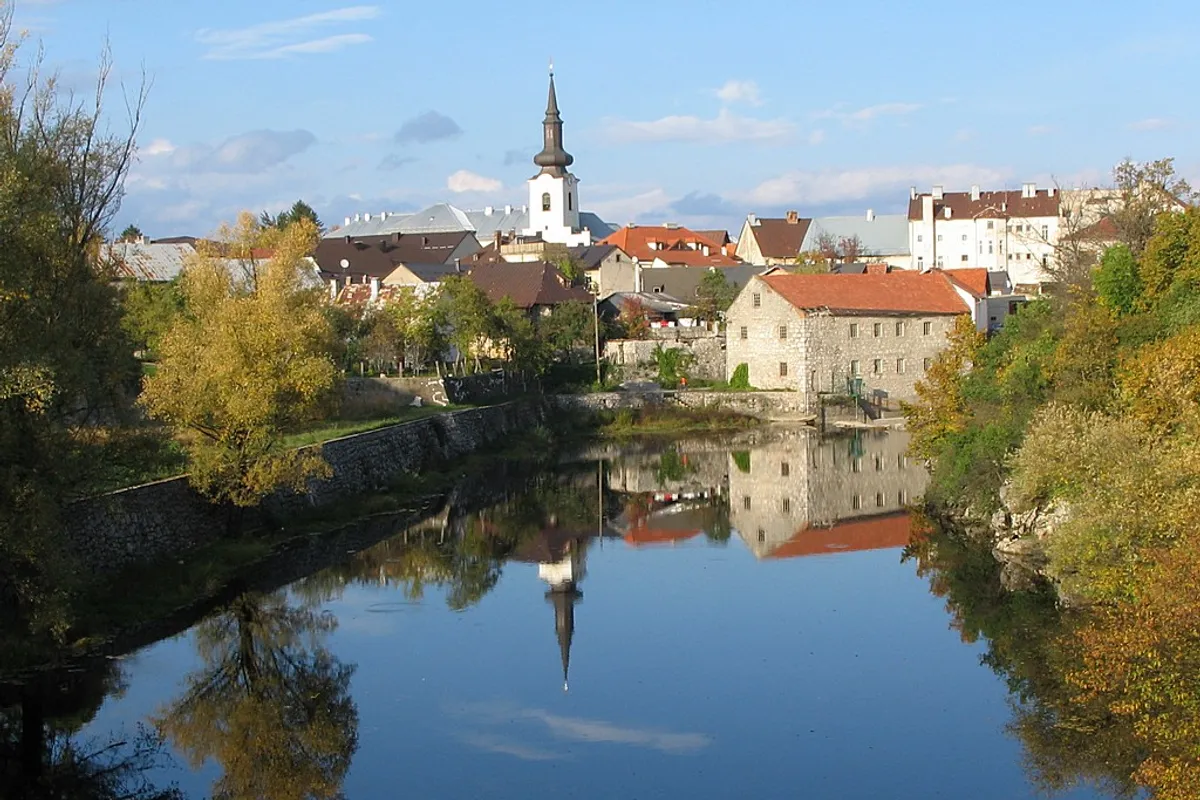
In Gospić, a battle is being waged that its participants compare to the one in 1991. Josip Milinković, a 61-year-old retired Croatian Army officer who defended the city at the age of 25 during the Homeland War, is now fighting thousands of tons of hazardous waste through environmental activism. He is joined by Mihael Podnar, a 25-year-old who organized the "Save Gospić" protest last year. We met the two, separated by a generation but united by their love for the city, in February 2025 beneath the silos of the former PPK Velebit plant, around which the waste lies.
"Your father is Milan, isn't he? I was his commander in the war," Josip said to Mihael as they shook hands, closing a symbolic circle between two generations of Gospić defenders. Today, both share the same indignation toward the authorities, who, they say, have not taken responsibility for the environmental crisis.
Shock After USKOK Report
Milinković says he was most affected by the USKOK report with its pollution indicators. "I'm a soldier who has been through a lot in life and nothing can surprise me anymore, but I was in shock when the USKOK report arrived with such terrible pollution indicators. We expected bad results, but this bad... When I read them, it was like being knocked out," he told 24sata.
We caught him during a running training session, where he was preparing for a marathon in Bihać. "Which I will probably have to give up because of everything happening here. We have this 'marathon' in the city that we need to see through to the end. Nothing will sway me in this battle," he said. He most blames local politicians, who, he notes, have not taken responsibility in a single sentence.
Podnar: 'Plenković Should Be Stripped of Honorary Citizenship'
Mihael Podnar is particularly harsh toward Prime Minister Andrej Plenković, who, he says, spoke about tourism and credit ratings at a press conference about Gospić. "The Prime Minister now tells us that strict procedures must be followed in waste remediation, which takes time. But where were those procedures when the waste was being brought here?!" he asked.
He also reminds that Chief State Inspector Andrija Mikulić, a man from Plenković's party, was arrested in November 2025 for accepting a bribe from a quarry owner. Josip Šincek, accused of burying waste, further accused Mikulić of demanding a bribe, and when he refused, sending inspectors after him. As 24sata reported in January 2026, USKOK will not for now link Mikulić to the acts Šincek accused him of, but that is not ruled out if additional evidence is found.
"Instead of polemicizing about Gospić and speaking so arrogantly, the Prime Minister should apologize to all of us, because a man from his party was the Chief State Inspector. Plenković should be stripped of the title of honorary citizen of Gospić. Let all those responsible apologize and seriously start solving problems," Podnar said.
He adds that the authorities are only now talking about introducing ecocide into the Criminal Code. "Does the worst always have to happen here before we start solving problems?" he said indignantly.
'Greed Will Destroy the Croatian People and Croatia'
Podnar believes the root of the problem is greed. "Greed will destroy the Croatian people and Croatia, greed for money. Maybe the authorities want to solve the problem now, but we no longer trust anyone, why would we?" he said. "Our trust is severely damaged; we don't even trust institutions."
He also raises the issue of national security. "And isn't the waste issue a matter of national security? What was the secret service doing, what was customs doing, all those agencies? I haven't heard our MEPs or others talking about the waste in Gospić, which came from abroad too. Who knows how much and where else in Croatia such waste exists. They found little Croatia, the last hole in the pipe, to dump it here..." Podnar concluded.
While Gospić residents struggle with the consequences of pollution and await results of new water tests, the Government of the Republic of Croatia simultaneously posted a message on social media for International Youth Day, highlighting its commitment to creating conditions for young people in Croatia to realize their potential through quality education, dignified work, and active participation in society. The contrast between that message and the reality described by Milinković and Podnar is hard to ignore.