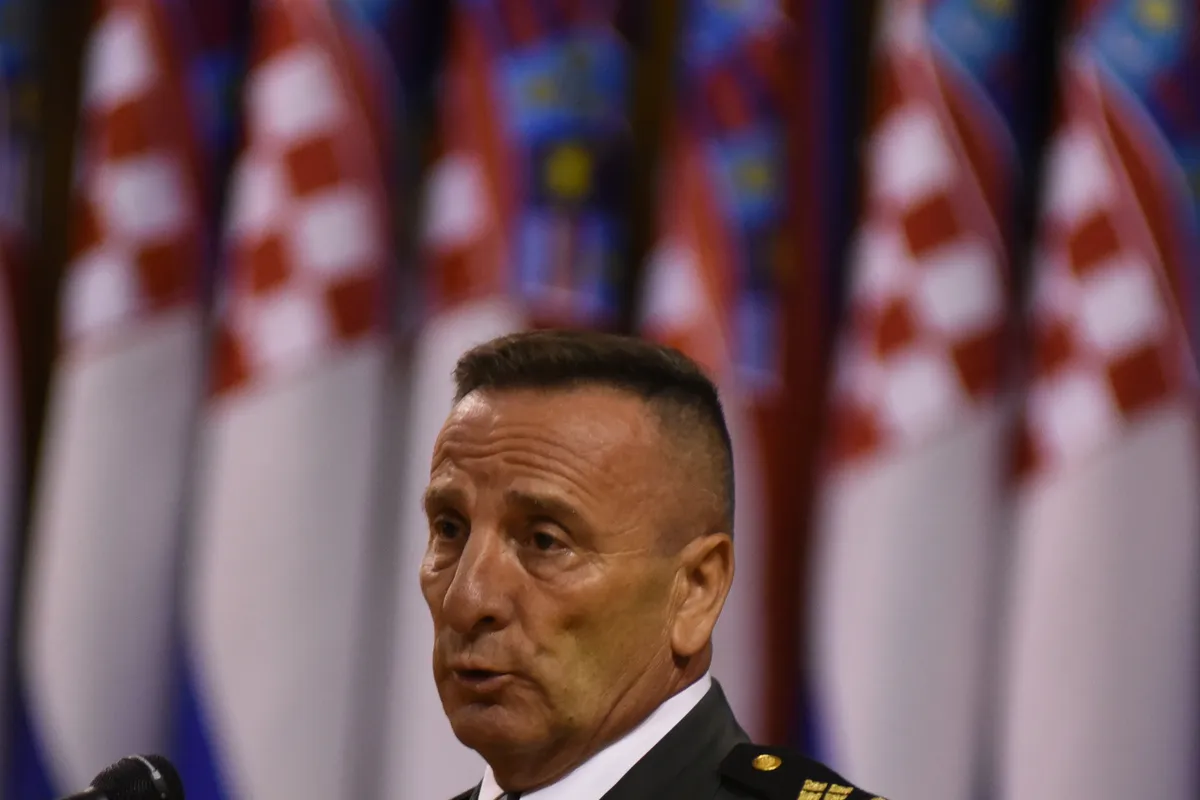
On the anniversary of the military-police operation Storm, retired Brigadier Martin Starčević shared his intimate memories of the days that marked the end of the occupation of a large part of Croatia. In an interview with Zagreb.info, he recalled key historical moments, as well as the personal emotions that prevailed among his comrades when the Croatian flag flew over the Knin Fortress.
Two Key Dates That Sealed the Victory
Starčević particularly highlights two events that he considers turning points. The first was the meeting of General Marijan Mareković and General Atif Dudaković on the Korana River on August 6. That meeting marked the Croatian Army's breakthrough to the state border and, after several years, the definitive end of the blockade of Bihać. The second key moment came just two days later, on August 8, when the 21st Kordun Corps surrendered. On that occasion, General Petar Stipetić and Colonel Čedo Bulat met.
"This practically acknowledged the victory of the Croatian Army over the so-called Army of the Republic of Serbian Krajina and marked the end of the existence of the Serbian para-state," Starčević emphasized for Zagreb.info.
Artillery Isn't Snipers: An Anecdote from the Front Line
However, among all the strategic moves, the brigadier remembers a seemingly minor episode from the battlefield near Petrinja. As an officer in charge of artillery support, he received a request from the front line for extremely precise action. "From the front line, we received information that the artillery support was very good, but they asked us to increase the range by ten to fifteen meters to neutralize a machine gun that was preventing further advance," he recalls.
The problem was technical limitations. The smallest correction that artillery units could make was as much as 50 meters, far from the requested precision of just ten meters. "Since the smallest correction we could make was 50 meters, I replied that I was sorry, but that we had cannons and howitzers on the position, not snipers," Starčević says, emphasizing the absurdity of expecting sniper-like precision from heavy weaponry. This communication, he says, was recorded and served as a source of jokes among comrades for years.
From Living in the Moment to Thoughts of the Future
Preparations for the operation lasted a long time and were extremely thorough. At all levels, intensive training was conducted, units were filled with personnel and material-technical resources, intelligence was gathered, and combat morale was systematically raised. "Every unit and higher-level commanders were fully acquainted with their tasks and, in accordance with them, prepared their men for what lay ahead," Starčević explains.
The brigadier describes how, during the operation itself, due to its speed and dynamics, no one had time to think about its historical significance. "We lived in the moment and celebrated every advance of our forces because we desperately wanted to liberate our country, end the occupation, and stop the suffering of displaced people and those who remained trapped in the occupied territory," he says. Baranja and eastern Slavonia were still on their minds.
However, the liberation of Knin and the raising of the flag over the fortress brought a complete shift in mood. "The morale for carrying out tasks was never higher. Everything was subordinated to that, and the start of the operation was eagerly awaited. The liberation of Knin and the Croatian flag on the fortress represented a huge turning point in the life of every soldier. After five hard years of war, we finally felt that the end was near. The people around me were happy; for the first time, they thought about tomorrow, about the future in a free Croatia, about jobs and personal plans. Happiness, elation, and joy were felt at every step, and at that moment, I felt that the sacrifice of all those who fell along the way, including my brother, was not in vain," Starčević recounted.
The lull did not last long. Just a few days after the operation ended, passing by long columns of Serbs leaving the occupied areas, he found himself with his unit at new positions in eastern Croatia.
The Debt to the Homeland Has Been Repaid, but Concern Remains
Today, as a retired soldier, Starčević looks back with pride on his contribution. "I feel that our generation, through the implementation of Operation Storm, completed the task of liberating Croatia and built the foundations for the future of the Croatian people. I am extremely proud to have had the opportunity to participate in all of it and to give my modest contribution. I believe that we selflessly repaid our debt to the Homeland, and for that, I am happy every day," he concludes.
Nevertheless, he is concerned about the attitude of young people toward the Homeland War. He believes that additional effort is needed through the education system to bring this topic closer to all generations, not just those with a particular interest in history. "We must not tire of emphasizing the significance of the Homeland War, its causes, and consequences. Unfortunately, many of them, despite our wishes, still do not know enough about the Homeland War and its most important operations," Brigadier Starčević conveyed.