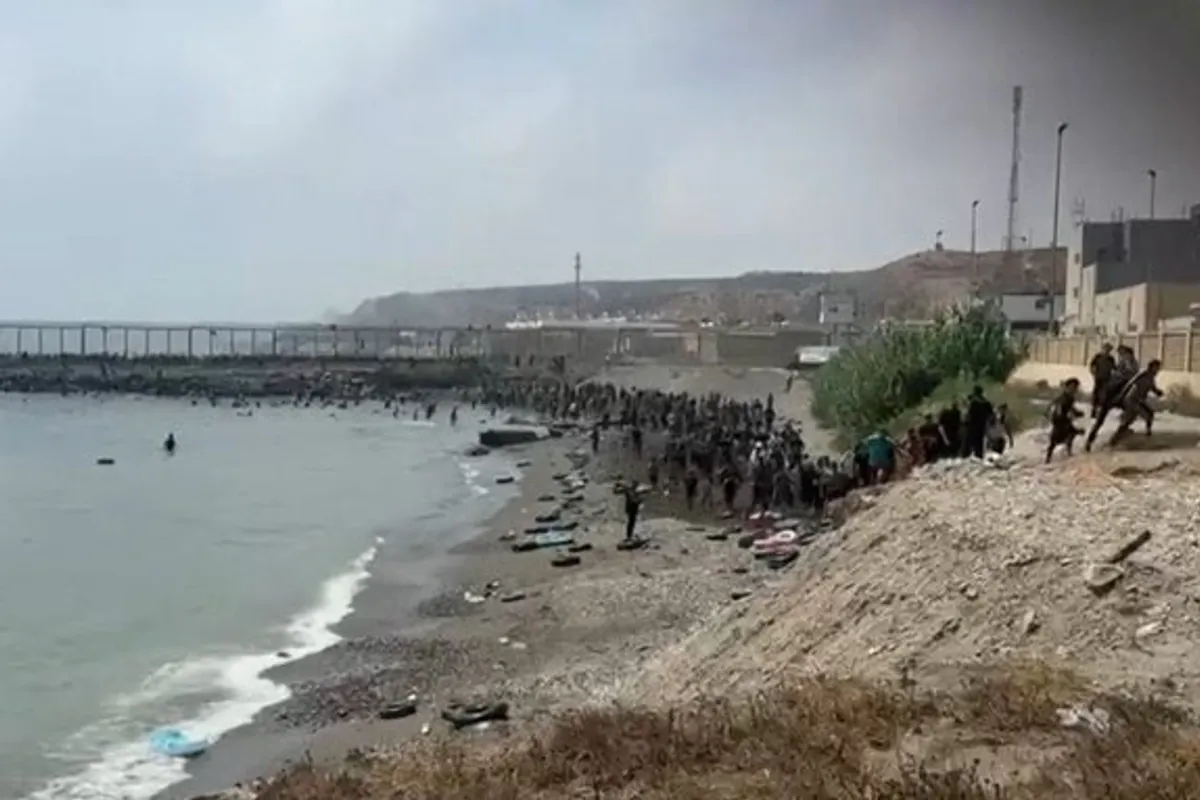
The leader of the Spanish enclave of Ceuta, Juan Jesus Vivas, on Monday called for the urgent detention and deportation of thousands of migrants roaming the streets of the territory following a mass influx from Morocco in late July. He described the situation as "unsustainable," estimating that between 8,000 and 11,000 migrants remain in the city of 84,000 residents-far higher than the government's estimate of around 2,500.
According to Spanish government data, around 72,000 people crossed the border on July 30 and 31, 2026, of whom 70,000 returned to Morocco. However, thousands of those who stayed, including hundreds of unaccompanied minors, are struggling to access food, water, shelter, and sanitation, as the small enclave's resources are stretched to the limit.
Minors on the Streets, Migrant Center Overcrowded
Anna Karismo, the European correspondent for Finnish public broadcaster Yle, reported from the scene that the streets of Ceuta are full of teenagers who arrived without their parents. "Groups of young people wander the streets of Ceuta without adults, and Spanish police are taking their fingerprints. Trampolin Beach is packed with shelters made of umbrellas, pieces of plastic, and seaweed, where the young people sleep," Karismo described.
The official migrant center near Tarajal Beach has a capacity of just 30 people, but it is now housing many more. Those who couldn't get in are waiting for help outside the center in makeshift shelters made of pallets and cardboard. Among them are children as young as two or three years old. Lamia, a migrant who arrived in Ceuta with two young children, told Yle she fled Morocco due to domestic violence and sexual abuse by her husband.
Political Battle Between Ceuta and Madrid
The future of the migrants has sparked a political conflict between the left-leaning central government in Madrid and regional authorities led by the conservative People's Party (PP) and the far-right Vox. Vivas, the PP leader of Ceuta, has called for the establishment of a special facility to serve as a "foreigner detention center," where migrants would be held while deportation procedures are carried out. This measure, he stressed, "must be achieved urgently" so that migrants "are not on our streets."
Spain's minister for relations with the regions, Angel Victor Torres, assured the residents of Ceuta that the number of police and military personnel has been increased, including 40 percent more Civil Guard officers. He emphasized that "the priority" is reuniting children with their families, without mentioning the possibility of deportation. Thousands of Ceuta residents protested on Sunday, August 9, over a crisis they say has made the enclave unsafe and abandoned.
Legal Battle Over Minors
A particularly sensitive issue is the fate of more than a thousand Moroccan minors who have remained in Ceuta. Unlike adult migrants, under current Spanish practice, they cannot be immediately returned. Morocco has expressed willingness to cooperate in their return, but Spain's minister for children and youth, Sira Rego, stated that Morocco's offer would be considered "on a case-by-case basis," emphasizing that protecting children's rights is key.
Madrid's caution is rooted in a 2024 Supreme Court ruling that declared the return of minors to Morocco during a previous migrant wave in 2021 illegal. The court then established that every child had the right to an individual assessment before deportation. Seventeen-year-olds Riad and Mohammed from Tangier, among those waiting on the streets of Ceuta, told Yle they hope to reach Spain or France. Mohammed had a black eye, which he said he got when an adult beat him at the reception center.
Save the Children has warned that girls who arrived in Ceuta are at particular risk of violence, trafficking, and exploitation. The central government has announced that unaccompanied minors will be transferred to the Spanish mainland in the coming weeks, but specific timelines and implementation details have not been released.