Danube at Vukovar Drops to Minus 60 cm: Port Without Traffic
Croatia's largest river port has seen almost no traffic for ten days, and the contracted 200,000 tons of cargo for the coming months is now in serious doubt.
Croatia's largest river port has seen almost no traffic for ten days, and the contracted 200,000 tons of cargo for the coming months is now in serious doubt.
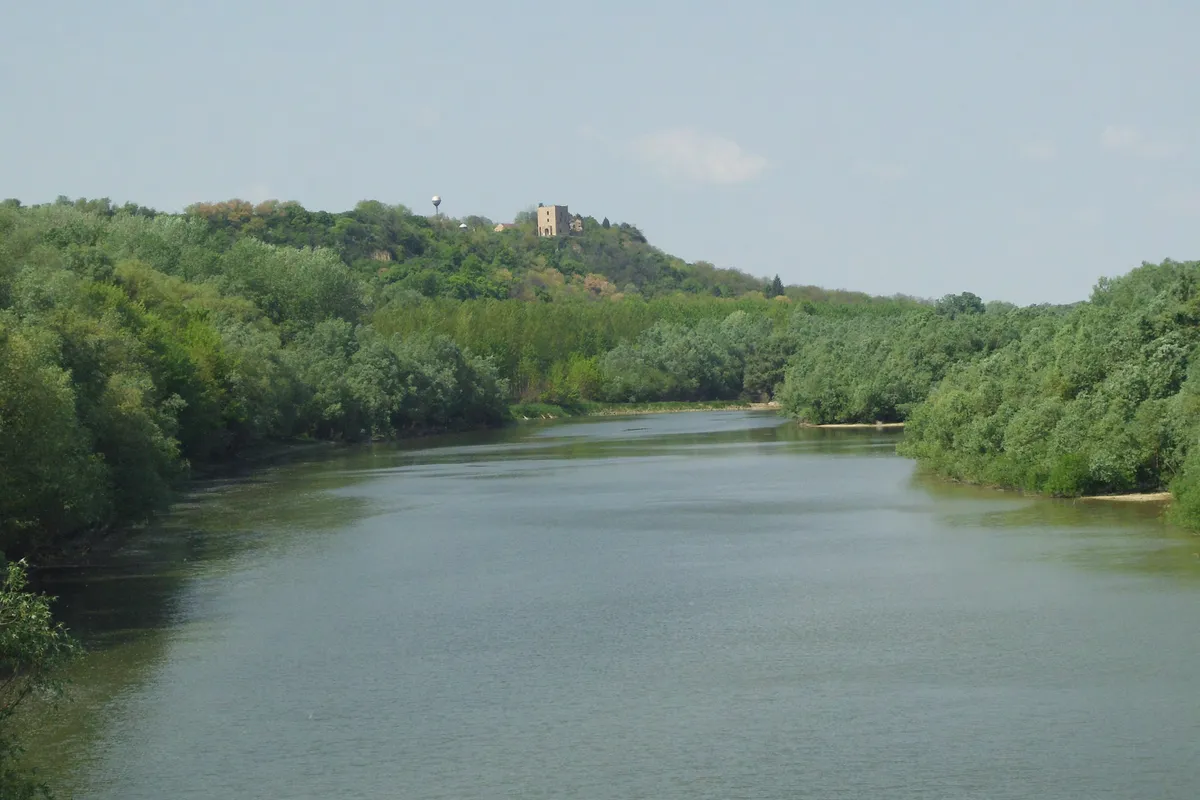
The exceptionally low water level of the Danube has practically halted navigation near Vukovar in recent days. The river in that area has dropped to minus 60 centimeters, revealing numerous underwater obstacles and leaving ships stranded, while the country's largest river port sits idle.
In some parts of the navigable channel, the river's depth is only about 1.2 meters. As a result, sandbars and rocks that are usually safely hidden beneath the water have surfaced, now posing a direct hazard to navigation.
"We're keeping an eye on all the sandbars, watching out for those rocks, and all the underwater obstacles that were previously submerged and out of sight. Now, unfortunately, we're running into problems with them more and more," said Saša Piljaš, president of the Dunav Vukovar Sports Fishing Association, for HRT.
Problems first hit smaller boats, but now the largest vessels are facing the same difficulties. Two cargo ships ran aground near the village of Erdut a few days ago and have been stuck there ever since.
Borna Čerina, head of the Navigation Safety Service at the Vukovar Port Authority, described the situation: "We have two cargo ships in the navigable channel near Erdut that ran aground a few days ago and are still there. They'll either have to be lightened or wait for the water level to rise."
Čerina also explained the economic side of the problem. "The navigable channel should be at least two meters deep for carriers to make it worthwhile to transport cargo. Anything less means they operate at reduced capacity, so profitability becomes an issue," he said.
The consequences are most pronounced at the Port of Vukovar. In recent weeks, carriers were still docking with nearly half the cargo, but even that traffic has now come to a complete halt. A cruise ship has also been moored in Vukovar for a week.
"For the past ten days, we've had no navigability at all. All barges are anchored either in ports or in certain areas, waiting for better draft," said Marijan Kuprešak, director of the Port of Vukovar.
Kuprešak warned of serious financial implications if the situation doesn't change soon. "Partners who signed contracts with us for the next three months were supposed to move about 200,000 tons of cargo through the Port of Vukovar, which is a significant volume for the port and a significant source of revenue. It's now questionable whether those partners will arrange alternative transport, whether by cargo or truck," he said.
Retired port captain Ivan Barović, who spent more than 20 years on the Danube, doesn't recall conditions like these. "There have been ice jams near Dalj, and there have been high water levels when we had flooding here. But a water level this low has never happened," he recalled.
Barović emphasized that captains now have to use all their skills to maneuver safely, but also that the economic calculus is increasingly unfavorable. "Captains have to use all their knowledge to bring ships safely into port. The other thing is how profitable it is to load a ship to only 50 percent of its draft just to get through certain areas," he said.
Although the Danube is navigable almost all year round, previous disruptions were mostly linked to ice or floods. Such a prolonged halt to navigation at Vukovar, Barović claims, has never been recorded. "I'm afraid we can't be too optimistic, but we have to take certain steps. This is a situation where we have drought here, and floods somewhere else," he concluded.
The lowest recorded water level of the Danube at Vukovar was about a hundred years ago, at minus 110 centimeters.